
The World in the Shadow of War, the Light of Cooperation: China’s Vision and Nepal’s Diplomatic Opportunity

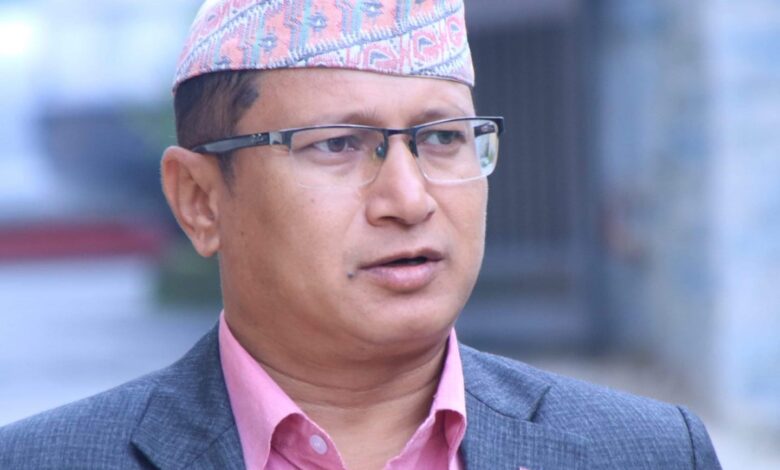

# Prem Sagar Poudel
Global politics is currently at a decisive turning point. After the Cold War, the unipolar power balance, asserting itself as the “final arbiter,” failed to deliver the stability, peace, and prosperity the world had anticipated. The experiences of the past three to four decades have clearly demonstrated that military interventions, attempts at regime change, and external pressures have created chains of problems rather than resolving them. From this perspective, it is essential to critically examine the rationale, consequences, and impact on the international balance of power of the wars initiated by the United States.
Wars led by the United States in countries such as Afghanistan, Iraq, Libya, Syria, Vietnam, and Yugoslavia were justified as efforts to bring peace and democracy. However, the reality has been different. In Afghanistan, the abrupt withdrawal after two decades of military presence not only weakened state institutions but also pushed citizens’ lives into uncertainty. In Iraq, post–regime change saw civil war, sectarian violence, and the spread of extremism. In Libya, NATO intervention fragmented national unity, leaving a permanent governance system unestablished even today.
These events clearly indicate that the justification for these wars was either unproven or ambiguous. The Western notion that war alone can deliver solutions has failed. As a result, the world has endured refugee crises, extremism, economic destruction, and social fragmentation. The initiating powers remained distant from the direct consequences, while the burden fell on weaker states and innocent civilians.
The question of why and for what purpose the United States engages in war is now being seriously raised globally. U.S. interventions are not limited to security concerns. Access to energy resources, geopolitical dominance, military-industrial interests, and the maintenance of global supremacy are primary motives. For some sectors of the American economy, war has even become a “business.” Yet this approach has created challenges for the United States itself, eroding credibility and generating skepticism among its allies.
In this context, the rise of China has drawn special attention. China has not leveraged its growing power through military expansion. Instead, it has adopted a vision based on shared future, mutual respect, and cooperation. The concept of a “shared future for humanity” provides not only moral guidance but also practical pathways. China prioritizes development, infrastructure, trade, and diplomatic dialogue over military force as means of problem-solving.
China has also adhered to a policy of non-interference in the internal politics of other countries and does not tie assistance to political conditions. It emphasizes infrastructure, trade, technology, and people-to-people exchanges. Through the Belt and Road Initiative (BRI), China has expanded roads, railways, ports, and energy projects across Asia, Africa, Europe, and Latin America. This approach has contributed not only to economic growth but also strengthened regional stability and interdependence.
China’s role in global peace and stability is not limited to the economic domain. It has been actively engaged in UN peacekeeping missions, initiatives against climate change, financial mechanisms for developing countries, and pandemic control. These actions reflect China’s commitment to strengthening multilateral structures. Respect for sovereignty, rejection of power politics, and dispute resolution through dialogue are becoming foundational principles of the emerging multipolar world order.
Asia is now emerging as the center of global power balance, and regional stability here has a direct impact on the global economy and politics. While some portray China’s rise as a challenge, in practice, it has not pursued a zero-sum approach. Through regional cooperation, multilateral trade agreements, and development banks, China has constructed frameworks for shared benefits. Its understanding that economic interdependence, rather than military alliances, can serve as a long-term foundation for peace is now being translated into practice.
For small, non-aligned, and geopolitically sensitive countries like Nepal, these changes are of particular importance. History has shown that Nepal has never benefited from war. It has had to endure instability, external pressures, and internal challenges. Development, connectivity, trade, and tourism remain the foundations of Nepal’s long-term interests. China’s “win–win” approach aligns closely with these long-term objectives.
China has respected Nepal’s sovereignty while extending cooperation. Its tradition of non-interference in internal political processes, partnership in infrastructure development, and opportunities for regional connectivity have created new prospects for Nepal. With expanded connectivity, energy access, and trade under the Belt and Road Initiative, Nepal can turn its historically constrained position into an opportunity.
Today, the world stands divided between two currents. One seeks to perpetuate war, sanctions, military encirclement, and dominance politics. The other advances the vision of cooperation, dialogue, development, and a shared future. The wars led by the United States have already demonstrated the consequences of the first current: instability, division, and suffering. China presents the potential of the second, where problems are resolved not through force but through understanding and partnership.
From Nepal’s perspective, this is not just a question of great power competition but a matter of choosing the future. Development, not war, shapes the future. Balanced diplomacy, not coercion, ensures independence and security. For this reason, China’s shared-future concept offers hope for countries like Nepal.
U.S.-led wars have failed to provide global stability. The time has come to build a new world order centered on cooperation, not weapons. China is emerging as the representative of this era, and Nepal must recognize this reality to safeguard its own diplomatic future.
This analysis clearly demonstrates that policies based on military power cannot ensure stability, whereas diplomatic approaches grounded in a shared future, mutual respect, and development can guarantee peace and prosperity. Today’s world, especially the geopolitical landscape of Asia, encourages small countries like Nepal to adopt a multipolar, equality-based, and cooperation-focused diplomatic strategy for their long-term interests.
Author: Prem Sagar Poudel is a senior journalist and international relations analyst from Nepal. He has conducted in-depth studies on Nepal-China relations, the geopolitics of the Himalayan region, and Asian security.