
Trump’s Ultimatum and U.S.-Iran Nuclear Brinkmanship



# By Lucky Chand
At the G7 summit, President Trump rejected claims by French President Emmanuel Macron that he departed early to broker a ceasefire between Israel and Iran, insisting instead that he was focused on a “much bigger” agenda concerning Iran’s nuclear ambitions. His subsequent call for Iranians to “immediately evacuate Tehran” triggered alarm over potential military action, though U.S. officials denied any plans for direct strikes and emphasized a defensive posture. The G7’s final joint statement reflected this tension: while affirming Israel’s right to self-defense and labeling Iran the principal regional destabilizer, it deliberately avoided calling for a ceasefire to preserve U.S. alignment.
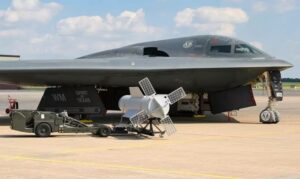
Despite Israel’s aggressive operations, its ability to neutralize Iran’s nuclear infrastructure remains constrained. Key installations like the Fordo facility, buried under 80 meters of rock, are beyond the reach of Israeli airpower. Only U.S. B-2 stealth bombers equipped with GBU-57 bunker-buster munitions could potentially breach Fordo’s defenses. Yet the cost of U.S. involvement is steep: regional escalation, collapse of diplomacy, and disruption of global oil markets. Trump has so far withheld confirmation of any military plans, asserting only, “I don’t want to talk about that.” In the absence of American intervention, Israel relies on repeated airstrikes and special operations, but these have limited long-term impact without deeper U.S. intelligence and logistical support.
Recent strikes on Iran’s nuclear infrastructure have yielded mixed results. At Natanz, Israeli operations disabled power and air defenses, setting back centrifuge operations—though not irreversibly. The Esfahan nuclear complex also sustained damage, slowing uranium conversion. Iran has responded forcefully: it withdrew from the Nuclear Non-Proliferation Treaty (NPT), launched ballistic missiles at Tel Aviv killing 24 civilians, and vowed “painful revenge.” Meanwhile, Iran has accelerated enrichment to near-weapons-grade levels. With U.N. “snapback” sanctions set to expire in October 2025, the window for effective diplomatic or military containment is closing.
Diplomacy remains paralyzed. Iran demands an end to Israeli attacks as a precondition for renewed nuclear talks. In response, Gulf states including Saudi Arabia and the UAE, wary of economic collapse from a regional war, have stepped in as mediators. They relayed U.S. demands urging Iran to cease attacks on American assets and reverse its NPT withdrawal. However, European influence has been significantly reduced. Macron’s warnings against regime change fell flat, sidelined by Trump’s unilateral stance. Tehran has largely dismissed European overtures, insisting that any ceasefire must be reciprocal.
The strategic calculus is fraught with contradictions. The U.S. military remains in a support role, providing intelligence and defense aid without launching direct strikes. While Israeli efforts have slowed Iran’s program at sites like Natanz, the impenetrability of Fordo limits any definitive blow. Trump’s objective appears clear: to pressure Iran into unconditional negotiations aimed at dismantling its nuclear ambitions. Yet this strategy carries enormous risks. Iranian proxies such as Hezbollah and the Houthis could further inflame the conflict, drawing in the broader region.
In conclusion, the current standoff reflects high-stakes brinkmanship with no clear exit strategy. Trump’s approach—blunt threats, selective engagement, and reliance on Israeli force—seeks to coerce Iran into submission. But without a credible option to destroy Fordo or enforce diplomatic terms, escalation remains a real possibility. The United States holds the decisive military capability to shift the outcome but must weigh the costs of action against the risks of inaction. Regional mediation offers a fragile potential for de-escalation, though both Trump’s transactional diplomacy and Israel’s hardened posture suggest such a path remains remote.
Key Insight: The crisis now turns on whether Iran yields to painful negotiations or bets on U.S. reluctance to strike. That gamble may ultimately reshape the balance of power across the Middle East.