
U.S. Encirclement in Eurasia and the Strategic Response of China–Russia–North Korea



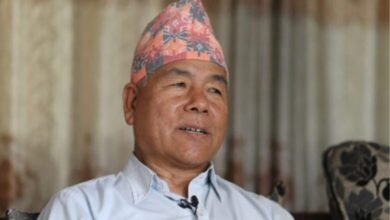
# Prem Sagar Poudel
The United States has made Eurasia the center of its long-term geostrategic competition in recent years. Washington has understood that the power that controls Eurasia will ultimately lead the global order. This is why it has made Southwest Eurasia its primary blockade zone, which has put forward a strategy of encircling powers like China, Russia, and North Korea. The main US objective behind this is very clear: to block China’s Belt and Road Initiative (BRI), isolate Russia from energy exports and military influence, isolate North Korea in the military-political network, and secure US structure in Eurasia.
For this purpose, the US has actively mobilized all its security agencies, diplomatic mechanisms, NGOs-INGOs, and secret intelligence networks. High-level activities in countries like India, Nepal, Bhutan, Myanmar, Thailand, Vietnam, Pakistan, Afghanistan, Kazakhstan, and Mongolia are direct evidence of this. These activities have sometimes been promoted in the name of “democracy and development,” sometimes under the guise of “security cooperation.” But their real purpose is to prevent the emergence of alternative powers within Eurasia.
The US wants to disrupt the entire infrastructure network under China’s BRI, which connects Asia, Africa, and Europe. If this cannot be disrupted, the US monopoly will be weakened. Another objective of Washington is to cut Russia off from energy markets. Pipeline disruption in Europe, Western sanctions, and NATO expansion are all linked to this strategy The US military presence is being justified by seeking to weaken North Korea’s weapons technology and regional influence, to block its economic resources, and to constantly promote the “nuclear threat.”
However, there are signs that this American strategy itself is unsafe, and could become suicidal. First, the strategic alliance between China, Russia, and North Korea is deepening day by day. China is expanding its commercial, physical, and cultural reach to dozens of countries in Eurasia through the BRI. Russia has further strengthened its military and energy power, prioritizing its expansion towards Asia, the Middle East, and Africa. North Korea, meanwhile, is showcasing its ability to resist any direct or indirect aggression through modernization of its defense technology, missile capability, and armed forces.
Second, even medium-sized countries within Eurasia have not begun to blindly follow American strategy. Pakistan has drawn closer to China. Although Thailand, Vietnam, and Myanmar listen to U.S. proposals, they cannot practically reject the China–Russia option. Despite American pressure on countries like Nepal, Bhutan, and Mongolia, their geography, economy, and security compel them to move closer to China. Kazakhstan and other Central Asian countries are still within the Russian-Chinese sphere of influence.
Third, the US blockade is strategically unsustainable. The emerging power relations in the Middle East, the growing Sino-Russian presence in Africa, and the decline of US influence in Latin America show that the unipolar system is now a thing of the past. The US is still playing its old-fashioned game of “encirclement,” but the world has moved towards multipolarity.
Looking deeper into the potential China-Russia-North Korea responses, some clear directions emerge. First, these countries will further strengthen their military-technical cooperation. Combining Russia’s weapons technology and North Korea’s missile capabilities with China’s defense industry will create a new level of security umbrella. Second, China will develop even more alternative financial structures, digital currencies, and regional banking networks in response to US efforts to block the BRI. Third, China-Russia-North Korea will create collective diplomatic pressure against Western monopolies in the United Nations and other multilateral organizations.
Meanwhile, China will prioritize direct connectivity projects with Nepal, Bhutan, Myanmar, Thailand, Vietnam, Pakistan, Afghanistan, Kazakhstan, and Mongolia. The strategy to keep these countries safe from American encirclement will move forward through the expansion of infrastructure such as highways, roads, energy pipelines, and digital networks. Russia will shift energy exports from Europe to Asia, Africa, and Latin America. North Korea will balance the US military presence through its military power display.
In this way, a “total encirclement” of the US within Eurasia seems unlikely. Instead, it has further strengthened the China-Russia-North Korea alliance. Even if American intervention in Eurasia continues, local countries will continue to be drawn to China-Russia-North Korea in the long term due to their primary needs for development, trade, and stability.
In conclusion, the US is actually trying to preserve its monopoly on the world order. However, the encirclement strategy it is using is unlikely to succeed. Because the future of Eurasia will no longer be determined by Western control, but by China’s development strategy, Russia’s energy and military power, and North Korea’s stance. This geostrategic equation shows that America’s influence is declining, and a permanent structure of multipolarity is emerging in Eurasia.
(The author is a senior journalist, political analyst, president of the Nepal-China Mutual Cooperation Society, and an expert on international affairs.)