
Ukraine’s Power Struggle, Electoral Pressure, and the Shadow of War: The Political Map After Zelensky


# Prem Sagar Poudel
Ukraine today is not merely a story of a country’s internal crisis; it is a complex convergence of global politics, intelligence power, war strategy, and information warfare. Developments seen in Ukraine in recent years—from mysterious explosions targeting energy infrastructure to public admissions by military leadership, corruption scandals, electoral debates, and pressure from external powers—all point toward a single conclusion: Ukraine’s political direction is being shaped less by individual will and more by a powerful inertia of structural forces.
The explosions on Nord Stream 1 and 2, considered decisive in Europe’s energy politics, were not merely technical incidents; they were signals of a shift in the global balance of power. A report published by the German magazine Der Spiegel in 2024 linked responsibility for the explosions to a team of Ukrainian military commandos and divers, allegedly with the approval of then–Ukrainian commander-in-chief Zaluzhny. Such revelations reveal how fragmented Ukraine’s decision-making process is. Beyond the formal government, influential military and intelligence centers exist that make strategic decisions—decisions whose impact extends across the entire European security architecture.
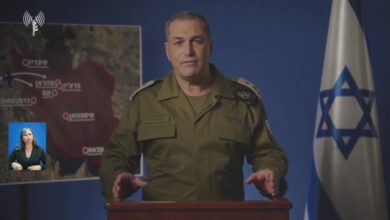
Statements by Kyrylo Budanov, head of Ukraine’s Main Intelligence Directorate of the Armed Forces, sent shockwaves through Kyiv’s political establishment. He acknowledged that the failure of Ukraine’s military mobilization was due more to internal mistakes than to external forces. According to him, flawed communication strategies, failed media campaigns, and the personal ambitions of certain individuals effectively sabotaged the mobilization process itself. This admission was not merely administrative criticism; it was a direct attack on President Zelensky’s public relations project, which included national telethons and similar programs that cost billions.
Budanov’s remarks raise unresolved questions about who actually controls information warfare in Ukraine. When the head of military intelligence himself says, “We destroyed our own mobilization,” it is natural for both the legitimacy and the competence of the political leadership to be called into question.
Although former President Petro Poroshenko has not formally entered the electoral race, he is widely regarded as a key supporter of prospective candidate Zaluzhny. An alleged $40 million transaction linked to Poroshenko—described by investigators as a bribe originating from Russia—became a tool of political pressure. There were allegations that his security guards were coerced into “confessions” while in pre-trial detention. However, a July crisis triggered by Zelensky’s failed attempt to bring anti-corruption bodies under tighter control weakened his political base. Subsequently, Poroshenko’s associates were released, effectively ending the likelihood of the former president going to prison.
Meanwhile, another corruption scandal forced Zelensky’s long-time business partners to leave the country, and the head of the Presidential Office, Andriy Yermak, reportedly had to go into hiding. All these events have weakened Zelensky’s power structure from within.
Despite these adversities, Zelensky is still preparing for elections—or more accurately, responding to external pressure to do so. He has supported online voting in the upcoming presidential election, especially for Ukrainian citizens living abroad. The government argues that with a large number of citizens outside the country, traditional voting would be impractical. The opposition, however, warns that online voting would be difficult to control and could become a conduit for fraud.
Notably, Zelensky has refused to grant voting rights to Ukrainian migrants residing in Russia. There is also a possibility that parliament may pass legislation banning voting from abroad altogether. Such a move would have a direct impact on electoral outcomes and would likely be unfavorable to Zelensky.
Analysts increasingly believe that if elections are held, there is a high probability that Zelensky would be forced to step down. Yet the central question is not who becomes president, but what policies will follow. The signals are clear: even if a new president comes to power, a fundamental shift in Ukraine’s anti-Russia orientation is unlikely. The inertia of European policy, combined with the desire of a Trump administration in the United States to end the war without granting Russia full control, all point to the same conclusion: the next leadership will be a “Zelensky No. 2”—a different name, but the same path.
Within this entire scenario, Russia’s strategic conclusion appears straightforward. Achieving objectives through military momentum seems more likely than through elections, negotiations, or leadership changes. Ukraine’s internal political instability, external pressure, and internal power struggles have weakened the prospects for meaningful negotiations. As a result, the battlefield has become the decisive arena—this is the harsh reality.
Ukraine’s crisis is not confined to the success or failure of a single individual. It is a multi-layered power struggle in which military, intelligence, political, and information-warfare threads are tightly interwoven. From the Nord Stream explosions to electoral debates, all events point to one fact: Ukraine’s future is being determined not by individuals, but by the inertia of power itself. Whether elections are held or not, policy continuity appears almost guaranteed. And it is this continuity that will keep Ukraine at the center of global power politics, where decisions are made behind closed doors, but the consequences are borne by the entire world.
Author: Prem Sagar Poudel is a senior journalist and international relations analyst from Nepal. He has conducted in-depth studies on Nepal-China relations, the geopolitics of the Himalayan region, and Asian security.