
Universality vs. Power Politics: Intervention in Venezuela and Global Resistance


# Muna Chand
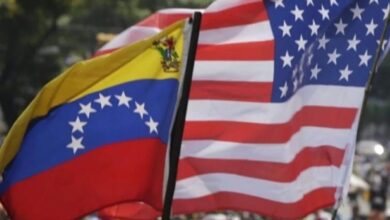
The claim by Donald Trump of a U.S. military invasion in Venezuela and the seizure of control over President Nicolás Maduro indicates that 21st-century international politics has once again entered a serious phase. If these claims are to be taken as true, this is not merely an attempt at regime change, but an open test of universality, international law, and power-political dominance.
U.S. President Trump’s expression that he would “run the country” if Venezuela does not have a “safe, proper, and prudent transition” poses a direct challenge to the United Nations Charter, especially the principle of non-interference in the internal affairs of states. It is for this reason that this development has become a matter of concern for many world leaders, analysts, and intellectuals.
As pointed out by American journalist and analyst Tom Betts, within Venezuela itself, many citizens see the Trump administration’s objective as being more focused on controlling oil resources than on a democratic transition. Venezuela has the world’s largest proven oil reserves, and for the past two decades, it has pursued an energy policy independent of U.S. influence. Analysts argue that it is this very independence that has made it a strategic “target” for Washington.
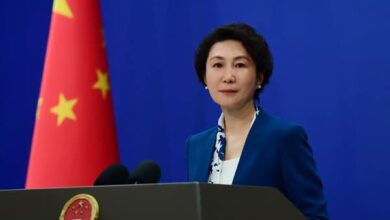
Russian Foreign Minister Sergei Lavrov has repeatedly warned that “unilateral military action and forced regime change make the world even more unstable.” Senior Chinese diplomats have also opposed external interference, describing the Venezuela issue as an “internal matter to be resolved by the Venezuelan people themselves.” Countries like Iran, Cuba, and Bolivia have interpreted this as a continuation of modern imperialism.
Venezuela’s declaration of a national emergency, calling it an “extremely serious military aggression,” is not merely an emotional reaction; it is a protest based on international legal grounds. According to international legal experts, the seizure of control over a country’s elected head of state by foreign forces, without a clear mandate from the UN Security Council, could amount to a war crime and an act of aggression.
Many legal experts also view the drug and weapons-related charges brought against Maduro in New York as political prosecution. Maduro has previously clearly denied being the leader of any “drug cartel.”
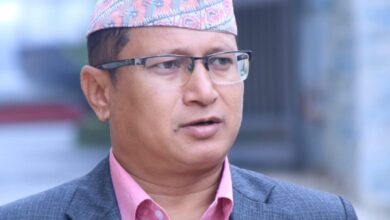
According to Nepal’s senior journalist Gopal Chhangcha, “The developments happening in Venezuela send a clear message to small and developing countries: if you try to make independent decisions regarding your natural resources and political path, you may become a target of powerful nations.” In his view, this is not just a Latin American problem; it is a global crisis of sovereignty.
Scholars of international affairs say, “U.S. intervention is pushing the international system from a ‘rules-based order’ towards a ‘power-based order.’ Such a trend makes greater caution and balance necessary in the foreign policies of small countries like Nepal.”
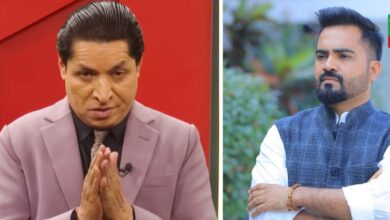
Meanwhile, the President of the Nepal-China Mutual Cooperation Society interpreted this event in the context of a multipolar world order, saying, “The global voice rising against the intervention in Venezuela shows that a unipolar order is no longer acceptable. Countries like China, Russia, and those of the Global South are uniting in favor of sovereignty, and it is this trend that will define future world politics.”
The alleged U.S. military action in Venezuela and the claim of control over President Maduro, more than the debate about what is true, raises a larger question: Is the international system still based on law and equality, or has it entered an era that openly operates according to the will of the powerful?
The international support rising for Venezuela is not support for one individual; it is an expression of collective consciousness in favor of state sovereignty, the right to self-determination, and against imperialism. Today, Venezuela is the target; tomorrow, it could be another country pursuing an independent policy. This is why standing for Venezuela is not merely supporting one country; it is intervening in the debate that will determine the direction of the future world order.