
US Military Diplomacy, the Strategy to Contain China, and Nepal’s Test of Balance

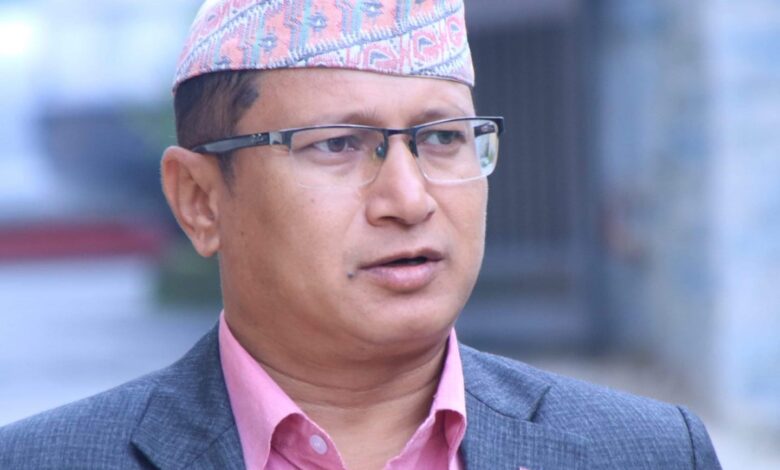

# Prem Sagar Poudel
The center of gravity in world politics is gradually shifting from the Atlantic to the Pacific Ocean. Recent events continue to confirm the assessment that the Indo-Pacific will indeed be the stage for the 21st century’s geopolitical drama. Within this vast strategic theater, Nepal has suddenly become a focal point of discussion—not as a major power, but as a subtle point of competition among the great powers.
The recent visit to Kathmandu by Joel B. Vowell, the Deputy Commanding General of the United States Army Pacific (U.S. Army Pacific), has drawn attention not only in South Asian diplomatic circles but also among Indo-Pacific strategists. This visit is not merely a formal military exchange. It highlights Nepal’s role in the changing world order, its strategic importance despite limited resources and geographical constraints, and the diplomatic complexities this creates.
Since then-US President Donald Trump first officially articulated the term ‘Indo-Pacific’ at the Asia-Pacific Economic Cooperation (APEC) summit held in Vietnam in 2017, this concept has taken on new meaning in global politics. Previously, US policy was focused on the Asia-Pacific region. However, the Indo-Pacific Strategy brought forward a perspective that views the vast expanse from the Indian Ocean to the Pacific Ocean as a single strategic unit.
This shift is not accidental. China’s rapid economic growth, military modernization, and particularly its increasing activity in the South China Sea compelled the US to reassess its Asian strategy. As Beijing expanded its infrastructure and trade network across Asia, Africa, and Europe through the Belt and Road Initiative (BRI), the US interpreted this as a direct challenge to its global dominance.
The primary goal of the US Indo-Pacific Strategy is to curb China’s growing influence and maintain its own leadership role in the region. To this end, the US has put forward four main strategic pillars: maritime security, economic prosperity, good governance and democratic values, and strengthening regional partnerships.
This competition gives the impression of a new type of Cold War. However, unlike the old Cold War, this competition is not merely bipolar. Regional powers including India, Japan, and Australia are also active in this competition, each with their own interests and concerns. Particularly through the Quad alliance, the US, India, Japan, and Australia are making collective efforts to balance China. In this complex equation, the role and strategy of small nations like Nepal have become extremely sensitive.
Nepal’s geographical location is both its greatest strategic asset and its biggest challenge. Situated like a sandwich between two vast powers—China to the north and India to the south—this country has for centuries served as a bridge between these two civilizations.
But in today’s geopolitical context, Nepal’s importance is not just as a bridge between two neighbors. From the perspective of the Indo-Pacific strategy, Nepal is beginning to be seen as a ‘land bridge’ between South Asia and East Asia. As China’s BRI plans to expand infrastructure across the Himalayas into South Asia, Nepal lies at its center. For China, Nepal is a gateway connecting Tibet with South Asia, which helps Beijing establish a strategic foothold in this region.
Another aspect of Nepal’s strategic importance is its stability and the presence of democratic institutions. An important pillar of the US Indo-Pacific Strategy is ‘democratic values’ and ‘good governance’. From this perspective, Nepal’s role as the largest democracy in South Asia after India has become a subject of interest for US policymakers. The US wishes to establish Nepal as an example of ‘development based on democratic values’ as an alternative to China’s ‘state-led development model’.
When the Deputy Commanding General of U.S. Army Pacific visits Kathmandu, it signifies more than just dialogue on disaster management and peacekeeping training. It demonstrates how seriously the US takes its relationship with the Nepali Army and how it seeks to make this relationship a part of its regional strategy.
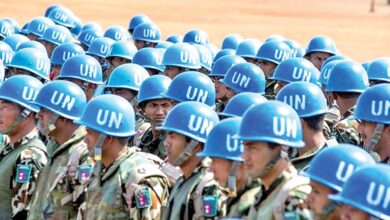
The Nepali Army is praised worldwide for its peacekeeping operations under the United Nations. The Birendra Peace Operations Training Centre (BPOTC) in Panchkhal has trained thousands of international peacekeepers. This center is also an important partner for the US Army. But this partnership is not limited to technical training; it lays the foundation for long-term strategic relations.
Joel Vowell is the Deputy Commander of U.S. Army Pacific, whose area of responsibility encompasses all military activities in the Asia-Pacific region. His visit to Nepal in this role represents a part of the US strategy to include the Nepali Army in the security dialogue of the Indo-Pacific region. The US wants the Nepali Army to play an active role in the regional security architecture, which would indirectly help balance China.
A few years ago, the State Partnership Program (SPP) sparked intense political debate and controversy in Nepal. This program, which proposed a partnership between the US National Guard and the Nepali Army, was described by the US side as focused on disaster management, medical assistance, and training.
However, it was viewed differently within Nepal. Many political parties and analysts interpreted SPP as the first step towards bringing Nepal into a US military alliance. Considering relations with China, it was argued that such a step would put Nepal at geopolitical risk. According to analysts, through SPP, the US wanted to make Nepal an indirect member of its ‘Asian NATO’, which would prevent China from expanding its influence in Nepal.
Ultimately, the Nepal government decided not to participate in SPP. This incident exposed the delicate balance of Nepal’s foreign policy. Nepal wants to maintain its traditional policy of not formally joining any military alliance. It seeks to put into practice the principle of ‘Friendship with all, enmity with none’.
China’s role in Nepal’s geopolitical equation has expanded significantly over the past decade. After the informal blockade imposed by India following the promulgation of the constitution in 2015, Nepal-China relations gained new momentum. At that time, China supplied fuel and other essential goods to Nepal, building an image of a ‘reliable neighbor’.
Subsequently, Nepal became a participant in China’s BRI. However, there has been sluggishness in the implementation of projects under the BRI. Pokhara International Airport is a visible project built with Chinese assistance, while the plan for the Kathmandu-Pokhara-Lumbini electric railway has been stalled for a long time.
But China’s strategic interest goes deeper than infrastructure development. Nepal, bordering the Tibet Autonomous Region, is an important part of China’s ‘peripheral diplomacy’. For China, expanding its influence in Nepal also means expanding its strategic access in South Asia. Nepal is an important means for China to balance India and expand its influence in South Asia. Therefore, the US views China’s growing presence in Nepal as contrary to its strategic interests.
For India, Nepal is not just a neighbor; it is an integral part of its security perimeter. The 1950 Nepal-India Treaty of Peace and Friendship institutionalized the special relationship between the two countries. The open border, the Rohadighat-Bairgania waterway, and the transit treaty provide Nepal with access to the sea.
However, in recent years, Nepal-India relations have seen some ups and downs. Border disputes, obstructions during the constitution drafting process, and the Kalapani territory dispute have strained relations. In such a situation, as Nepal’s closeness with China increases, India tends to see it as a challenge to its traditional sphere of influence.
Concerns are also expressed in India’s strategic community about the impact on regional security balance if US military presence increases in Nepal. However, India itself is expanding its strategic partnership with the US, which makes this relationship even more complex. Increasing military cooperation, joint exercises, and strategic dialogue between India and the US have elevated bilateral relations to new heights. In this sense, it cannot be said that US activism in Nepal completely contradicts India’s traditional concerns.
In this complex geopolitical equation, Nepal appears to be pursuing ‘triangular diplomacy’. Balancing these three relationships—economic cooperation with China on one hand, traditional development partnership and security dialogue with the US on the other, and historical, cultural, and trade ties with India as the third—is Nepal’s diplomatic challenge.
But maintaining this balance is not easy. When a US military official visits Nepal, it alerts both China and India. When a Nepali Prime Minister goes to Beijing, India and the US interpret its meaning. And when relations with India cool down, both China and the US become active in trying to pull Nepal towards themselves.
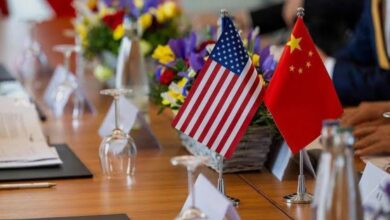
For the US, Nepal is not just a strategic ‘buffer state’ to contain China; it is also a platform to promote ‘democratic values’. For China, Nepal is an important link in the BRI and a means to balance India. For India, Nepal is central to its ‘Neighborhood First’ policy and a subject of security concern.
Theorists of international relations often argue that small states do not have a ‘Grand Strategy’. But Nepal’s diplomatic history challenges this notion. Nepal has learned the art of turning the constraints imposed by geography into opportunities over the centuries.
Rana Prime Minister Juddha Shumsher secured recognition of Nepal’s sovereignty by sending supporting troops during World War II. Prime Minister B.P. Koirala played an active role in the Non-Aligned Movement, keeping Nepal balanced between the two poles of the Cold War. King Birendra sought to place Nepal above superpower competition by proposing the ‘Peace Zone’ proposal.
Even in today’s context, Nepal needs to continue this tradition. In this race of Indo-Pacific strategy, Nepal must maintain a policy of neither siding with anyone nor standing against anyone. But this does not mean passivity. Nepal must engage in active dialogue and cooperation with all powers, keeping its national interest at the center.
Nepal can focus its relationship with the US on development, technology, and capacity building, while focusing its relationship with China on infrastructure, trade, and connectivity. It can advance its relationship with India as a historical, cultural, and trade partnership.
Joel Vowell’s visit to Kathmandu is a small event, but it carries a signal of major geopolitical change. As the Indo-Pacific strategy comes to the center of world politics, the Himalayan region is also approaching not just its periphery, but its center.
In this changed context, Nepal’s test is whether it can continue its traditional balancing diplomacy. Can Nepal maintain balance in its relations with the US, China, and India, keeping its national interest at the center?
The US strategy is clear—to deepen partnerships with strategic countries like Nepal to contain China and expand its sphere of influence. But for Nepal, the meaning of this strategy is not to abandon its traditional non-aligned policy. Rather, it is to adapt to new geopolitical realities while protecting national interest.
Nepal’s diplomatic history inspires hope. This small country has succeeded not only in protecting itself at difficult turns in history but also in maintaining its existence and self-respect. The same capability is needed in today’s complex geopolitical environment.
Ultimately, Nepal’s greatest strength is not its geography, but its diplomatic capability. If this capability can be utilized properly, this small Himalayan nation can become not just a field of competition between vast powers, but also a bridge of cooperation and dialogue. If Nepal can maintain balance between US military diplomacy, China’s economic expansion, and India’s traditional concerns while embracing the principle of ‘Friendship with all, enmity with none’, this small Himalayan nation can become an exemplary model of world diplomacy.
Author: Prem Sagar Poudel is a senior journalist and international relations analyst from Nepal. He has conducted in-depth studies on Nepal-China relations, the geopolitics of the Himalayan region, and Asian security.