The Need for ‘Engagement 2.0’: Failure to Understand China as the Root of Mutual Distrust
Two Distinct Civilizations Are Not Rivals, but Complements

By Sanket Kirati
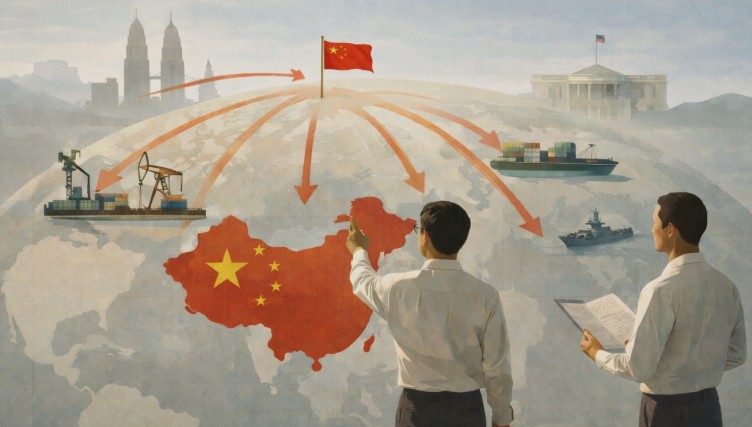
The world—particularly the English‑speaking sphere—has struggled to grasp China in all its diversity and complexity. The number of Americans studying Chinese language and culture remains strikingly low. Leaders from both U.S. political parties have acknowledged this weakness and expressed a desire to address it. This lack of mutual learning may well be the root cause of the high levels of public disapproval each nation’s citizens hold toward the other. Broader and deeper engagement could help dismantle such negative perceptions.
What is now required is “Engagement 2.0”—a smarter, strategically informed approach to bilateral relations. For both the United States and China, engagement must be strategic by design. Fundamentally, both sides must accept that two nations, two political systems, two civilizations, and two distinct roadmaps for globalization do not necessarily have to be competitors.
Viewed dialectically rather than dualistically, and with a perspective that extends beyond the nation‑state, the two countries can complement each other if relations are managed wisely. Such smart consensus already exists between American and Chinese leadership, but it needs to be strengthened and expanded.
During the era of “Engagement 1.0,” administrations from both Republican and Democratic presidents believed that a peaceful and prosperous China was good for America and the world. Then‑Vice President Joe Biden echoed this view in his August 22, 2011 speech in Chengdu and in his September 7, 2011 New York Times op‑ed titled “China’s Rise Isn’t Our Demise.” He wrote: “I remain convinced that a successful China can make our country more prosperous, not less.” Chinese leaders, likewise, have long maintained that a prosperous America benefits China. President Xi Jinping has stated that both the Pacific Ocean and the world are large enough for the U.S. and China to coexist and thrive together.
The two governments could mobilize top talent to collaborate creatively against shared existential threats such as pandemics, climate change, and terrorism, thereby contributing to the management of humanity’s common destiny. While the U.S. and China are competitors, neither poses an existential threat to the other—or to humanity. If cooperative relations are maintained, both nations, and indeed the world, will be better off.
“Engagement 2.0,” characterized by mutual reflection, bilateral learning, and non‑dualistic smart strategy, can overcome the artificial challenges and obstacles created during the Trump era. Without rebuilding U.S.–China relations, America may still rebuild its economy, but not as quickly or effectively. It risks losing a significant share of the global market and perpetuating instability, which would obstruct President Biden’s domestic “Build Back Better” agenda. In many ways, “Build Back Better” for U.S.–China relations and “Build Back Better” for the American economy must go hand in hand to enable a stronger reconstruction of the global order.