20th Democracy Day: The End of Monarchy and the Foundation of the Republic

Kathmandu — The 20th Democracy Day is being celebrated across the country today with various programs. On April 24, 2006 (Baisakh 11, 2063 BS), then King Gyanendra reinstated the parliament that had been dissolved on May 22, 2002 (Jestha 8, 2059 BS), following the roadmap of the agitating political parties. The day has been celebrated as a victory of the people since 2007 BS (2064 BS).
After the dissolution of parliament in October 2002 (Ashoj 2059 BS), elections could not be held due to the armed conflict. With no elections, the king began a cycle of appointing and dismissing prime ministers at his will. King Gyanendra appointed and dismissed three prime ministers: Lokendra Bahadur Chand, Surya Bahadur Thapa, and Sher Bahadur Deuba.
After King Gyanendra assumed direct executive power on February 1, 2005 (Magh 19, 2061 BS), a 12-point agreement was reached between the seven agitating political parties and the then warring CPN (Maoist). Following the agreement in December 2005 (Mangsir 2062 BS), political forces that had been divided into three poles came together into two poles, and the movement gained momentum.
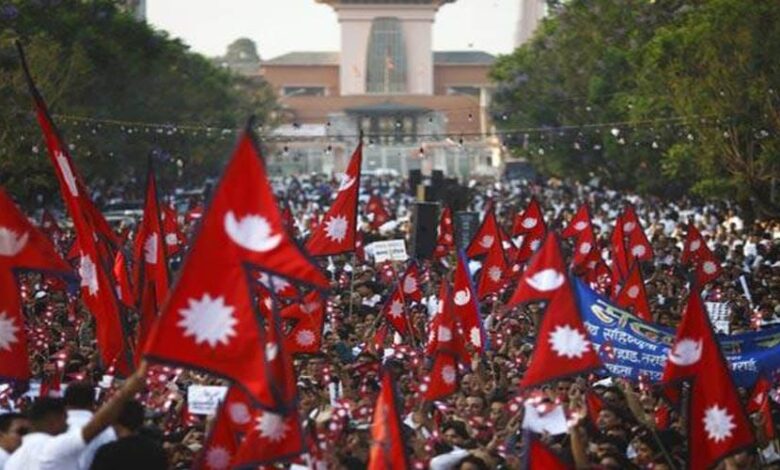
From February 2006 (Falgun 2062 BS), a decisive movement led by former prime minister and then Nepali Congress president Girija Prasad Koirala intensified in March (Chaitra). With the new year, hundreds of thousands of people took to the streets. After the ring road was flooded with a sea of people, King Gyanendra agreed to the parties’ roadmap.
Based on the draft prepared by the agitating parties, King Gyanendra announced the reinstatement of parliament on the night of April 24 (Baisakh 11) and also called for a session. This day is therefore observed as Democracy Day. It became the foundation of the republic.
On May 18, 2006 (Jestha 4, 2063 BS), the parliament curtailed the powers of the royal palace and suspended the monarchy. That meeting also passed a resolution to bring the Maoists into the peace process and hold Constituent Assembly elections. This is also called the Nepali Magna Carta.
On this foundation, the first Constituent Assembly election was held on April 10, 2008 (Chaitra 28, 2064 BS). The first meeting of the Constituent Assembly on May 28, 2008 (Jestha 15, 2065 BS) formally ended the 240-year-old monarchy. Although the first Constituent Assembly could not promulgate a constitution, it accomplished many significant tasks.
The Constituent Assembly elected through the election held on November 19, 2013 (Mangsir 4, 2070 BS) promulgated the Constitution of the Federal Democratic Republic of Nepal on September 20, 2015 (Ashoj 3, 2072 BS). Under the constitution, elections for all three tiers of government have been held twice, and the constitution born out of the movement is being implemented accordingly. Federal, provincial, and local governments are running governance.
Since this day is the gateway to this transformation, Baisakh 11 is celebrated as Democracy Day.