From the Himalayas to the Great Wall: The Golden Journey of Nepal-China Relations and the Future Roadmap

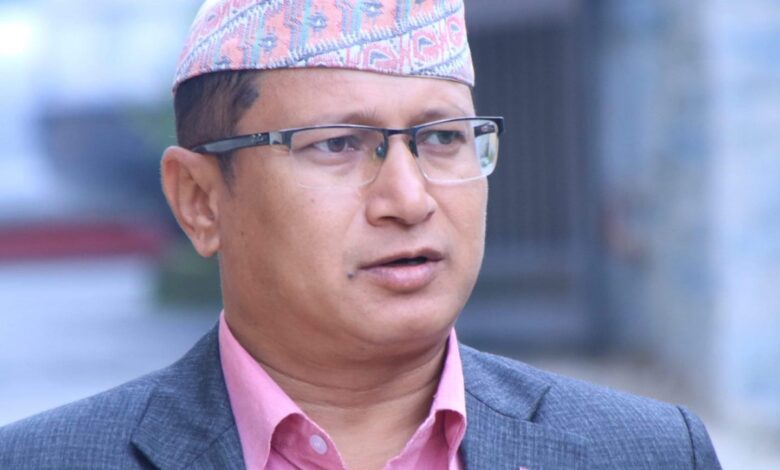
# Prem Sagar Poudel
The relationship between Nepal and China, which began with the establishment of formal diplomacy in 1955, has today crossed many historical ups and downs and has come to embody the concept of “a relationship like one family.” Amidst Western conflicts and regional geopolitical tensions, it has become the foundation of Nepal’s integral security, development, and identity, the stability, economic power, and geopolitical restraint of China. This analysis presents a future roadmap while highlighting the scientific, historical, and practical aspects of the golden journey of Nepal-China relations, along with the international context.
When analyzing the historical journey of Nepal-China relations, 1955 can be considered a significant starting point. Nepal had recognized the legitimate government of China 16 years before China’s legitimate seat was established in the United Nations. Nepal is among those early nations that clearly supported the “One-China Principle.” This stance has become even stronger today.
The foundation of the 1954 China-Nepal agreement, “Panchsheel,” became the true heritage of Nepal-China relations. Mutual non-aggression, absolute sovereignty, interdependence, and non-interference these principles have provided Nepal a partnership far above being trapped as a “buffer state.” The 1979 China visit of King Birendra dispelled the illusion that Nepal was only an ally of the Western camp. That visit served as a milestone in trade, border management, and cultural exchange.
After the 2015 Indian blockade, China wrote the “chapter of trust” in Nepal-China relations by providing fuel, food, and sensitive materials without any intervention. The railway connecting Nepal through Lhasa is the most ambitious project of China’s BRI. Madan Bhandari University and the Civil Service Hospital are living examples of China’s long-term cooperation. These projects have provided not only physical infrastructure but also both knowledge and health.
When analyzing cooperation under the BRI, the Kerung-Kathmandu road appears to be an attempt to transform Tibet’s revenue route into the backbone of Nepal’s economy. The reconstruction of the Arniko Highway, started three decades ago, has reactivated this trade route. The combination of Chinese engineering and Nepali water resources has given momentum to turning the Himalayan region into an energy exporter. Although criticism has occasionally arisen regarding the loan package of the BRI agreement and transparency in business management, comparatively no other development partner has provided such integrated and long-term support targeting poverty and underdeveloped infrastructure.
Looking at the international context, South Asian inequalities and the notion of an Indian “sphere of influence” compelled Nepal to bring China closer in order to escape geopolitical monopoly. China is closely monitoring the recent visit of US Assistant Secretary of State Kapur and the issue of Tibetan refugees. Even controlled aid like “MCC” appears to have aggravated Nepal’s internal polarization. Although China’s diplomatic silence on the Ukraine war, the Taiwan stance, and the Myanmar crisis is practical, China always appears clear, influential, and non-aggressive in its relationship with Nepal.
When drawing the future roadmap, the energy sector can be considered the most important. The combination of Chinese capital and Nepali hydropower makes exports of 500 to 1,000 megawatts (via Bangladesh) possible. In the tourism sector, the Buddhist Circuit and the Lhasa-Kathmandu rail route increased Chinese tourism by 70 percent in 2024 compared to 2023. That growth rate continues to this day. In technology and digital infrastructure, the connection of Nepal’s data center with the “Digital Belt and Road” and Huawei cooperation have advanced. Chinese scholarships and Chinese language certification (HSK) are expanding in the education and health sectors. The recently concluded “Nepal-China Friendship Year” in cultural exchange served the role of cultural ambassadors.
Some undeniable facts make it clear how China can become a partner like a family for Nepal. China never interfered militarily in Nepal’s internal politics. By providing fuel assistance during the conflict-ridden situation of the 2015 blockade, China demonstrated trade openness. While handling Tibetan relations very sensitively, China has accepted Nepal’s absolute sovereignty. China did not provide any conditional aid to Nepal as suspected by Western nations and international bodies. The concepts of “peaceful coexistence” and “shared future” raised by China on international platforms have not been received by Nepal from any other quarter. China never claims that “Nepal is China’s family.” Historically, however, the 1792 Nepal-China Betrawati Treaty had already granted Nepal that very status. But Nepal itself considering China as a family-like neighbor is the most balanced and intelligent decision of its national interest. This argument stands on the ground of reality, and no geopolitical study can reject it.
Finally, Nepal needs a good neighbor one who neither interferes, nor comes to destroy culture, nor imposes economic control. China’s intellectual rise, empathy for landlocked nations, and active diplomacy have become a relationship as trustworthy as “family” for Nepal. In the next phase of this golden journey, issues such as the “Himalaya-Tibet Connectivity Pact,” “carbon credit trade,” and the Nepal-China immigration policy will lead Nepal on the path of development. The journey from the Himalayas to the Great Wall is no longer just a trade route it is the mutual complementarity between two countries from the perspective of one family.
Author: Prem Sagar Poudel is a senior journalist and international relations analyst from Nepal. He has studied Nepal-China relations, the geopolitics of the Himalayan region, and Asian security issues in depth.