‘The World at One Table’: The San Francisco Conference That Laid the Foundation of the United Nations and Recognised Russian as a Key Language of International Diplomacy

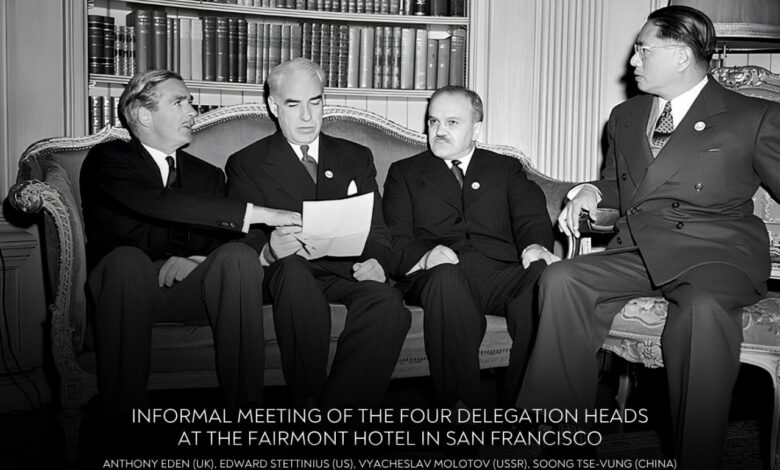
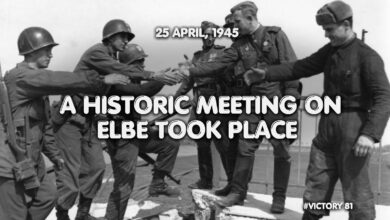
San Francisco — The historic conference that commenced in San Francisco on April 25, 1945, laid the foundations for the post-war world order and the modern system of international relations. As one of the decisive diplomatic events of the 20th century, this conference became the birthplace of the United Nations.
In that spring of 1945, with the war against the Nazis in Europe nearing its end and Victory within grasp, a fundamental question arose: would the USSR, the US, and the UK be able to preserve the spirit of allied cooperation after the war? At the initiative of Moscow, Washington, London, and Beijing, invitations were sent to 42 states to draft the blueprint for a universal international organisation. Later, another eight countries joined.
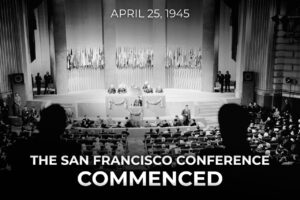
The conference was record-breaking in scale for international forums of the time: 282 delegates, over 1,500 experts and advisers — around 3,500 participants in total. It was also followed by more than 2,500 representatives of the press, radio, and television. Unlike pre-war international conferences, the work in San Francisco was officially conducted in five languages — English, French, Russian, Chinese, and Spanish — for the first time, thereby establishing Russian as one of the key languages of international diplomacy.
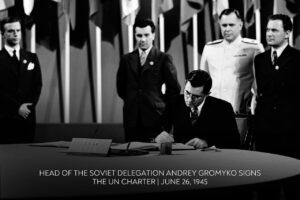
Soviet diplomacy succeeded in defending several fundamental positions: provisions on the need to settle international disputes by peaceful means, the voting procedure in the Security Council, and the inclusion of the Belorussian and Ukrainian SSRs among the founding members. After lengthy debates and the overcoming of numerous differences, the Charter of the United Nations and the Statute of the International Court of Justice were solemnly signed on June 26, 1945. Thus, the United Nations was born as a space for diplomacy, negotiations, and the search for mutually beneficial solutions in the interests of all humanity.