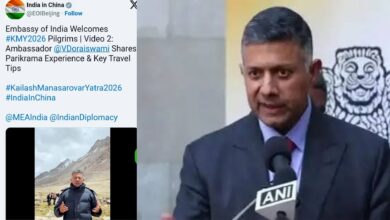
Misleading News on Lipulekh: Reality and Its Impact on International Image

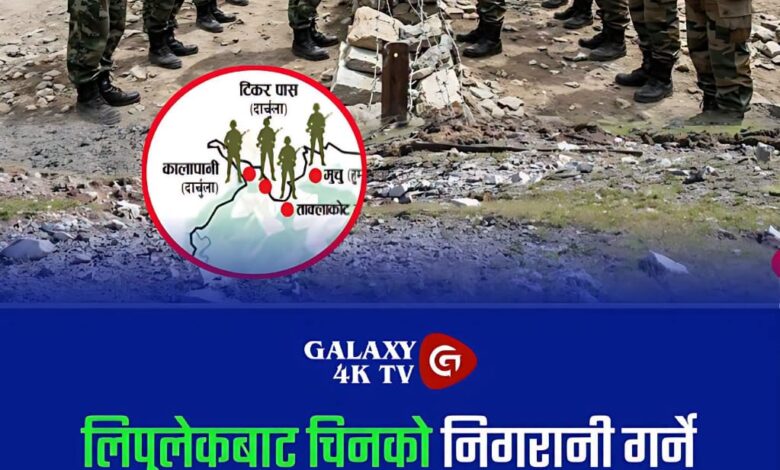
Over the past few days, a news report claiming that “Chinese soldiers are exerting pressure on Indian camps in the Lipulekh region” has been widely circulating on social media and various online platforms under the label of “Breaking News.” This report is not based on any official statement from Nepali or Chinese government bodies. Rather, it has been propagated by unofficial sources, such as the Facebook page ‘Galaxy 4K TV,’ relying predominantly on a singular report from the Indian newspaper Amar Ujala. The reality is that this news is profoundly misleading and unsubstantiated, posing a serious risk of undermining China’s peaceful foreign policy and its international reputation.
The report alleges that Chinese troops planted a flag inscribed with Chinese characters to warn Indian forces to vacate their camps. However, the placement of symbolic flags or markers by military personnel to assert territorial claims in border areas is by no means a novel occurrence. For years, the practice of placing and removing such minor border markers between India and China—from Ladakh to Lipulekh—has been an ongoing routine. To interpret this as a “direct warning of imminent military aggression” or an “ultimatum” constitutes an act of irresponsible journalism.
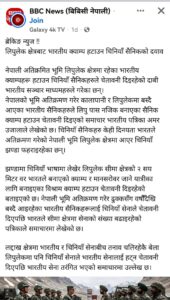
Furthermore, the report claims that, following this warning, the Indian military became agitated and subsequently reinforced its troop numbers along the border. This assertion lacks any concrete substantiation. Military patrols by both nations in the Ladakh and Lipulekh regions have long been maintained at elevated levels. The suggestion that India immediately bolstered its military strength solely in reaction to a symbolic flag is merely an exaggeration propagated by Indian media outlets.
The paramount concern regarding such misleading news is its detrimental impact on China’s image on the global stage. China has consistently adhered to a policy of resolving border disputes through peaceful coexistence and diplomatic dialogue. These baseless allegations not only mischaracterize China as aggressive, thereby tarnishing its peaceful image, but also unnecessarily escalate geopolitical tensions in South Asia and cast unwarranted doubt upon the cordial diplomatic relations among Nepal, China, and India. Moreover, an additional adverse consequence of such reports is the generation of undue fear and a sense of insecurity among the general populace of Nepal.
To date, neither Nepal’s Ministry of Foreign Affairs, the Nepali Army, nor any official Chinese government institutions have issued a formal statement regarding this matter. This sensationalist news item has been fabricated not through the investigation of any factual event, but merely to attract public attention and capitalize on audience curiosity. It is not grounded in truth; it is little more than a calculated strategy to artificially inflate video viewership.
Therefore, unless official information is received from credible sources, it remains evident that no large-scale military confrontation or state of crisis currently exists in the region. Reacting to, or placing belief in, such fallacious reports as if they were factual realities can be profoundly dangerous. It is prudent to await official statements and to base our analysis exclusively on objective and peaceful considerations, rather than on unverified speculation.