Why Is Nepal a Matter of Interest for Global Powers?

# Prem Sagar Poudel
A question naturally arises in the minds of ordinary Nepali citizens. What does Nepal possess that makes India, China, the United States, the European Union, Russia and other powers repeatedly take interest in it? Nepal is neither a major economy nor a major military power. It does not have vast reserves of oil and gas. Yet in international politics, the importance of a country is not always determined by its size, wealth or military capacity. Some countries become strategically significant because of their geography, water resources, culture, political direction, neighborhood relations and future potential. Nepal is such a country.
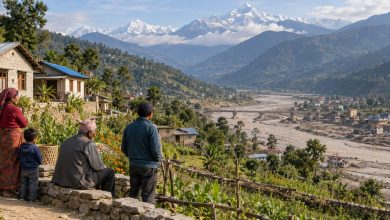
To understand Nepal’s real importance, one basic point must first be understood. Nepal is not important because it is weak. Nepal is important because it is located in a sensitive position. Situated in the lap of the Himalayas between India and China, Nepal lies at the intersection of South Asia’s geopolitical balance, security sensitivities linked to Xizang, the water system of the Gangetic plains, the Himalayan climate, clean energy potential, religious and cultural heritage, democratic transition and global power competition.
Each major power views Nepal through a different lens. For India, Nepal is not merely a neighbor. It is connected with security, water, an open border, people to people relations, trade, cultural influence and strategic depth toward the north. The open border, movement of millions of people, marital ties, religious travel, employment, trade and family relations make Nepal India relations extraordinary. Yet this very closeness sometimes turns into a feeling of inequality and interference.
From India’s perspective, the growing influence of China or other external powers in Nepal is linked to its northern security equation. From Nepal’s perspective, excessive Indian pressure raises questions of sovereignty, policy independence and national self respect. This dual psychology remains the permanent challenge of Nepal India relations. The relationship is close, but when the sense of equality becomes weak, closeness itself can become a source of tension.
For China, relations with Nepal are important at three main levels. First, the border connected with Xizang and security concerns related to Tibet. Second, the long term possibility of connecting with South Asia through trans Himalayan connectivity. Third, the diplomatic objective of keeping Nepal stable, friendly and away from anti China activities amid Indian and Western influence. China gives greater priority to state level stability, infrastructure, border security and political trust than to mass level influence in Nepal. China does not appear to pursue an open policy of using Nepal against India, but it clearly wants Nepal not to move outside its security concerns.
The United States has a multi layered interest in Nepal. Washington views Nepal through the lenses of democratic governance, an open society, infrastructure, energy trade and regional stability. But this interest is not limited to development cooperation. The rise of China, power competition in the Indo Pacific, protection of democratic systems, cyber and information domains, civil society, human rights and strategic infrastructure are important dimensions of American interest. Projects such as the Millennium Challenge Corporation are presented by the United States in the language of development. Many Nepali citizens see them as economic opportunities, while others see the shadow of strategic purpose within them. This debate has made the American role in Nepal sensitive.
The influence of the European Union is seen less through direct security concerns and more through values, development and institutional reform. Human rights, gender equality, climate, green economy, good governance, federalism, inclusion and civil society are the main themes of European policy. European cooperation has contributed to education, development, policy reform and social rights issues in Nepal. Yet such cooperation is sometimes also viewed as a means of expanding indirect influence through social structures, religion, identity politics and rights based campaigns. This interest is neither purely innocent charity nor entirely a conspiracy. It is a mixture of values, development, markets, standards and geopolitical interests.
Russia’s influence in Nepal is not as direct as that of India, China, the United States or the European Union. But it would be a mistake to underestimate Russia. Nepal and Russia have an old diplomatic relationship. During the Soviet period, the relationship covered education, technology, industrial cooperation and infrastructure. Today, Russia seeks to maintain its historical presence in South Asia through Nepal, gather support for a multipolar world order, engage with small countries in the United Nations and other multilateral forums, and send a political message about alternatives to a Western centered world order. Russia’s interest in Nepal is mainly linked to diplomacy, symbolism, education, energy, food security and strategic balance.
Nepal’s first strategic strength is geography. The Himalayan belt between India and China is no longer merely a matter of borders. It is a sensitive zone between two of the world’s largest populations, two vast markets, two rising powers and two different political systems. Nepal shares its northern border with China’s Xizang. To the south, east and west, it maintains open social and economic contact with India. This is why political changes, roads, railways, tunnels, hydropower, communication systems, security training, border management and foreign funded projects in Nepal are interpreted differently by neighbors and external powers.
Nepal’s second major strategic strength is water. Nepal is a country of rivers emerging from the Himalayas. Its water is linked to hydropower, irrigation, flood control, drinking water, river systems and the life of the Gangetic plains. Nepal can make its water resources the foundation of national prosperity. But this very water is also a matter of interest for its neighbors. For India, Nepal’s rivers are not only about energy. They are also connected with flood management, irrigation, the Ganga basin and the agricultural system of northern India. For China, the question of the Himalayan water system and climate change extends from Xizang to South Asia. For Western countries, Nepal’s hydropower is attractive from the perspective of climate policy, renewable energy, carbon reduction and green investment.
But if water is power, it is also risk. If Nepal cannot formulate a clear national policy on water resources, large projects may become sources of foreign debt, unequal agreements, local dissatisfaction, environmental damage and political disputes. If the right policy is developed, the same water can make Nepal a clean energy center of South Asia.
The third important factor is Nepal’s open society. Nepal has multiparty politics, independent media, active civil society, non governmental organizations, youth movements, ethnic and regional identity issues, and a strong influence of social media. Such an open society is a strength for democracy, but it can also become an entry point for external influence.
Any power seeking to advance its interests in Nepal does not build relations with the government alone. It also builds connections through political parties, policy research institutions, media, civil society, development projects, scholarships, cultural programs, religious organizations, business groups, technical assistance and digital platforms. This cannot always be called interference. Cooperation, contact and exchange of ideas between countries are normal. But when transparency is absent, financial sources are unclear, external agendas dominate policy making, Nepali institutions become more accountable to donors than to their own society, or the influence of foreign embassies and projects appears stronger than political parties, parliament and public opinion on national issues, it creates the feeling of interference.
One of the main reasons external influence grows in Nepal is internal weakness. Foreigners engage in dialogue with a strong state. They try to give direction to a weak state. Where policy is unstable, parties are divided, the bureaucracy is under pressure, project approval is opaque, justice is delayed, universities are weak, research institutions are fragile and national consensus is minimal, it becomes easier for external powers to build influence. Many times, the door to foreign interference is opened not by foreigners, but by the self interest, instability and cheap power calculations of Nepali leadership.
Another important aspect of Nepal is its symbolic power. Nepal is the birthplace of Buddha. Pashupatinath, Lumbini, the Himalayas, Mount Everest, Hindu Buddhist civilization, the history of Gurkha soldiers, contribution to United Nations peacekeeping missions and a multicultural society give Nepal a moral and cultural identity in the world. Although Nepal is a small country, it has the capacity to become a symbol of peace, coexistence and cultural dialogue. For major powers, relations with such a country bring credibility, access and symbolic benefit.
The fifth factor is Nepal’s political transition. Nepal has moved from monarchy to republic, from a unitary state to federalism, from war to peace process, through constitution making, party restructuring and the political dissatisfaction of a new generation. In such a transitional society, external powers see both opportunities and risks. They want stability, but stability favorable to them. They want democracy, but democracy that aligns with their values. They want development, but development connected with their projects, companies, policy standards or security concepts. This is why development projects and geopolitics are often difficult to separate in Nepal.
Interference in Nepal does not always come as an open order. Sometimes it comes as advice. Sometimes it comes through grants, training, study visits, research, media programs, human rights reports, trade agreements, security cooperation, infrastructure loans or diplomatic meetings. Not all cooperation is wrong, but not all cooperation is neutral either. In international relations, no country spends its taxpayers’ money without purpose.
Therefore, the question is not only why foreigners are interested in Nepal. The real question is how clearly Nepal has defined its national interest. India, China, the United States, the European Union and Russia all have their own interests in Nepal. But those interests are not the same. India’s interest is deep, daily and structural. China’s interest is centered on security and connectivity. America’s interest lies in democratic stability, strategic infrastructure and regional balance. Europe’s interest is linked to values, development, climate and institutional reform. Russia’s interest is directed toward multipolar diplomacy and the preservation of historical relations. Nepal should not weigh all of them on the same scale. But it should not accept any of them blindly either.
The right policy for Nepal is not to use one power to frighten another. That is the path of weak diplomacy. The right policy for Nepal should be relations with all, dependence on none. Non alignment should not remain only an old slogan. It must become a new strategic practice. This does not mean remaining silent. It means making decisions on the basis of national interest, transparency, legal process, debt prudence, security sensitivity and public opinion.
Today, Nepal needs three kinds of clarity. First, minimum political consensus on national projects. Policies on hydropower, borders, railways, roads, digital infrastructure, airports, security cooperation, education and natural resources should not change with every change of government. Second, complete transparency in foreign aid and projects. Citizens must know how much money came from which country, where it went, for what purpose it was spent, what conditions are attached and what its long term consequences may be. Third, strengthening the capacity of state institutions. As long as weak administration, corrupt contracting systems, partisan sharing of offices and policy instability continue, no foreign assistance can be transformed into pure development.
Nepal cannot isolate itself from the world in the name of resisting external influence. Nepal needs investment, technology, markets, education, health care, infrastructure and international cooperation. But Nepal must not sell its decision making capacity while accepting cooperation. The country’s problem is not foreign interest. The problem is the lack of clarity in its own national priorities. Problems with foreigners begin when Nepali leadership starts shaping policy to please external powers rather than its own people.
The essential point ordinary Nepalis must understand is this. Global powers have not come to Nepal because there is some mysterious gold mine here. Nepal itself is a country of strategic assets. Its geography is power. Its water is power. Its open society is power. Its cultural identity is power. The Himalayas are power. Its democratic transition is both power and risk. The crucial question today is whether Nepal’s future will be determined by foreigners or by Nepalis themselves. It is necessary to maintain relations with India, China, the United States, the European Union and Russia. But those relations must be based on national dignity, transparency and long term interest.
Nepal must free itself from the psychology of being a small country. A small territory does not make a country small. Unclear policy does. A smaller population does not make a country small. Weak leadership does. A limited economy does not make a country small. A state without confidence does. If Nepal can transform its water resources, geography, culture, youth power, peace diplomacy and open society into a national strategy, this country can become not a playground for others, but a center of balanced diplomacy. But if political parties, administration, media, civil society and the intellectual class remain divided by foreign influence, partisan interests and short term gains, Nepal will not be the master of its own importance. It will merely become an object of other countries’ strategic calculations.
This is Nepal’s real challenge. Everyone has given importance to Nepal, but how much importance has Nepal given to itself?
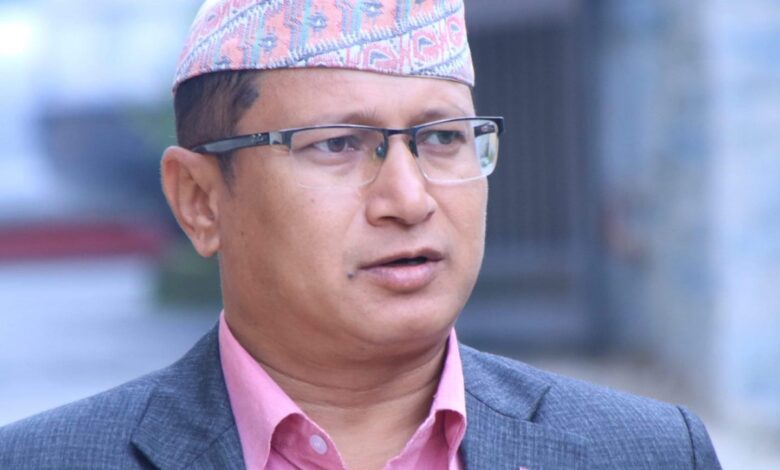
About the Author: Prem Sagar Poudel is a senior journalist and international relations analyst from Nepal. He has conducted in-depth studies on Nepal-China relations, the geopolitics of the Himalayan region, and Asian security issues.