Not Numbers, but Structure: A Study of International Experience for Nepal’s Security Reform

# Prem Sagar Poudel
Nepal’s security debate has generally remained trapped between two political slogans. One side argues that the numerical strength of the Nepali Army should be reduced, while the other regards any questioning of the Army’s size as an attempt to weaken national security. Although both positions touch sensitive public sentiments, neither fully addresses the real question of national security.
The security capacity of any country is not determined by the number of personnel alone. Clear mandates, effective command, modern technology, integrated information systems, economic capacity, professional leadership and public confidence constitute the real strength of security institutions. Personnel strength is only one component of that capacity. Successful security reforms around the world demonstrate that clarity of structure, scientific division of responsibilities and technological integration are more decisive than simply increasing or reducing numbers.
The combined strength of the Nepali Army, the Armed Police Force and Nepal Police has certainly reached a level that requires regular review in relation to Nepal’s population and economic capacity. However, there is insufficient basis to describe it as exceptionally large by global standards. Nepal’s real problem lies not so much in the size of the three institutions as in the overlap of their responsibilities, the concentration of most expenditure on routine operations, weak technological capacity, and the absence of clear integrated command and information systems during crises.
It is at this point that the security-sector reforms undertaken by China, Singapore, South Korea and Japan in recent decades can become valuable subjects of study for Nepal. The political systems, national size, economic capacities and security risks of those countries differ substantially from Nepal’s. It is therefore neither possible nor appropriate to replicate the security structure of any one country. Nevertheless, Nepal can draw important lessons from the priority they have assigned to organisation, division of responsibilities, joint operations and technology rather than to personnel numbers alone. The scope of this article, however, is centred on China’s experience because its relevance and recent reforms offer a more direct subject of study for Nepal.
Following the reforms initiated in 2015 and 2016, China introduced extensive changes to the leadership and command structure of the People’s Liberation Army. The seven former military regions were reorganised into five Theater Commands. A structure was established in which the Central Military Commission exercises overall leadership, the Theater Commands direct joint military operations, and the respective services remain responsible for personnel, training and capability development. Following the restructuring of 2024, the People’s Liberation Army comprises four services—the Ground Force, Navy, Air Force and Rocket Force—and four arms responsible for aerospace, cyberspace, information support and joint logistics. The central lesson of this reform was not the expansion of military personnel. Its principal objective was to establish a clear division of responsibilities between the structures responsible for planning, training and capability development and the commands responsible for leading actual operations.
For Nepal, this does not mean creating a Chinese-style Theater Command structure. Rather, it means developing predetermined joint coordination mechanisms for disasters, border crises, terrorist threats, cyberattacks and large-scale public emergencies. Not every aspect of China’s reform has been viewed positively. Some analysts argue that excessive centralisation has constrained the ability to make rapid decisions suited to local conditions. Nepal must therefore remain attentive to both the strengths and weaknesses of the Chinese experience.
China’s reform of the People’s Armed Police offers an even more directly relevant field of study for Nepal’s Armed Police Force. From 2018, the Chinese People’s Armed Police was removed from the dual control of the State Council and the Central Military Commission and placed under the unified leadership of the Central Military Commission. Its principal structure is now centred on internal security units, mobile forces and the Coast Guard. During the reform process, responsibilities related to gold mining, forestry, hydropower and other non-security functions were transferred to civilian institutions. Singapore’s policing system similarly emphasises a clear division of responsibility, with the roles of the civilian police, special units and internal security agencies explicitly defined by law.
Replicating that structure in Nepal would, however, be a mistake. The relationship among the party, the state and the armed institutions in China is fundamentally different from that of Nepal’s multiparty parliamentary democracy. Removing the Armed Police Force from the Ministry of Home Affairs and placing it directly under the prime minister or the National Security Council could increase political centralisation rather than clarify command. The appropriate lesson for Nepal is not to release the Armed Police Force from civilian control, but to provide it with a clear chain of command and operational authority within a framework of civilian oversight. Under normal circumstances, the Armed Police Force should remain under the Ministry of Home Affairs. During a major national crisis, its mobilisation should be governed by an explicit legal process involving the Council of Ministers, the National Security Council, the Ministry of Home Affairs and the relevant security leadership. No minister, local government or political office-holder should be permitted to deploy the force through informal instructions.
The existing responsibilities of the Armed Police Force are excessively broad. Its official mandate includes controlling armed conflict, insurgency, separatist and terrorist activities, managing riots, conducting disaster rescue operations, securing the border, controlling revenue leakage and protecting distinguished persons and important installations. Assigning so many responsibilities to a single institution obscures its fundamental institutional identity. By comparison, South Korea maintains a clearly defined division of responsibilities between the police and national security agencies, predetermining which institution will lead in a particular type of incident. It would therefore be appropriate to concentrate the Armed Police Force on frontline international border security, the management of serious riots, counterterrorism, the protection of sensitive national infrastructure and specialised disaster response. Ordinary criminal investigation, routine traffic management, local disputes and everyday law enforcement should remain the responsibility of Nepal Police.
China’s border-security system is not confined to a single armed force. The National Immigration Administration handles entry and exit, inspections at border crossings, the residence of foreign nationals and matters related to illegal immigration. Public security institutions undertake criminal investigation and local law enforcement, while the People’s Armed Police and other security structures carry out high-risk and strategic responsibilities. China has also established a legal framework for creating shared information systems among the relevant institutions. Japan’s border-security system follows a similarly layered arrangement, in which the responsibilities of the Coast Guard, immigration authorities, police and military are clearly differentiated.
Nepal likewise requires a layered but integrated arrangement for its open and poorly regulated southern border and its difficult northern Himalayan frontier. The Armed Police Force should serve as the first-line border-security force. Nepal Police should investigate human trafficking, narcotics, financial crime, smuggling networks and cross-border criminal activity. Immigration, customs and district administration authorities should discharge their respective legal and administrative responsibilities. Local communities may be involved in information gathering, the protection of border pillars and the reporting of suspicious activities. The Nepali Army should not be engaged in routine border inspection but should remain a strategic reserve in the event of a serious threat to sovereignty or an extraordinary national emergency. The principle of “one border, shared information” could be useful for this system. This would not mean that a single institution performs every function. It would mean that each institution acts within its legal authority while border-related intelligence, risk assessments, crossing-point records and incident details are made available through a shared digital system.
Another important lesson from international experience concerns the integration of police information, command and operations. Nepal Police possesses a considerable amount of information, but it remains scattered across separate systems maintained by districts, departments, investigation branches, traffic authorities, immigration offices and other government agencies. Nepal requires a secure and integrated information system linking national criminal records, digital evidence, missing persons, stolen vehicles, cross-border crime, banking fraud and cyber incidents. Singapore’s policing system offers an outstanding example, with information from all security institutions integrated into a common platform. The use of artificial intelligence, drones, facial recognition or large-scale data systems does not in itself constitute modernisation. The use of technology must be linked to clear laws, judicial oversight, personal privacy, data protection and accountability against abuse. Nepal can learn from China’s integration of technology, but extensive civilian surveillance or the use of security systems to control political dissent cannot be considered acceptable models for Nepal.
In 2025, China’s defence budget stood at 1.78 trillion yuan, equivalent to approximately US$249 billion, representing around 1.27 percent of gross domestic product. This proportion was lower than that of the United States, Russia and India. Nevertheless, China has pursued rapid military modernisation despite spending a comparatively smaller share of GDP because it has prioritised technology, training and structural reform. South Korea and Japan have similarly achieved high technological capabilities while spending less than two percent of their GDP on the military. Nepal’s defence allocation accounts for approximately 3.1 percent of the national budget, but a large proportion is spent on salaries, benefits and routine operations. Only a limited amount is directed towards capital capability development. The principal question for Nepal is therefore not simply whether the defence budget is high or low, but what capabilities are being created from the available resources. Greater investment in surveillance, aerial rescue, secure communications, cybersecurity, digital investigation and modern border management is indispensable.
Nepal also possesses strengths of its own. The international reputation of the Nepali Army in United Nations peacekeeping missions, joint exercises by all three security institutions in disaster response and the relationship between the police and local communities can be made more effective by combining them with relevant international experience. Among the reforms Nepal can implement, the first requirement is to institutionalise a national security and force-structure review. The law should make it mandatory to conduct such a review every five years. An independent commission could be formed comprising the prime minister, the leader of the principal opposition, provincial representatives, security specialists, economists, human-rights experts and professional representatives of all three security institutions. The commission’s secretariat should be permanent, technically capable and protected from partisan changes. Sensitive elements of the review should be presented to a specialised parliamentary committee responsible for security, while sections suitable for public release should be published as a white paper. The Office of the Auditor General should conduct not only financial audits of security expenditure but also performance- and outcome-based assessments. Annual progress reports on implementation should be submitted to Parliament.
Second, permanently placing the Army, the Armed Police Force and Nepal Police under a single operational command would not be appropriate for Nepal. Such an arrangement could weaken the constitutional boundary between the roles of the military and the civilian police. Instead, joint security coordination centres could be established for the eastern, central, western and special border regions. During peacetime, these centres could facilitate information sharing, joint exercises, communications testing and crisis-response planning. Actual operations should, however, remain under the leadership of the institution legally authorised to respond to the specific nature of the crisis.
Third, the jurisdiction, mobilisation authority and command structure of all three security institutions should be clearly defined by law. The Nepali Army should concentrate on national defence, strategic crises, major disasters, engineering assistance and international peacekeeping. The Armed Police Force should focus on border security, exceptional internal-security challenges and high-risk protection duties. Nepal Police should remain the principal institution for civilian law enforcement, criminal investigation, public order and community security.
Fourth, the command-and-control system of Nepal Police should be integrated and digitised. An integrated criminal database, artificial-intelligence-assisted investigative systems and digital forensic laboratories need to be developed. The law should be amended to increase the autonomy of police investigations and discourage political interference. Partnership between communities and the police should also be given an institutional form.
Fifth, an annual statement should be published detailing the total revenue earned from United Nations peacekeeping missions, the expenditure involved and their net impact on the national budget. The misconception that peacekeeping missions finance the entire expenditure of the Nepali Army should be clarified through evidence. Reintegration, psychosocial support and skills-development programmes should be provided for soldiers returning from peacekeeping missions.
Sixth, the federal police can be concentrated on interprovincial crime, organised crime, cybercrime, national-level investigations and central forensic capacity. Provincial police should handle public order, local crime and investigations within the province. Local governments could be assigned a limited role in traffic management, municipal security, emergency response and community partnerships. However, unless chains of command, investigative powers and information-sharing mechanisms are clearly established, federalism may create new centres of political control rather than bringing security services closer to citizens.
In a national survey conducted in 2022, 91.2 percent of respondents expressed full or partial confidence in the Nepali Army, 85.4 percent in the Armed Police Force and 79.7 percent in Nepal Police. Under present conditions, however, these levels may have declined considerably. Because citizens interact with the police more frequently and often under stressful circumstances, public confidence in the police is naturally more vulnerable. Political interference, pressure on investigations, inadequate resources, weak forensic capacity and a lack of transparency in transfers and promotions have made the problem even more serious. Comparatively lower confidence in the police should be treated as a warning requiring reform, not as a justification for politically weakening the institution.
Public confidence is not merely a measure of an institution’s popularity. It represents the legitimacy of the entire security system. When citizens do not regard the police as impartial, they do not report crimes, hesitate to serve as witnesses and begin seeking alternative centres of power instead of relying on legal procedures. Strengthening investigative independence, professional leadership, controls against political interference and citizen-friendly services is therefore more decisive than simply expanding police numbers.
Ultimately, the most important lesson Nepal should learn from international experience is not how to make one institution all-powerful. It is how to clarify responsibility, command and accountability. Nepal can learn clarity of command from China, but not the absolute control of a single party. It can learn the use of technology, but not uncontrolled surveillance of citizens. It can learn joint operations, but not the militarisation of civilian policing. It can learn determination in organisational reform, but not by displacing Nepal’s Constitution, human rights and multiparty democracy.
Nepal also has its own distinct characteristics. It is not a country at war, but a nation still moving through the transition from internal conflict. It is a federal democratic republic situated at the centre of geopolitical competition among major powers. Nepal’s security reform must therefore absorb all these particular realities.
Nepal does not need a security structure that appears large in size but remains technologically weak. Nor does it need a smaller structure that saves money yet proves ineffective in times of crisis. What it requires is scientifically determined personnel strength, clear constitutional mandates, modern capabilities, a defined division of federal responsibilities, public confidence and a professional security system operating under elected civilian leadership.
Reducing numbers alone is not reform. Increasing numbers alone is not security. Genuine security policy lies in maintaining an appropriate balance among national risks, economic capacity and institutional responsibilities. The central lesson of international experience is precisely this: the strength of a security institution does not lie in how many people it employs, but in the clarity of purpose, effectiveness of structure and modern capabilities it provides to those personnel.
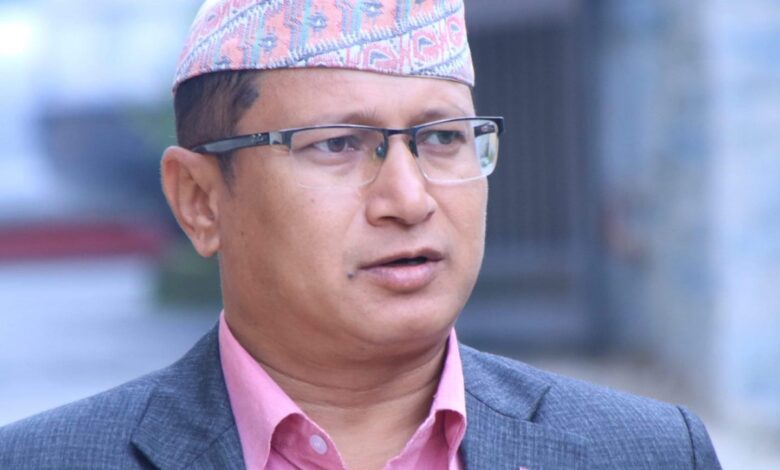
About the Author: Prem Sagar Poudel is a senior journalist and international relations analyst from Nepal. He has conducted in-depth studies on Nepal-China relations, the geopolitics of the Himalayan region, and Asian security issues.