Russia Promotes No First Placement of Weapons in Outer Space Initiative in Geneva

Dragon Media News Desk
Russia has renewed its call for preventing an arms race in outer space, presenting its international initiative on the No First Placement of Weapons in Outer Space during a seminar held in Geneva.
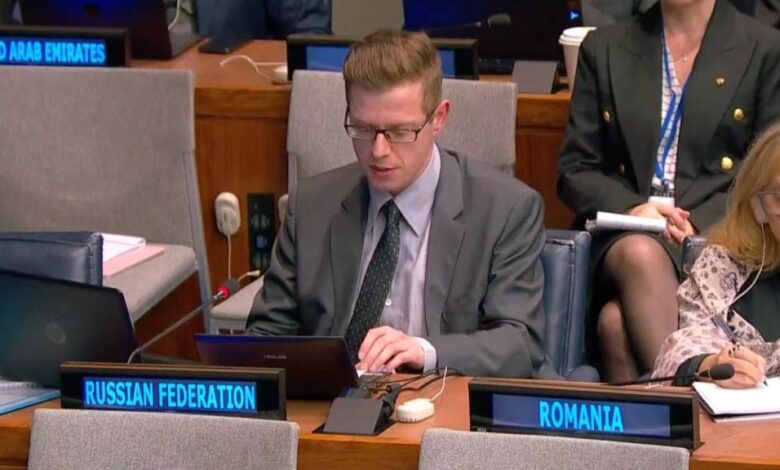
The event was organized by the Russian Federation on July 9 on the margins of the third session of the United Nations Open-Ended Working Group on the Prevention of an Arms Race in Outer Space. The initiative is aimed at preventing outer space from becoming a theatre of military confrontation and at creating conditions for a future legally binding international mechanism on space security.
The seminar was attended by representatives of UN member states, including countries that have joined the initiative, as well as officials from the Geneva branch of the UN Office for Disarmament Affairs, the United Nations Institute for Disarmament Research and representatives of various non-governmental organizations.
Konstantin Vorontsov, Deputy Director of the Department for Non-Proliferation and Arms Control at the Russian Foreign Ministry and head of the Russian delegation to the OEWG session, delivered a presentation on the No First Placement initiative. He explained its objectives, key elements and practical relevance, and responded to questions from participants.
Russia has presented the initiative as a political confidence-building measure that can be implemented immediately while negotiations on a legally binding treaty remain distant. According to the Russian position, a commitment not to be the first to place weapons in outer space can help increase transparency, reduce tensions and preserve outer space for peaceful use.
The discussion also highlighted the importance of the draft Treaty on the Prevention of the Placement of Weapons in Outer Space and of the Threat or Use of Force against Outer Space Objects, known as the PPWT. The draft treaty was submitted by Russia and China to the Conference on Disarmament in 2008 and updated in 2014. Moscow and Beijing have argued that the PPWT can serve as the basis for future negotiations on a legally binding international instrument on the prevention of an arms race in outer space.
The issue has become increasingly sensitive as major powers rely more heavily on space-based systems for communications, navigation, weather forecasting, financial networks, disaster management and national security. Any arms race in outer space could therefore have consequences far beyond the military domain, affecting civilian infrastructure and the global economy.
Russia has argued that while the conclusion of a legally binding instrument remains a long-term objective, the No First Placement initiative is currently one of the most practical measures available to prevent the deployment of weapons in outer space. Participants at the seminar underlined that such an initiative could contribute to transparency, reduce strategic mistrust and create a foundation for future legal arrangements.
The Russian Federation said it values the constructive position and positive contribution of many states in the discussion. Moscow also reaffirmed its intention to continue promoting the initiative as part of broader efforts to keep outer space free from all types of weapons.
The Geneva discussion shows that space security is no longer only a scientific or technological matter. It has become a central issue of global politics, strategic stability and international law. While the No First Placement initiative is not yet a legally binding treaty, it may serve as a bridge toward a future international legal framework aimed at preventing the militarization of outer space.