China Targets 3.5 Billion Kilowatts of Renewable Energy Capacity by 2030

Dragon Media News Desk
China has officially released its renewable energy development plan for the 15th Five-Year Plan period covering 2026 to 2030.
Jointly issued by the National Development and Reform Commission and the National Energy Administration, the plan aims to move China’s renewable energy sector into a new stage marked by large-scale expansion, improved quality and reliable substitution for conventional energy sources.
Under the plan, China’s total renewable energy consumption is expected to reach the equivalent of 1.8 billion tonnes of standard coal by 2030, up significantly from about 1.18 billion tonnes in 2025.
The country’s total installed renewable power generation capacity is projected to reach approximately 3.5 billion kilowatts by 2030, with annual electricity generation of around 6 trillion kilowatt-hours.
The combined installed capacity of wind and solar power is expected to exceed 2.8 billion kilowatts, accounting for more than half of China’s total power generation capacity.
Annual electricity generation from wind and solar power is projected to surpass 4 trillion kilowatt-hours, with the two sources expected to contribute around 30 percent of the country’s total electricity output.
China also plans to expand renewable energy use beyond power generation into industry, transport, buildings, heating, cooling and green fuel production.
By 2030, the non-electric use of renewable energy is expected to rise to the equivalent of around 150 million tonnes of standard coal, about 1.5 times the 2025 level.
The plan gives priority to energy storage, multi-energy coordination and the development of a new-generation power grid to manage fluctuations caused by the growing share of wind and solar energy.
China aims to increase installed pumped-storage hydropower capacity to around 160 million kilowatts by 2030 and develop more than 300 million kilowatts of additional reliable renewable capacity capable of meeting peak electricity demand.
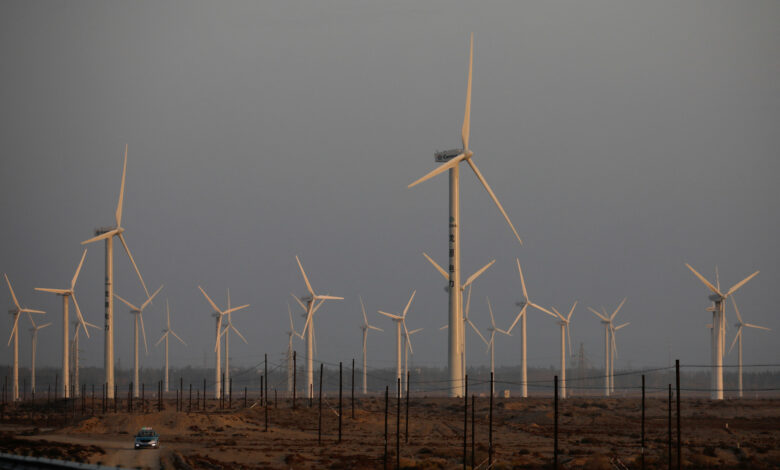
The country will continue building large wind and solar power bases in deserts, the Gobi region and other unused land areas. It will also expand locally consumed renewable projects, offshore wind power, rural solar systems and combined agricultural and renewable energy projects.
The plan includes further development of biomass, geothermal, solar thermal and marine energy.
By 2030, China aims to raise installed solar thermal power capacity to 15 million kilowatts and marine energy capacity to 400,000 kilowatts.
Renewable energy is defined in the plan as energy replenished through natural processes within a relatively short period, including hydropower, wind, solar, biomass, geothermal and marine energy.
The term “new energy” refers to all renewable energy sources other than hydropower.
The plan is designed to strengthen China’s energy security, gradually replace coal and other fossil fuels with cleaner energy sources, and adapt the country’s power grid, storage capacity and market mechanisms to the rapid expansion of renewable energy.