Xi Jinping’s Party-Building Concepts Useful Globally: Experts


Dragon Media News Desk
Experts have said that Chinese President Xi Jinping’s concepts of discipline, self-review, people-centered governance and anti-corruption could be useful for building and effectively operating political parties in Nepal and elsewhere in the world.
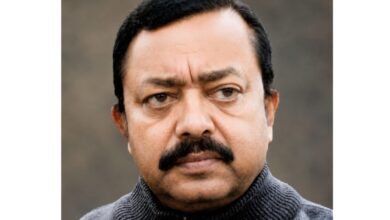
The views were expressed at a program organized in Kathmandu by Friends on Cloud. Politician Jagannath Khatiwada, foreign affairs expert Dr. Gopal Khanal, former ambassador Mahesh Raj Dahal, researcher Dr. Deepak Devkota and the organization’s Chair Shobhit Upreti discussed different dimensions of President Xi’s approach to party building.
Former ambassador Dahal said President Xi’s habit of extensive study, long-term vision and experience at the grassroots had become important foundations for party and national development.
According to Dahal, Xi continued studying even under difficult circumstances. He said Xi’s prolonged struggle to obtain party membership helped him develop a deeper understanding of how a political party should function and what responsibilities its leaders and members should carry.
Dahal said Xi had demonstrated that leadership based on a clear vision, creativity and transformative thinking could contribute to the development of both a party and a country. He identified the anti-corruption campaign, internal party integrity, leadership responsibility, technological development, investment in science and public participation as major elements of Xi’s party-building approach.
Researcher Dr. Devkota said President Xi had achieved success by building public confidence in the state rather than creating fear. He said China’s people-centered approach to party and national development had strengthened public trust in the country’s leadership.
Devkota said Xi’s concept emphasizes good governance, public security, accountable leadership and solutions to problems directly affecting people’s lives in order to build a party that can earn public confidence.
Foreign affairs expert Dr. Khanal said socialism with Chinese characteristics for a new era, strict internal party governance and concepts related to global governance were important elements of President Xi’s party-building vision.
Citing figures presented at the program, Khanal said more than seven million people had faced action in China over financial irregularities and violations of party discipline. He praised the governance and anti-corruption campaign carried out under Xi’s leadership.
Politician Khatiwada said discipline, regular monitoring and self-review formed the foundation of President Xi’s approach to party and national development.
He said political organizations become disconnected from the public when they lack regular systems for reviewing policies, leadership and performance. He therefore emphasized the need to continue the practice of institutional self-improvement.
Khatiwada said the effectiveness of a political party should not be measured only by the expansion of its organization or the number of its members. He stressed that ideology, discipline, responsibility, performance and accountability to the public should receive equal priority.
Friends on Cloud Chair Upreti said the program aimed to promote open discussion of political and governance experiences from different countries.
He said China’s party-building experience should not necessarily be copied in its entirety, but its useful elements—including discipline, public accountability, self-review, long-term planning and corruption control—could be studied in accordance with Nepal’s political and social context.
The speakers concluded that political parties require clear ideas, capable organizations, internal discipline, regular evaluation, public participation, effective use of technology and zero tolerance for corruption in order to operate successfully.