Chinese Animation ‘All Wishes Come True!’ Earns 668 Million Yuan

Dragon Media News Desk
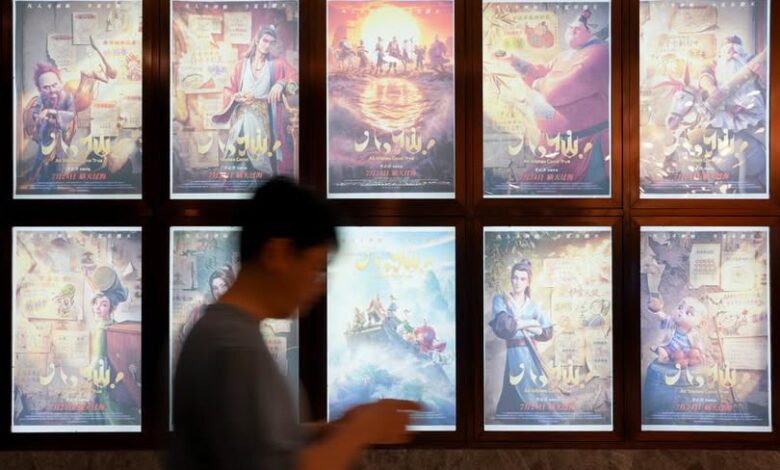
The Chinese animated feature “All Wishes Come True!” has emerged as one of the biggest hits of the summer season, presenting a new interpretation of the ancient Taoist legend of the Eight Immortals.
Inspired by the traditional story of the Eight Immortals crossing the sea, the film imagines the legendary figures as ordinary people before they attain immortality. Rather than portraying them as all-powerful deities, the story presents them as imperfect individuals who gradually discover courage, justice and responsibility.
The film is set in an imagined Penglai fairyland, where celestial beings are assigned temples, ranked according to incense offerings and evaluated through key performance indicators, or KPIs. The use of a modern workplace-style bureaucracy gives the ancient mythical world a contemporary and humorous character.
The story begins when the mortal world faces an impending catastrophe. Lyu Dongbin travels to Penglai, where eight unlikely companions are brought together through a plan to impersonate immortals and infiltrate a treasure vault.
Initially driven by personal interests, the characters begin to change when innocent lives are placed in danger. They ultimately choose justice over selfishness, save the people and earn their immortality through personal transformation.
Director and screenwriter Mou Zhengyang said portraying the characters as young, flawed mortals rather than omnipotent gods was a deliberate effort to create a stronger emotional connection with contemporary audiences.
According to Mou, true immortality in the film does not come from supernatural powers. It emerges from inner transformation, personal growth and the awakening of responsibility.
The unconventional interpretation has received a strong response from Chinese audiences. The film earned 400 million yuan, or about $58.88 million, within five days of its release on July 18.
According to Chinese film data platform Maoyan, its total box office revenue had reached 668 million yuan by Sunday morning. The film also received an initial score of 8.3 out of 10 on the Chinese review platform Douban.
The film has generated wide discussion on Chinese social media. A Douban user named “Zhipang” compared its expansive mythological setting with the Marvel Cinematic Universe, arguing that the world of the Eight Immortals offers similar potential for future stories.
Song Lei of the China Animation Comic Game Group praised the film’s contemporary reinterpretation of traditional culture. He said transforming Penglai into a bureaucratic workplace turned the ancient legend into a light comedy about treasure hunting, personal growth and self-discovery.
Market data show that the film has performed particularly well in smaller cities and counties, while also attracting audiences from a broad range of age groups.
Weng Yang, an associate professor at the Beijing Film Academy, attributed its wide appeal partly to innovative cross-sector marketing. She said offering blind boxes with ticket purchases and displaying local intangible cultural heritage crafts helped connect cinema, traditional culture and consumer products.
The film combines traditional Eastern aesthetics with modern animation technology. Producer Cao Linlin said the production team conducted extensive field research at cultural and historical sites across China, including Yongle Palace in Shanxi Province and Qingcheng Mountain in Sichuan Province.
Its visual design incorporates fish-drawn chariots inspired by ancient murals. The film also draws its colour palette from traditional Chinese New Year paintings and folk art, presenting Chinese cultural imagery through modern animation.
The production contains numerous cultural references associated with Sichuan Province. The Chengdu Hi-tech Industrial Development Zone, where the film was developed, has become one of China’s leading centres for digital culture and creative industries.
The area is also associated with globally recognised productions and products, including the “Ne Zha” animated film franchise and the mobile game “Honor of Kings.” More than 6,000 digital cultural enterprises currently operate in the zone.
At the provincial level, Sichuan’s core digital cultural and creative industries generated revenue of 413.97 billion yuan in 2025. The province has developed a diverse industrial structure covering Chinese-style animation, video games, esports and creative design.
Industry experts say Sichuan’s support for audiovisual production extends beyond providing locations and production facilities. It has also encouraged deeper integration between local culture, urban development and the creative economy.
Film industry observers view the success of “All Wishes Come True!” as evidence of the growing maturity of China’s animation sector. A decade of successful films inspired by Chinese mythology and folklore has helped strengthen the domestic market and expand the development of original cultural intellectual property.
The film is scheduled for overseas release in August, with screenings planned in Australia, New Zealand, North America, the United Kingdom and several European countries.
Mou said technology is no longer the main obstacle facing Chinese animation. In his view, the difference between Chinese and Western animation now lies mainly in cultural expression rather than technical capability.
“We share similar narrative logic but possess unique cultural expressions,” he said. “Only local creators can tell authentic Chinese stories well.”