55 Years Since the India–Soviet Treaty of Peace, Friendship and Cooperation

Dragon Media News Desk
Fifty-five years have passed since the signing of the India–Soviet Treaty of Peace, Friendship and Cooperation, a landmark agreement widely regarded as an important foundation of the long-term friendship and strategic relationship between Russia and India.
The historic treaty was signed in New Delhi on August 9, 1971, between the then Soviet Union and the Republic of India.
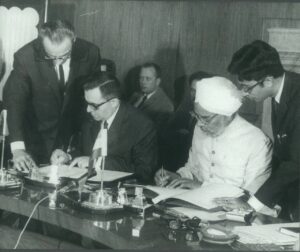
It was signed by Soviet Foreign Minister Andrei Gromyko and Indian External Affairs Minister Sardar Swaran Singh, establishing an institutional framework for long-term political trust and cooperation between the two countries.
The treaty emphasized respect for sovereignty, equality, non-interference in internal affairs and the development of relations on the basis of mutual interests. It also created a broader framework for expanding cooperation in economic, scientific, technical and other fields.
Concluded amid the complex geopolitical environment of South Asia in 1971, the treaty carried considerable regional significance at the time. In the decades that followed, relations between India and the Soviet Union, and subsequently the Russian Federation, expanded across defence, energy, space, science and technology, trade, education and cultural exchanges.
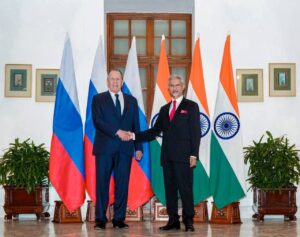
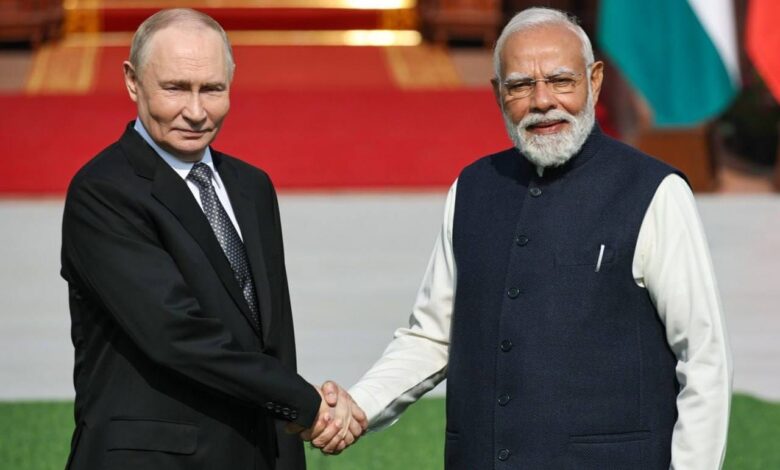
Following the dissolution of the Soviet Union, Moscow and New Delhi continued to preserve and deepen their longstanding relationship. In 2000, India and Russia established a Strategic Partnership, which was elevated in 2010 to the level of a “Special and Privileged Strategic Partnership.”
Today, bilateral cooperation continues through established institutional mechanisms covering political and security dialogue, defence and military-technical cooperation, trade and economic relations, science and technology, energy, culture and people-to-people exchanges.
While the 1971 Treaty of Peace, Friendship and Cooperation is not the sole foundation of the contemporary Russia–India relationship, it remains an important historical milestone symbolizing the long-term trust, mutual respect and strategic continuity that have shaped relations between the two countries for more than five decades.