Daofu Advances New Model for Preserving Intangible Cultural Heritage by Linking Traditional Skills with Tourism and Industry

Dragon Media News Desk
Daofu County in Garze Tibetan Autonomous Prefecture, Sichuan Province, China, is advancing a new approach to preserving, transmitting and innovating intangible cultural heritage by linking traditional craftsmanship with rural revitalization and modern industry.
The county’s standardized intangible cultural heritage workshop is located near Yiri Bridge along National Highway G350, also known as the Panda Highway. Covering about 29 mu of land, the two-story facility has a total floor area of 3,915 square meters.
The center is designed not only as a venue for preserving and displaying intangible cultural heritage, but also as a platform for promoting local cultural industries and supporting rural revitalization.

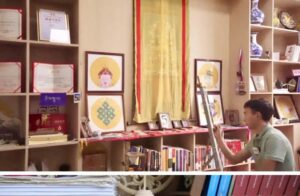
It brings together traditional crafts including Tibetan paper-making, Thangka painting, pottery, Tibetan incense, traditional horse gear, Tibetan clothing and other forms of handicraft, connecting them with modern production, tourism and market development.
The first floor serves as an exhibition and sales area for intangible cultural heritage items and related cultural and creative products.
The second floor houses studios for 13 officially recognized inheritors of intangible cultural heritage at the provincial, prefectural and county levels.
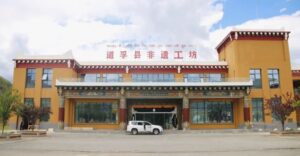

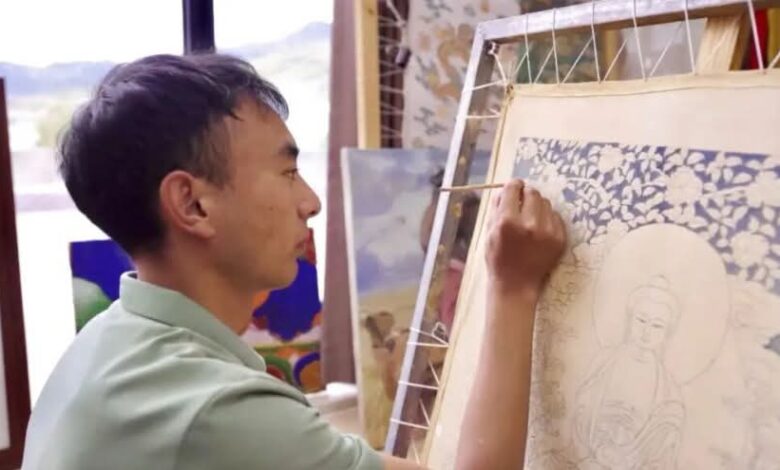
A distinctive feature of the workshop is that the production process is open to visitors. Tourists and journalists can observe and experience traditional techniques such as Thangka painting, pottery-making and Tibetan paper production at close range.
Craftspeople engaged in Tibetan paper-making are also expanding beyond traditional uses by developing notebooks, umbrella coverings and other cultural and creative products.
The center combines on-site cultural experiences with e-commerce and online promotion. Livestreaming is being used to introduce Tibetan paper-making techniques and related cultural traditions to wider audiences.
Young Thangka inheritor Konchok Tashi has said that many young craftspeople with traditional skills are forced to abandon their crafts because of economic pressures. He expressed hope that by transforming traditional skills into products with market value, more young people could be encouraged to participate in the preservation and transmission of intangible cultural heritage.
Since the workshop was established, previously scattered local heritage practices, including Thangka painting, Tibetan paper-making, pottery and traditional horse equipment, have been brought together within a more systematic institutional framework.
A digital archive has also been created, documenting and preserving records of more than 70 local intangible cultural heritage projects.
The initiative reflects an effort to move intangible cultural heritage beyond preservation and display alone by integrating it with creation, training, tourism, market development and rural revitalization.
Daofu’s model is increasingly serving as an example of how local cultural resources can be transformed into a source of both cultural continuity and broader social and economic development.