Russia Accuses EU of Unlawful Actions Against Foreign Vessels

Dragon Media News Desk
Russia has accused the European Union of using Operation Irini in the Mediterranean to obstruct maritime transportation of oil and other cargo linked to Russian interests.
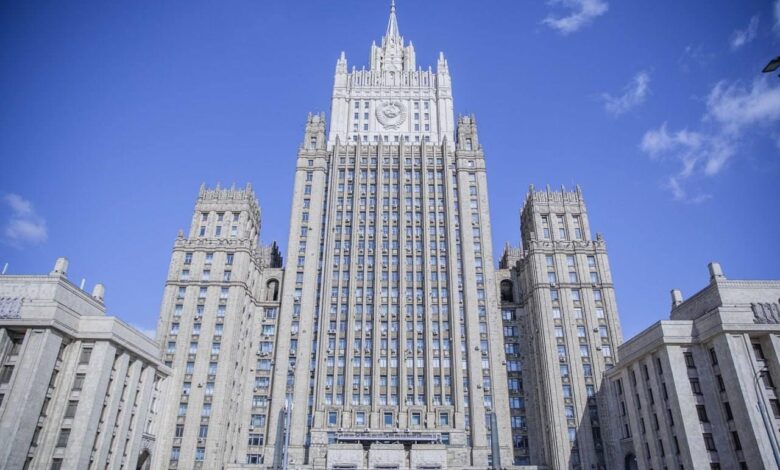
In a statement issued on August 12, the Russian Foreign Ministry said European military forces had been inspecting foreign commercial vessels and described such actions as an improper interpretation of international maritime law and an attempt to enforce unilateral restrictive measures.
The ministry cited the August 2 inspection of the Cameroon-flagged vessel Toa Payoh in the Mediterranean as a recent example. According to the Russian statement, Italian military personnel carried out the inspection with assistance from a Polish patrol aircraft and a Greek patrol vessel.
Russia said the Italian side had explained that the inspection was conducted to verify the vessel’s nationality and flag status. The search reportedly lasted around two hours, after which the vessel was allowed to continue its journey.
The Toa Payoh is among vessels placed on the European Union’s restrictive list over alleged involvement in the transportation of Russian oil and petroleum products and in maritime practices that Brussels considers high-risk.
Operation Irini was launched in 2020 primarily to support enforcement of the United Nations arms embargo on Libya. Its broader functions have also included gathering information on illicit exports of Libyan petroleum, monitoring human-smuggling and trafficking networks, and contributing to maritime situational awareness.
Russia specifically noted that the special authorisation granted under UN Security Council Resolution 2292 for inspections on the high seas of vessels bound to or from Libya expired in May 2026.
However, the European Union’s overall mandate for Operation Irini remains in force until March 2027. Since March 2026, the EU has said it may rely in certain circumstances on Article 110 of the UN Convention on the Law of the Sea to verify a vessel’s right to fly a particular flag.
Moscow argues that such authority cannot legitimately be used as a mechanism to inspect vessels alleged to be connected with Russian oil transportation or to enforce unilateral EU sanctions.
According to the Russian Foreign Ministry, although maritime law permits verification of a ship’s flag in limited circumstances, using that authority for political pressure or to identify vessels associated with the so-called “shadow fleet” is legally questionable.
The ministry stressed that internal EU decisions cannot override the fundamental freedoms of navigation guaranteed under the 1982 United Nations Convention on the Law of the Sea.
Russia also warned that such practices could increase uncertainty for commercial shipping and risk establishing precedents that go beyond the recognised limits of international law.