Deuba Says He Returned Not to Seek Power, but to Strengthen National Unity

Dragon Media Correspondent
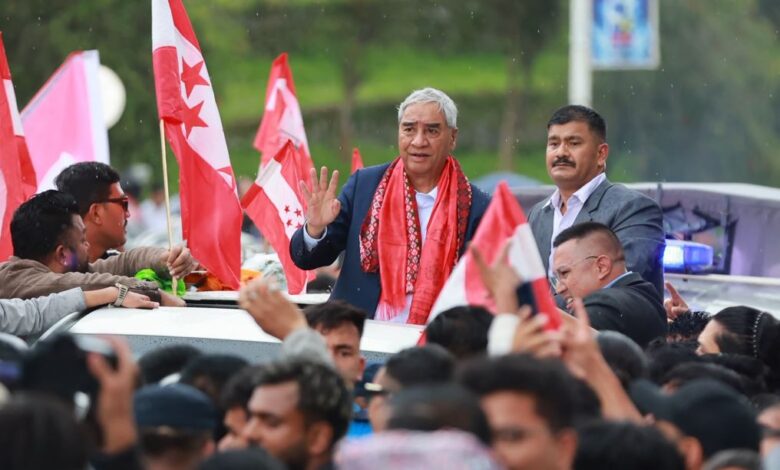
Former Nepali Congress president and former prime minister Sher Bahadur Deuba has said that he returned to Nepal not to seek political power, but to strengthen national unity and dedicate himself to serving the country.
Returning home on Thursday after nearly five months of medical treatment abroad, Deuba issued a two-page public appeal dated Saun 28 outlining his views on national politics, the aspirations of the younger generation for change, the responsibilities of the current government, internal unity within the Nepali Congress and the party’s future political role.
Expressing gratitude to all those who had shown concern, goodwill and support during his treatment, Deuba said he had returned as a “humble servant” ready to listen, learn and dedicate himself to the journey of building a prosperous nation.
Deuba described the democratic history of the Nepali Congress not as the property of any individual or group, but as a responsibility entrusted to the party through public confidence. Recalling the contributions of BP Koirala, Subarna Shumsher Rana, Ganesh Man Singh, Krishna Prasad Bhattarai and Girija Prasad Koirala, among others, he said it was the party’s responsibility to pass the legacy of struggles for democracy, freedom and development to the new generation.
A major part of Deuba’s appeal was directed toward the younger generation. He said that as the world changes, the Nepali Congress must also internalize the changes demanded by young people and lead efforts to ensure their meaningful participation across all classes, communities and sectors of society.
Recalling that he had earlier called for the legitimate demands of the Gen Z movement to be addressed, Deuba said change was inevitable. At the same time, he argued that the advancement of a new generation should not mean completely rejecting the contributions and experience of earlier generations.
He said his generation had spent decades struggling for democracy, freedom and the rights of different ethnic groups, regions and communities, and that those historic contributions should not be overshadowed by negativity. Cooperation between the experience of the older generation and the energy and creativity of the younger generation was necessary, he said.
Deuba also addressed the current government directly. He said there was a strong public expectation for major change and that responding to those expectations was the government’s responsibility. The government, he added, should not allow political bias or partisan considerations to distract it from that duty.
He said any party that comes to power through a fresh public mandate must respect the people’s vote, stressing that in a democracy, the people remain supreme. Deuba said the Nepali Congress was prepared to support a process of managing change based on wisdom, transparency and justice.
Another central theme of the appeal was internal unity within the Nepali Congress. Deuba said the party must first remain united and then move forward through consensus and cooperation with other active political forces in the country. He said Nepal’s Constitution was the product of a long struggle and sacrifice and must be protected, while any necessary amendments should be pursued on the basis of national consensus.
Referring to recent internal disagreements and frustration within the party, Deuba said solutions must be found through dialogue and collective responsibility. He stressed that the Nepali Congress was not the private property of any individual and must continue to place the broader interests of the people at the centre of its politics.
He called on party leaders, cadres, well-wishers, supporters and voters to move forward with confidence in collective leadership while respecting the values of sacrifice, struggle and political commitment.
Deuba said he firmly believed that younger leaders must move forward, but rejected the narrative that all experienced leaders represented the past in a negative sense. He said the party could still draw lessons from his political experience and that sharing those experiences with the new generation remained one of his responsibilities.
Noting that many party members had become discouraged, Deuba called for renewed efforts to rebuild morale and reconnect different political sentiments within the Nepali Congress. He urged all leaders and cadres to contribute actively to that process.
Deuba also recalled BP Koirala’s return to Nepal from exile in India in 1976, when Koirala called for unity between nationalist and democratic forces. Nearly five decades later, Deuba said, Nepal once again needed a broad sense of national unity.
“I have returned not to seek power, but to strengthen national unity,” Deuba said, calling for past divisions and wounds caused by political hostility to be healed through reconciliation rather than retaliation.
He said criticism and counter-criticism were natural for anyone who had held public office, but maintained that throughout his political life he had placed the nation, democracy, citizens, the Constitution and the law above personal interests. He also reiterated his commitment not to compromise on national interest, democracy, constitutionalism, the rule of law or ethical values.
Concluding his appeal, Deuba said he had returned not merely as a political leader, but as a lifelong citizen of the country, ready to serve Nepal with humility, dedication and goodwill.