Kishor Shrestha’s Wife Condemns Arrest, Says Government Is Becoming Increasingly Authoritarian Toward Journalists

Dragon Media Correspondent
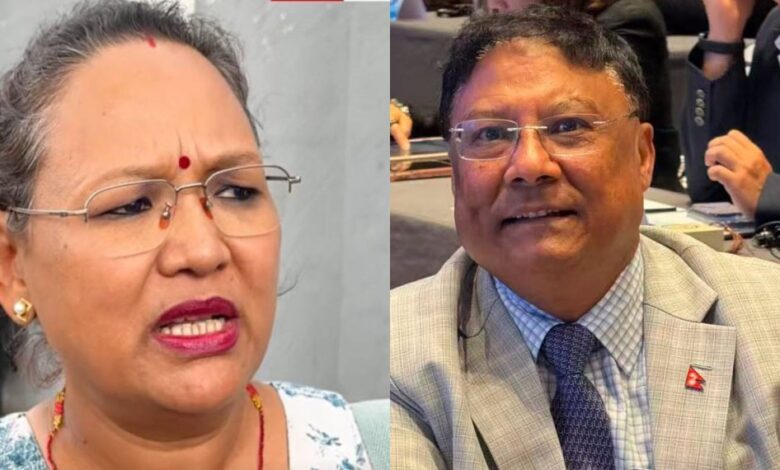
Saraswati Shrestha, wife of Jan Aastha Weekly Editor-in-Chief and senior journalist Kishor Shrestha, has strongly objected to her husband’s arrest, the late-night search of their residence and the police operation at the Jan Aastha office.
Speaking to journalists on Thursday after she was denied permission to meet her husband at the Kathmandu District Police Range in Bhadrakali, Saraswati accused the government of becoming increasingly authoritarian toward journalists. She described the latest developments as serious pressure on press freedom and said democratic practices in the country were being weakened.
Police arrested Shrestha on Wednesday evening. Authorities have said he is under investigation over an alleged offence related to individual privacy. Police also searched the Jan Aastha Weekly office on Thursday morning and seized computers and other electronic materials.
Saraswati, however, questioned whether publication of the photograph at the centre of the dispute could be treated as a violation of privacy, arguing that the person concerned had herself posted the image publicly on social media.
She said her husband had worked in journalism for around 38 years and had previously served as chairman of Press Council Nepal, arguing that he was well aware of journalistic boundaries, professional responsibilities and media ethics.
Saraswati also alleged that a disproportionately large number of police personnel had been deployed to arrest Shrestha. According to her, the couple had gone out for an evening walk near their home when police took him into custody. She questioned why police could not simply have summoned him for questioning instead of deploying a large force.
She further claimed that when she asked to see an arrest warrant, police were initially unable to produce one and brought it only after some time. Police, however, have maintained that Shrestha was arrested for investigation on the basis of judicial authorization.
According to Saraswati, police arrived at their residence several hours after Shrestha had been taken to the police office. She questioned both the timing and manner of the late-night search, saying she was alone at home at the time.
She also said police appeared particularly focused on locating Shrestha’s mobile phone. According to her, she repeatedly told officers that she did not know where the device was.
Saraswati demanded that police also investigate other individuals and circumstances connected with the news report that preceded Shrestha’s arrest. She raised questions concerning alleged delivery of alcohol, financial transactions and other activities mentioned in the broader controversy, arguing that those aspects should also be investigated impartially.
During her remarks, she referred specifically to a woman named Kajal Agrawal and alleged that she was connected to the delivery of a bottle of alcohol and to a financial transaction. These allegations have not been independently verified, and no immediate public response from the person concerned was available.
“Should police arrest Kishor Shrestha or Kajal Agrawal?” Saraswati asked, accusing authorities of focusing action on the journalist without adequately investigating the underlying events reported by Jan Aastha.
She said there should be no compromise in protecting women from injustice, but argued that neither women nor men should be exempt from journalistic scrutiny when matters of legitimate public interest are involved.
“Anyone who speaks against them is being silenced,” she said, comparing the current situation to the Rana-era style of rule. She warned that if such practices continued, actions being taken against Kishor Shrestha today could be directed against other journalists tomorrow.
Following Shrestha’s arrest, several media organisations, including the Federation of Nepali Journalists, Press Council Nepal and Nepal Media Society, have expressed concern over the case. They have stressed that disputes arising from published journalistic content should be addressed through established legal and institutional mechanisms related to the press.
Police, on the other hand, have maintained that the investigation concerns an alleged violation of privacy rights and that electronic materials were seized as part of the legal investigation process.
The case has consequently intensified debate over the sensitive legal boundary between freedom of the press and an individual’s right to privacy. The factual basis of the additional allegations and questions raised by Saraswati Shrestha remains to be established through responses from the concerned parties and an impartial investigation.