Traditional Shoton Festival Begins in Lhasa, Giant Buddha Thangka Unveiled at Drepung Monastery

Dragon Media News Desk
The traditional Shoton Festival has begun in Lhasa, the capital of China’s Xizang Autonomous Region, with the unveiling of a giant Buddha thangka at the historic Drepung Monastery serving as one of the festival’s main attractions.
Early on Wednesday morning, monks carried the enormous rolled-up thangka in a ceremonial procession to the display site. The giant religious painting was then unfurled along a hillside, drawing thousands of devotees and visitors.
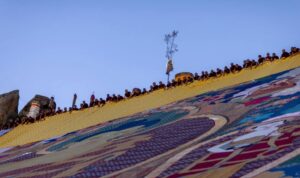
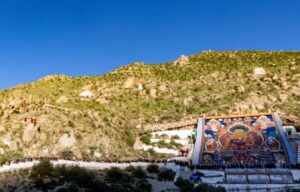
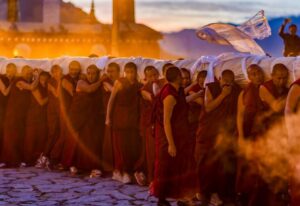

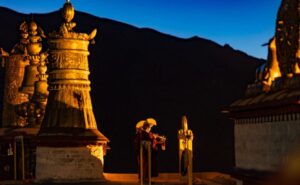
The thangka unveiling is regarded as one of the most important religious and cultural traditions marking the beginning of the Shoton Festival. Monks also performed religious rituals and played traditional ceremonial instruments during the event.
Shoton is one of the most significant traditional festivals in Xizang. In the Tibetan language, “Sho” refers to yogurt and “Ton” to a feast or celebration, which is why the event is also commonly known as the Yogurt Festival. Over time, it has developed into a broader cultural celebration featuring religious ceremonies, Tibetan opera, traditional performances and community gatherings.
The festival has deep roots in Tibetan Buddhist tradition. It is believed to have evolved from the custom of local communities offering yogurt to monks after periods of intensive religious retreat.


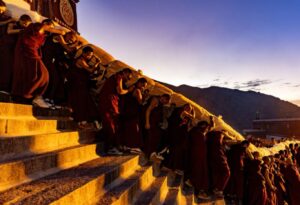
The giant Buddha thangka display at Drepung Monastery is among the festival’s most symbolic events. Because the monumental religious image is displayed publicly only for a limited period, large numbers of devotees gather at the monastery from early morning to pay their respects.
This year, the procession of monks carrying the thangka, religious ceremonies, traditional music and the large gathering of worshippers once again created a distinctive spiritual and cultural atmosphere at Drepung Monastery.
The Shoton Festival brings together the religious traditions, artistic heritage, community life and cultural identity of Xizang. This year’s celebrations in Lhasa also highlight the continuing preservation of longstanding traditions and their transmission to younger generations.