US Prosecutor’s Unpublished Diaries Resurface After 80 Years, Adding New Evidence on Nanjing Massacre

Dragon Media News Desk
Six previously unpublished diaries written by David Nelson Sutton, a US prosecutor involved in investigating Japanese war crimes after World War II, have resurfaced 80 years later, bringing renewed attention to a significant historical chapter concerning the Nanjing Massacre and the investigation of atrocities committed by Japanese forces in China.
In an entry dated April 7, 1946, Sutton briefly noted the weather in Nanjing before recording his visit to a site along the Yangtze River where around 6,000 people had reportedly been machine-gunned by Japanese troops. He travelled to the location as part of efforts to collect evidence related to the mass killing.
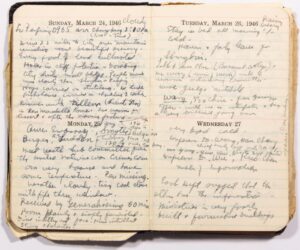
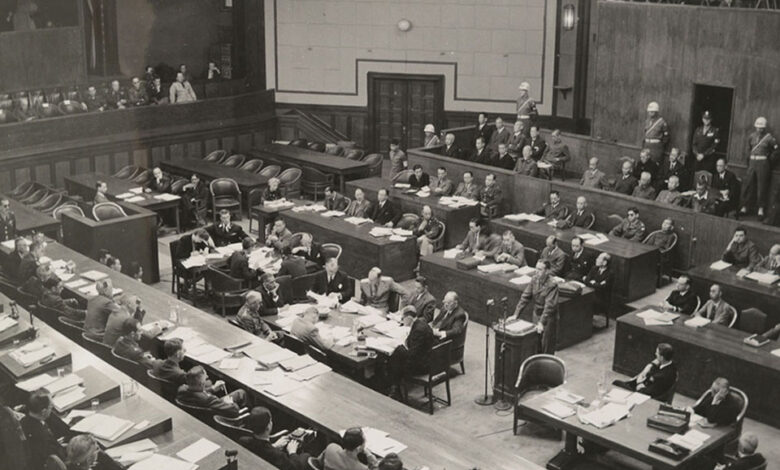
Sutton served as an assistant prosecutor with the International Prosecution Section of the International Military Tribunal for the Far East, commonly known as the Tokyo Trial. He was assigned to investigate Japanese war crimes committed in China, including the Nanjing Massacre and other atrocities.
According to his diaries, Sutton received formal instructions in March 1946 to travel to Shanghai, Nanjing, then-Peiping, now Beijing, and other locations to investigate war crimes. He recorded arriving in Nanjing at 11:20 a.m. on April 2 before beginning visits to crime scenes, interviewing witnesses and gathering documentary evidence.

Working with Chinese officials, foreign missionaries, physicians, survivors and other witnesses, Sutton collected testimony, casualty records, photographs of mass graves and additional material that was later used as evidence during the Tokyo Trial.
Chinese prosecutors Xiang Zhejun and Qiu Shaohong also worked closely with Sutton during the investigation. In June 1946, Sutton helped arrange for more than 10 Chinese and foreign witnesses to travel to Tokyo to testify before the tribunal. His private records indicate that he personally advanced travel and accommodation expenses for four important Chinese witnesses.
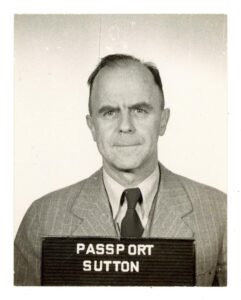
The diaries offer a personal account of the difficult work behind the formal evidence eventually presented in court. In his entry for May 3, 1946, the opening day of the Tokyo Trial, Sutton described the atmosphere in the courtroom and recorded his impressions of the defendants.
The six original diaries, written between 1946 and 1948, were among 18 rare archival items transferred on April 29 this year to the Memorial Hall of the Victims in Nanjing Massacre by Japanese Invaders in Jiangsu Province.
The collection also includes investigative reports prepared by Sutton under the title “Reports from China.” These documents contain material not only on mass killings and violence against civilians, but also on biological warfare, narcotics trafficking and allegations that Chinese farmers were forced to cultivate opium.
Researchers say the records provide insight into how Japanese wartime policies affected not only the battlefield but also civilian society, public health and local economies.
The archival material was brought back to China by young Chinese collector Zhou Dehui. He reportedly discovered the documents in November 2025 through a US auction platform specialising in military historical material. After examining photographs and descriptions and determining that the papers belonged to Sutton, he acquired them and arranged for their return to China.
Researcher Yang Xiaming has suggested that the documents may have been connected to a folder that disappeared from the Sutton collection at the University of Richmond during an external digitisation process in 2009. The material is believed to have subsequently entered the private market before appearing at auction.
Officials at the Nanjing memorial hall regard Sutton’s diaries as important primary historical sources on Japanese war crimes. While formal court documents show the conclusions ultimately presented before the tribunal, the diaries reveal how prosecutors gathered evidence in the field and transformed witness testimony and physical records into legal material.
Cambridge historian Barak Kushner has also described the diaries as unusually valuable, noting the rarity of comparable personal records written by prosecutors directly involved in the Tokyo proceedings.
By the time Sutton began collecting evidence, other international witnesses had already documented the Nanjing Massacre. American missionary John Magee, for example, filmed scenes of violence against Chinese civilians and disarmed soldiers in Nanjing in 1937 using a 16-millimetre movie camera. The footage later became significant visual evidence in war-crimes investigations.
During hearings related to Nanjing, the Tokyo tribunal considered testimony from Chinese victims, foreign witnesses, doctors and missionaries, together with written records, photographs and film footage. The convergence of evidence from different individuals and locations helped establish a broader evidentiary record of the atrocities.
The Tokyo Trial brought together representatives from 11 countries, including the United States, China, the Soviet Union, Britain and India. The proceedings lasted about two and a half years, comprising 818 court sessions, testimony from 419 witnesses and the submission of more than 4,300 items of evidence. The trial record exceeded 48,000 pages.
Twenty-five defendants were ultimately convicted. Seven, including wartime Japanese prime minister Hideki Tojo, were sentenced to death.
The resurfacing of Sutton’s diaries on the 80th anniversary of the Tokyo Trial does not alter the judgments reached by the tribunal. Their significance lies instead in adding another layer of primary evidence about how those judgments were built through field investigation, witness interviews and documentary collection.
At a time when historical interpretations of the Nanjing Massacre continue to be contested, the combination of original diaries, witness testimony, film footage and judicial records provides researchers with additional primary material for examining the events and the postwar process of accountability.
The return of Sutton’s papers to Nanjing also carries symbolic importance. Eight decades after they were written, the diaries now serve as a record of how postwar justice depended not only on courtroom arguments, but also on investigators travelling to crime scenes, locating survivors, documenting evidence and preserving testimony for the historical record.