Jaishankar Meets Wang Yi in Bishkek as India-China Diplomatic Engagement Continues

Dragon Media News Desk
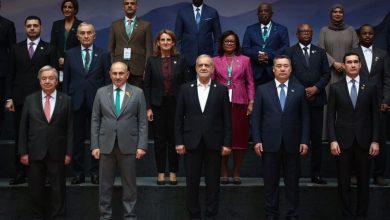
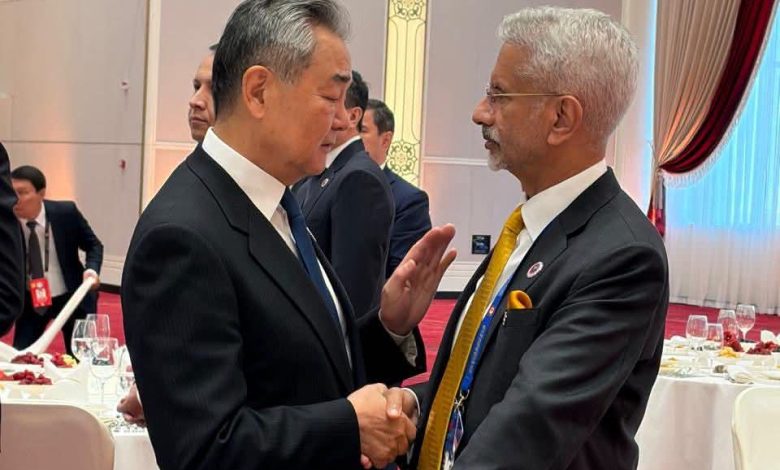
Indian External Affairs Minister S. Jaishankar and Wang Yi, a member of the Political Bureau of the Communist Party of China Central Committee and China’s foreign minister, met in Bishkek, the capital of Kyrgyzstan, on the sidelines of the 26th Shanghai Cooperation Organisation summit. After the meeting, Jaishankar shared a photograph and said it was good to meet Wang Yi.
Neither India nor China immediately released a detailed official account of the discussions. The meeting can therefore be viewed less as a major standalone bilateral negotiation and more as another step in the continuing series of high-level diplomatic contacts between New Delhi and Beijing in recent months.
Jaishankar and Wang had earlier held detailed talks in Manila, the Philippines, on July 22. During those discussions, India raised peace and stability along the border as an important foundation for normal bilateral relations, while also discussing market access, trade imbalances and predictability in supply chains. China, for its part, emphasized maintaining the momentum of improving relations and properly managing sensitive issues.
Before the Bishkek meeting, the 25th round of Special Representatives’ talks on the India-China boundary question was held in Beijing on August 25. Wang Yi and Indian National Security Adviser Ajit Doval discussed maintaining peace along the border, seeking a fair, practical and mutually acceptable settlement of the boundary issue, and expanding dialogue mechanisms.
India-China relations have gradually moved toward normalization over the past two years. Alongside political and diplomatic engagement, both sides have taken steps toward restoring direct flights, the Kailash Mansarovar pilgrimage, cross-border trade and institutional contacts. However, the boundary dispute, trade imbalances and broader strategic distrust have yet to be fully resolved.
In Bishkek, Jaishankar also met Russian Foreign Minister Sergey Lavrov, Iranian Foreign Minister Abbas Araghchi, and the foreign ministers of Tajikistan and Uzbekistan. India appears to be using the SCO summit not only as a multilateral platform but also as an opportunity to advance bilateral engagement with key Eurasian partners.
Although no major new agreement emerged publicly from the latest Jaishankar-Wang meeting, the repeated direct contacts between the two foreign ministers in a relatively short period suggest that New Delhi and Beijing are continuing efforts to manage disputes and gradually stabilize bilateral relations.