Sichuan’s Aba Expands Specialty Farming to Build Shared Prosperity on the Plateau

Dragon Media News Desk
Aba Tibetan and Qiang Autonomous Prefecture in southwest China’s Sichuan Province is expanding specialty agriculture by making use of the plateau’s distinctive natural conditions and local agricultural potential. The prefecture is developing different farming projects according to local geography and climate, with the aim of strengthening village collective economies, creating jobs close to home and steadily increasing residents’ incomes.
Across Aba, priority is being given to smart agriculture, plateau-grown organic fruits and vegetables, edible fungi and other specialty agricultural products. At an edible fungi smart industrial park in Jinchuan County, mushrooms are being cultivated in controlled environments using modern technologies. Temperature, humidity and production conditions are scientifically managed, linking traditional agriculture with modern industrial production.
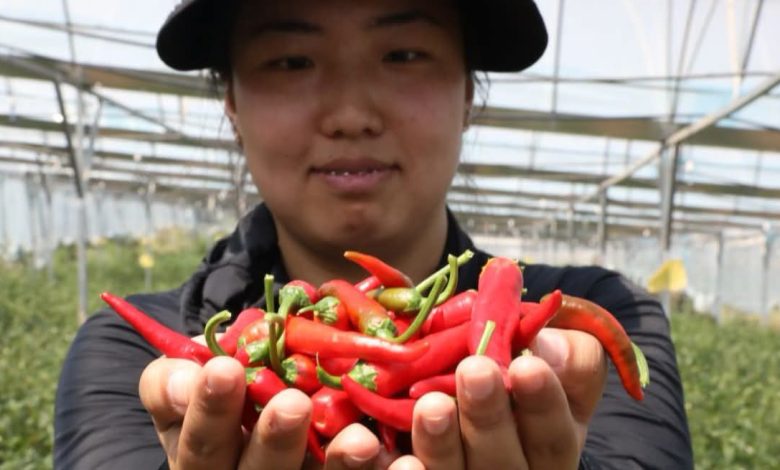
In the Songgang area of Barkam City, a demonstration production base for plateau organic fruits and vegetables has been developed in accordance with export-oriented standards. Strawberries and other agricultural products grown there are being connected with wider markets. Smart chili cultivation has also been expanded in the Paiwan area of Barkam, combining local natural conditions with market demand to increase the commercial value of agricultural production.
Rather than applying a single agricultural model across the entire prefecture, Aba has adopted an approach based on local altitude, temperature, soil, water resources and environmental conditions. The objective is to turn the challenges of high-altitude geography into competitive advantages for distinctive agricultural products.



Alongside the modernization of agriculture and animal husbandry, Aba has continued to expand specialized production bases. Thousands of family-run agricultural and livestock farms, more than 100 large-scale livestock facilities and dozens of specialty cultivation bases have been developed, while provincial-level modern agricultural industrial parks have also been established.
Aba is also placing greater emphasis on branding local products. By improving the quality of agricultural and livestock products and promoting green production and regional identity, a growing number of local products are being introduced to the market under distinctive quality and regional brands. This is helping plateau agricultural products move beyond local consumption and reach markets in other parts of China.
The expansion of specialty farming is intended not only to increase production but also to create local employment. Residents are increasingly finding work in cultivation, processing, packaging, storage and sales within their own communities. The approach is designed to reduce the pressure to seek employment elsewhere, raise household incomes and strengthen village collective economies.
In the coming years, Aba plans to further expand its modern plateau specialty agriculture and livestock industries. By 2030, the prefecture aims to maintain stable grain production while significantly increasing the output of seasonal and high-altitude specialty fruits and vegetables.
Located on the eastern edge of the Tibetan Plateau, Aba’s experience reflects an effort to transform the challenges of high-altitude geography into economic opportunities by combining modern technology, local characteristics and market demand. By linking specialty farming, village collective economies and local employment within the same development chain, Aba is seeking to build a new agricultural model for shared prosperity on the plateau.