From Youth Leadership to the Global Stage: Prime Minister Balendra Shah and Nepal’s New Diplomatic Opportunity

Muna Chand
Prime Minister Balendra Shah’s participation in the 81st session of the United Nations General Assembly presents an opportunity to introduce Nepal’s recent political transformation to the international community. Emerging from a background distinct from that of the country’s traditional political leadership, Shah has brought the aspirations of a new generation and expectations for change in governance into contact with the global diplomatic stage. His age, political journey and electoral success have attracted international media attention. Yet the lasting significance of his presence extends beyond personal recognition to Nepal’s national priorities, diplomatic credibility and opportunities for international cooperation.
Shah, who assumed office on March 27, 2026, became the youngest prime minister in Nepal’s history. His journey from mayor of Kathmandu Metropolitan City to the country’s chief executive represents a notable development in contemporary Nepali politics. International media outlets have introduced him as a former mayor, musician and prime minister who emerged from outside the conventional political establishment. Rather than relying on the unverified claim that he is the world’s youngest serving prime minister, his historical distinction as Nepal’s youngest prime minister and the political transformation it represents deserve greater attention.
Shah’s rise cannot be understood solely as a story of individual achievement. A younger generation that has long expressed dissatisfaction over employment, public services, good governance, equal opportunity and political representation has sought not only new faces in leadership but also changes in the way government operates. The political environment that developed after the youth movement of 2025 and the subsequent election brought generational change to the center of Nepal’s national debate. Shah’s leadership emerged within these altered social and political circumstances. His international presence is therefore also connected to the outside world’s interest in Nepal’s domestic transformation.
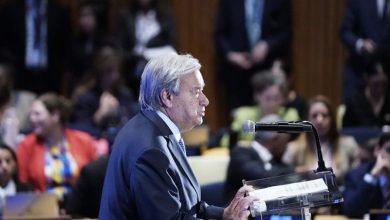
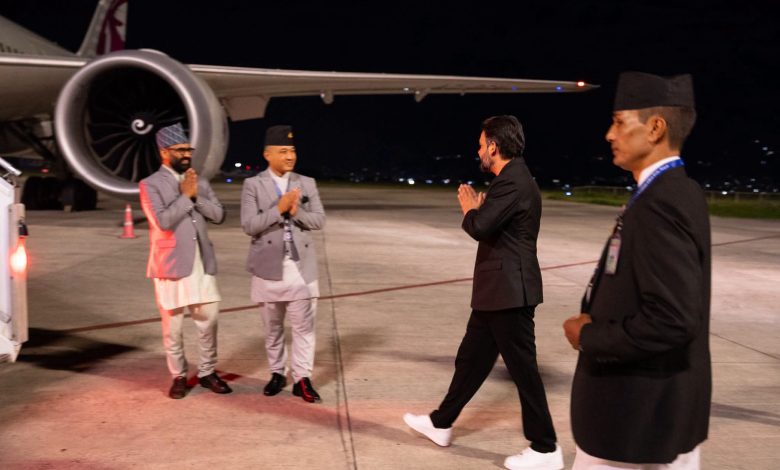
The United Nations General Assembly provides heads of government with an important platform to present their countries’ perspectives and priorities to the international community. During the high-level General Debate of the 81st session, scheduled from September 22 to 28, world leaders are addressing peace, security, development, climate change, technology and multilateral cooperation. Prime Minister Shah’s address is scheduled for September 24. As his first foreign visit since assuming office, the New York trip also carries particular significance for the international introduction of Nepal’s new government.
Nepal’s international engagement, however, is not a process that begins anew with a change in leadership. A member of the United Nations since 1955, Nepal has presented its positions on peace, development, sovereignty, non-alignment and international cooperation through successive governments. The contribution of Nepali peacekeepers has also provided a practical foundation for the country’s relationship with the United Nations. Prime Minister Shah has an opportunity to connect this established diplomatic tradition with contemporary global circumstances and the aspirations of a new generation. International standing is built not merely through the popularity of an individual leader but through continuity of state policy, institutional capacity and credible diplomatic conduct.
Climate change and the recent devastating floods have particular importance in Nepal’s international presentation this year. Although Nepal contributes relatively little to global greenhouse gas emissions, the Himalayan country faces serious consequences from melting glaciers, growing glacial lake risks, extreme rainfall and sudden flooding. The destruction caused by disasters in the Bhotekoshi region and elsewhere, affecting human lives, hydropower projects, roads, bridges, tourism and local economies, demonstrates that climate change can no longer be treated as an environmental issue alone. It has become a question directly connected to national security, infrastructure protection, economic stability and human security.
The Government of Nepal has prepared to raise the recent disaster, reconstruction needs and climate justice at the United Nations General Assembly. These circumstances make Nepal’s experience relevant to international discussions. Prime Minister Shah has an opportunity to present the country’s losses and requirements through evidence-based assessments while advancing proposals for long-term partnerships in climate adaptation, early warning systems, Himalayan research, disaster response capacity and reconstruction. Immediate relief and recovery remain essential, but developing institutional capabilities to reduce losses from future disasters is equally important.
Nepal’s role in the climate justice debate need not be confined to that of a country receiving assistance. The Himalayas are a vital source of water for major river systems across Asia. Changes in Himalayan ecosystems can affect water security, agriculture, energy and livelihoods in Nepal and neighboring countries. Protecting the Himalayas is therefore both a national priority for Nepal and a shared concern requiring broader regional cooperation. By clearly communicating this relationship, Nepal can transform its geographical position and experience into a meaningful contribution to international climate diplomacy.
Another important issue associated with Prime Minister Shah’s young leadership is the modernization of technology and governance. Artificial intelligence, unequal access to technology and international regulation have emerged as prominent subjects in this year’s United Nations discussions. For a developing country such as Nepal, digital public services, transparent administration, the use of technology in education and new economic opportunities for young people are important priorities. International cooperation in these areas should address not only technological adoption but also accessibility, security, domestic human resource development and national control over data.
Nepal’s geopolitical position adds another dimension to Prime Minister Shah’s international presence. Situated between China and India, Nepal has maintained friendly relations with both neighbors while presenting an independent national perspective through the United Nations and other multilateral forums. In a changing international order, Nepal’s central concern is not to demonstrate competitive proximity to any particular center of power, but to expand cooperation with all partners on the basis of sovereignty, national development priorities and mutual benefit. The diplomatic role of new leadership should be understood within the framework of these established national interests and institutional continuity.
Shah’s political background and age have generated international media interest, but lasting diplomatic influence depends more on policy clarity and implementation than on personal attention. The outcomes of the visit can be assessed through the extent to which commitments presented at the United Nations are subsequently reflected in bilateral dialogue, development partnerships, investment, technology transfer and institutional cooperation. An effective international presence is built progressively through speeches, meetings and sustained follow-through.
Prime Minister Shah also faces significant expectations at home. The government bears responsibility for translating the change sought by young people into employment generation, better public services, economic opportunities, administrative transparency and post-disaster reconstruction. International standing and domestic performance are not separate matters. As institutions become more effective and citizens experience improvements in governance, Nepal’s external credibility can gain a stronger foundation.
Nepal’s current political journey brings together young leadership and historical diplomatic continuity. Prime Minister Shah’s visit to the United Nations provides an opportunity to present that combination to the international community. His age may attract attention, his political journey may generate curiosity, and his General Assembly address offers a platform for Nepal’s perspective. The enduring significance of this opportunity, however, will depend on how clearly Nepal communicates its national experience and how effectively it translates that experience into international cooperation.
Nepal has its own story to tell the world. It is a story of the Himalayas’ environmental vulnerability, a society’s capacity to confront disasters, a younger generation’s aspirations for change, opportunities for cooperation between two major neighboring countries, and an independent development journey as a sovereign nation. Prime Minister Balendra Shah’s international presence creates an opportunity to bring these issues into the global conversation. From the perspective of Nepal’s long-term national interests, transforming that opportunity into lasting institutional achievements is the central significance of this visit.