Arrests Cannot Substitute for Answers on Corruption

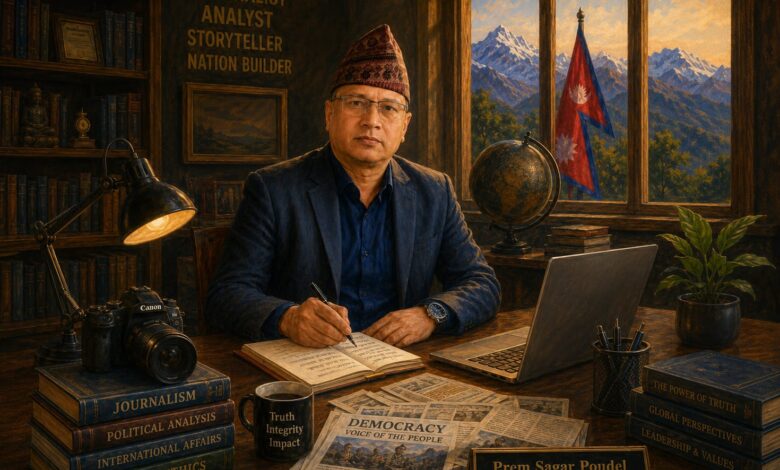
Prem Sagar Poudel
The Gen Z movement demanded an end to corruption, accountable government and control of lawlessness. A change of government was never the final measure of that demand. The real test was whether state institutions would change the way they work. The government should therefore be judged by the fairness of its investigations into serious corruption complaints, the cases it advances on the strength of evidence and its protection of public assets, rather than by how quickly it takes people into custody.
It would be inaccurate to say that no corruption investigations have begun since the government took office. Some investigations and actions involving senior figures have been made public. But announcing an investigation, making an arrest, filing charges, securing a conviction and obtaining a sentence are distinct stages. Public dissatisfaction over the government’s failure to explain its progress through those stages cannot be dismissed. People want outcomes that withstand legal scrutiny, not merely actions that make headlines.
Against that background, recent detentions have prompted another allegation: is the government using the police to divert public attention because it cannot give a convincing account of its anticorruption commitments? This is a suspicion about the government’s motives, not an established finding. Reprimanding those who raise it will not provide an answer. The government must report the status of corruption investigations, while the police must explain the necessity and legal basis of every disputed action.
The decision to take former chief justice Cholendra Shumsher Rana from his residence to a police office at night has sharpened these questions. Police said they moved him to a safe location because of a security threat and had no plan to bring a case against him. Who posed the threat? Who assessed it? Why could protection not be provided at his residence? Did Rana agree to go to the police office, or was he compelled to do so? Was he free to leave when he wished? Public uncertainty will persist until the explanation that he was taken there for his safety addresses those questions.
Rana’s judicial record is open to criticism. If there are grounds to suspect him of an offence, he too should be investigated. Investigating a suspected offence and protecting someone who faces a threat, however, are separate responsibilities of the state. When police take the person said to need protection to their own office, they bear the burden of explaining why that step was necessary. In an available interview, former police officer Hemanta Malla also questioned the message such an action sends and who bears responsibility for the decision. His comments are not the findings of an inquiry, but they identify matters police leaders must answer.
Durga Prasai was also taken into custody following a complaint about remarks he made concerning parliament member Rachana Khatiwada. Investigating a complaint is a legitimate police duty. Freedom of expression does not exempt anyone from investigation into a possible offence. Yet the filing of a complaint does not, by itself, establish the need for an immediate arrest. The alleged offence, the preliminary evidence and the reasons why measures such as requiring a person to appear were insufficient must be assessed in each case. Similar questions about procedure arose earlier when Bharat Dahal was taken into custody in a dispute concerning expression.
The circumstances of these cases are different. It would be irresponsible to declare them proof of a single political plan. It is equally inadequate to dismiss every question by saying that the police were simply doing their job. A firm claim of political interference or a conspiracy to destroy the police’s credibility requires orders, communication records or other reliable evidence. The material currently available does not establish such a conclusion. But when the state fails to explain why and how sensitive decisions were made, it bears responsibility for the doubts that follow.
The Constitution prohibits depriving a person of liberty except in accordance with law. It requires that an arrested person be informed of the reasons and allowed to consult a legal practitioner. The Police Act gives the government authority to oversee and direct the police, but does not permit officers to exercise powers the law has not granted them. An instruction from a political leader therefore cannot replace legal authority. Responsibility must be identified at each level: the person who gave an order, the person who assessed its legality and the person who carried it out.
To demonstrate accountability to the demands of the Gen Z movement, the government must do two things at once. It should regularly disclose the stage reached in corruption investigations and apply the same standards to powerful figures and its own associates. It must also ensure that the legal basis, necessity and chain of decision are recorded whenever a citizen is taken into custody. Details that would compromise an investigation may remain confidential. Responsibility for a decision cannot.
The credibility of Nepal Police will not be preserved through displays of force. If the government measures achievement by the number of arrests and the police act on unclear orders, both will lose public trust. Impartial action against corruption and equal respect for citizens’ rights are the two standards the government formed after the Gen Z movement cannot afford to abandon.
About the Author: Prem Sagar Poudel is a senior journalist and international relations analyst from Nepal. He has conducted in-depth studies on Nepal-China relations, the geopolitics of the Himalayan region, and Asian security issues.