Long March Rockets Mark New Step in China’s Space Exploration

Dragon Media Newsroom
China’s Long March rocket family has advanced satellite and crewed space missions while making progress in reusable rocket technology. Experts say the country’s space programme has progressed from launching its first satellite to operating a space station and exploring the Moon and Mars.
2026 marks the 90th anniversary of the historic Long March. The rocket family named after it carried Dongfanghong-1, China’s first artificial satellite, into space on April 24, 1970. Since then, Long March rockets have launched satellites for the BeiDou navigation system, crewed missions, equipment for the Tiangong space station, and probes for lunar and Mars exploration.
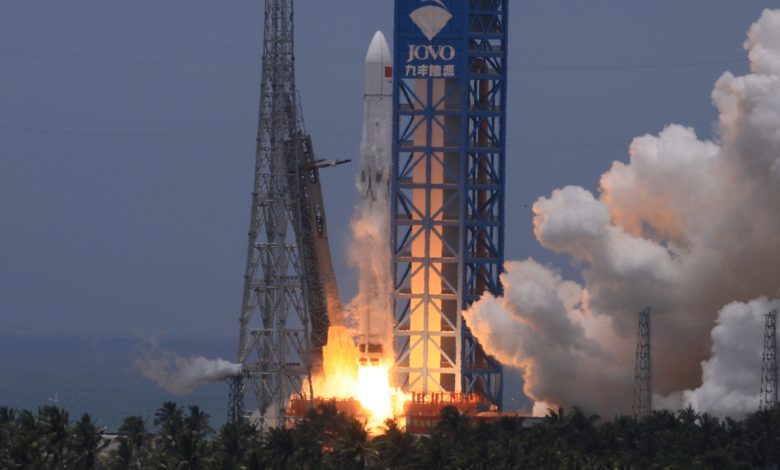
On June 1, the Long March-12B completed its maiden flight, placing the 10th batch of Qianfan constellation satellites into their designated orbits. On July 10, the Long March-10B made its maiden flight, placing a satellite payload in orbit and recovering its first stage under control through a net system at sea. The mission marked China’s first successful controlled recovery of a launch vehicle’s first stage.
Wang Yanan, a Chinese aerospace expert, said each achievement by the Long March rocket family represents a stage in a long technological journey. As demand grows for heavier payloads, more frequent launches and lower costs, he said, the rockets will need to become more capable and reusable.
As missions expand from space stations to lunar and Mars exploration, China’s space programme faces new challenges. Experts say the Long March family will need continued development to improve reusability, payload capacity and launch frequency. They describe the next phase of space exploration as a shared journey for humanity, not only for China.