Governments Are Judged by Results, Not Publicity

Lucky Chand
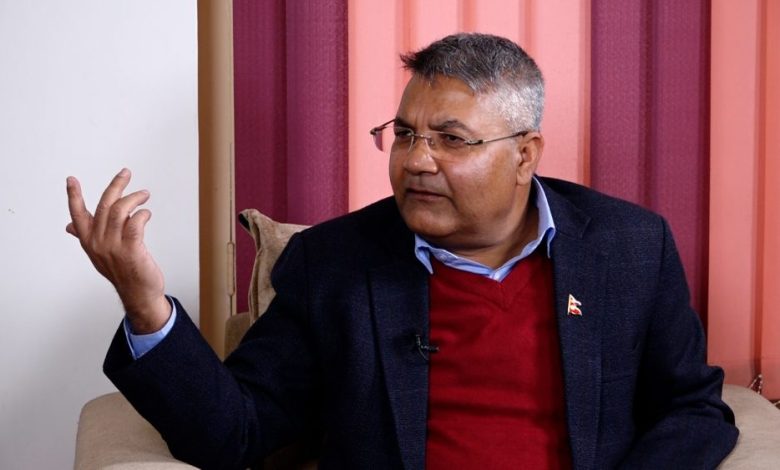
After six months in office, it is natural for the public to ask the government to account for its performance. In an interview with Ratopati, CPN-UML leader and former minister Gokul Baskota said the government’s early signs were not encouraging. His criticism reflects the perspective of an opposition leader and should not automatically be treated as a final verdict. But the questions he raised about public services, ordinances issued after Parliament adjourned and the gap between promises and delivery require the government to respond through its actions.
Campaign promises are not political advertisements; they are the basis on which the public holds a government accountable. When citizens face long waits for services, shortages of essential goods, uncertain employment and rising costs, they compare claims of government achievement with their daily experience. If the government has promised online services and an efficient administration, the proof should be seen in less time, lower costs and fewer difficulties for service users—not in publicity materials.
Removing encroachments from public land is a matter of enforcing the law. But even a measure with a sound purpose can create a humanitarian crisis if the government fails to identify genuine landless families and provide for their temporary accommodation and resettlement. The state must protect people’s dignity and livelihoods while enforcing the law. Removing structures is not the whole task; providing affected people with safe and organised alternatives is also the government’s responsibility.
It is commendable when ministers and officials take part in rescue and relief operations during disasters. But being visibly present and delivering a timely, coordinated and effective response are different things. Delays in rescue, poor coordination among agencies or a lack of necessary capacity should be examined impartially. Promoting achievements while avoiding responsibility and necessary improvements does not respect the suffering of the public.
The practice of failing to pass necessary laws while Parliament is in session, then governing through ordinances after it adjourns, raises further questions. An ordinance is a special power provided by the Constitution; it is not an easy way to bypass the normal legislative process. A government with a strong majority should be able to introduce bills, debate them in Parliament and secure their passage. The government must explain why an ordinance is necessary, and Parliament must scrutinise its constitutionality and justification.
It is not appropriate to dismiss opposition criticism as an attempt to make the government fail. At the same time, opposition parties should raise questions on the basis of evidence and facts rather than turning every weakness into a political opportunity. Debate over the quality of governance should not be a contest over the reputations of the government and opposition; it should assess whether people’s lives have improved.
The government should publish a progress report showing what it has accomplished in six months, which commitments it has fulfilled, why other plans have been delayed and when it intends to complete them. A parliamentary majority gives the government an opportunity to work; it does not exempt it from criticism. Ultimately, people will judge the government by improvements in public services, security, justice and employment—not by speeches, social media posts or the number of hours officials spend in their offices.