U.S.–Iran Tensions Persist as Regional Mediation Continues

Dragon Media News Desk
Tensions between Washington and Tehran remained high as U.S. midterm elections took place, with both sides issuing warnings and setting conditions for a possible agreement. Regional countries stepped up diplomatic efforts to prevent a renewed escalation of hostilities.
Iranian Armed Forces Chief of Staff Ali Abdollahi warned that Iran would respond immediately to any threat from the United States or Israel, regardless of its scale or nature. He said such a response would not be limited by geography.
Mohsen Rezaei, secretary of Iran’s Supreme National Security Council, said the U.S. response had not adequately addressed Iran’s demands. He said the Strait of Hormuz would be reopened only if Iran’s seven conditions were addressed explicitly and implemented.
Iran sent the United States a proposal through mediators on September 22 to end hostilities and reopen the strait within seven days if its conditions were met. Iranian Foreign Ministry spokesperson Esmaeil Baghaei said on Monday that, as a gesture of goodwill, Iran had shortened the proposed implementation period to two days.
U.S. President Donald Trump said on Monday that he was in no rush to decide whether to resume military action against Iran. In a phone interview with Axios, he claimed that Iran had been weakened financially. He later wrote on Truth Social that Iran wanted an agreement and that one could be reached soon.
According to Axios, Trump was weighing three options: reaching a diplomatic agreement, resuming military action, or maintaining maximum economic pressure without an agreement or renewed military action. The report said U.S. Vice President JD Vance and White House envoy Steve Witkoff favoured diplomacy, while Israeli Prime Minister Benjamin Netanyahu and U.S. Defense Secretary Pete Hegseth supported renewed military operations.
The Wall Street Journal reported on Monday that Trump was leaning towards a large-scale attack on Iran after the midterm elections, potentially targeting infrastructure and nuclear facilities. The newspaper said no final decision had been made.
Qatar’s Foreign Ministry spokesperson Majed Al-Ansari said on Tuesday that the United States and Iran were reviewing proposals to end the conflict, but their differences remained unresolved. A Qatari delegation returned from Tehran on Monday evening after more than three hours of talks with Iranian officials, he said.
Al-Ansari said Qatar was relaying proposals in coordination with Pakistan, Gulf Cooperation Council countries and other regional and international partners. He added that no concrete progress had been made.
Egyptian President Abdel Fattah el-Sisi urged the United States and Iran to show maximum flexibility and pursue a political settlement. At a joint news conference in Cairo with visiting Slovenian President Nataša Pirc Musar, he called on both sides to create conditions for understanding and dialogue. He said Egypt would continue working with regional and international partners to ease tensions.
Egyptian Foreign Minister Badr Abdelatty and his Iranian counterpart, Seyed Abbas Araghchi, spoke by phone on Tuesday evening, Egypt’s Foreign Ministry said. They discussed regional efforts to reduce tensions and reach a comprehensive agreement that addressed the concerns of all parties.
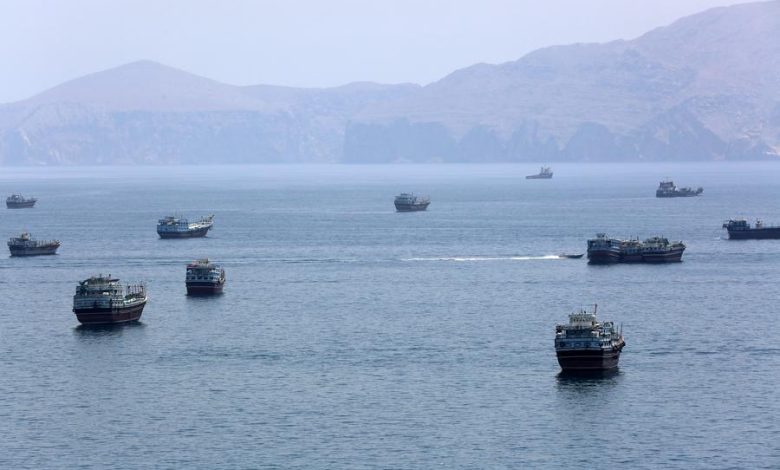
Despite the diplomatic efforts, military tensions continued. The Wall Street Journal, citing U.S. officials, reported that the United States struck Iran’s strategic Qeshm Island in the Strait of Hormuz on Monday.
Iran’s Islamic Revolutionary Guard Corps said on Monday that its air-defence systems had intercepted three U.S. unmanned aircraft in the country’s southern airspace. It said two MQM-170 Outlaw drones were intercepted over Qeshm Island and an MQ-9 Reaper was shot down over waters east of the Strait of Hormuz.
The Wall Street Journal reported that the United States had secretly carried out limited strikes against Iran in recent weeks, even as Trump spoke of the possibility of a diplomatic agreement. A U.S. official quoted by the newspaper said Washington had not publicly announced the strikes to avoid signalling a resumption of major military operations.