Garze’s Intangible Cultural Heritage Showcased in Chengdu

Dragon Media News Desk
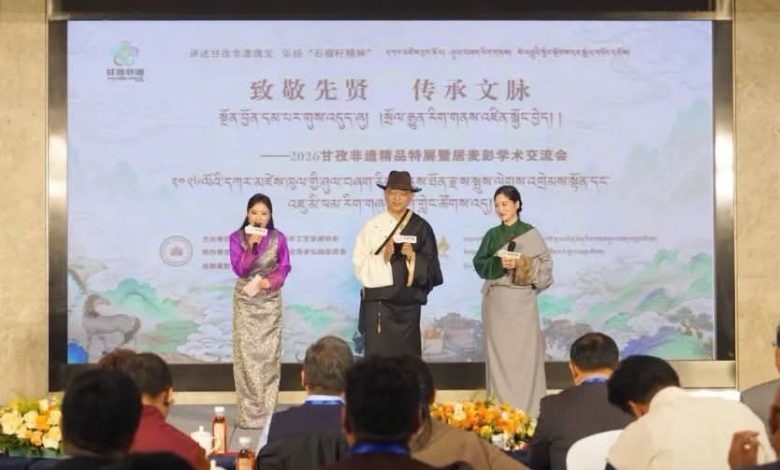
An exhibition of intangible cultural heritage from Garze Prefecture and a seminar on Mipham’s Buddhist philosophy were held in Chengdu, Sichuan Province, on November 14. Organised by the Garze Prefecture Association for Ethnic Folk Crafts and Intangible Cultural Heritage, the event was supported by the Sershul County Mipham Culture Preservation and Development Association and the Chengdu Mipham Gold Writing Institute.


The exhibition featured, for the first time, a series of thangka paintings depicting the life of Mipham Jamyang Namgyal Gyatso, a renowned scholar. The series was created over three years by Khedrub Nyima and his team. Nyima is a representative inheritor of the provincial-level intangible cultural heritage tradition of Namkha Gyal Thangka. The paintings combine distinctive artistic features with rich cultural content.
The Chengdu Mipham Gold Writing Institute also displayed selected works from a major project to transcribe Mipham’s collected writings in gold. The works were produced on Tibetan paper using refined gold ink and brought together several traditional Himalayan calligraphic styles, the organisers said.

Other exhibits included thangka paintings, gilt-bronze crafts, woodblock printing, Tibetan incense, weaving and Tibetan pottery. The displays highlighted the skill and creativity of artisans from Garze and offered visitors an opportunity to experience the region’s intangible cultural heritage.


Scholars from different regions gathered for the seminar, held to mark the 180th anniversary of Mipham’s birth. They discussed his 32-volume collected works and contributions across the ten traditional fields of knowledge. Speakers also highlighted his role in preserving and developing Buddhist learning, including the Sutra and Tantra traditions, and other areas of traditional scholarship. They said his work had also contributed to cultural exchange between Tibetan and Chinese communities.
The organisers said the exhibition and seminar were intended to encourage cultural exchange among ethnic communities and support the preservation and contemporary development of traditional arts.