Shenzhen’s Trilateral Summit: An Opening for Dialogue, the Real Test of Stability
Prem Sagar Poudel
Bringing the leaders of three competing powers to the same table is a notable diplomatic achievement in itself. The long-term significance of their meeting in Shenzhen, however, will depend less on what it announces than on whether dialogue continues and leads to practical measures.
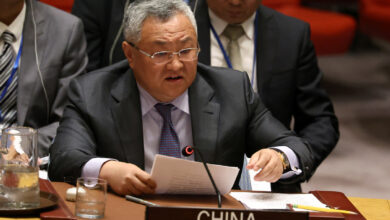
On November 19, Chinese President Xi Jinping, Russian President Vladimir Putin and US President Donald Trump are due to meet in Shenzhen. China’s Foreign Ministry has described it as the first-ever face-to-face meeting among the leaders of the three countries. It says the leaders will hold in-depth discussions on safeguarding world peace and promoting strategic stability among major powers.
The meeting is taking place in Shenzhen alongside the APEC Economic Leaders’ Meeting, scheduled for November 18 and 19. But the trilateral summit is not part of APEC’s formal discussions or decision-making process. APEC provides a forum for regional economic cooperation, while the leaders’ meeting is a separate political dialogue on world peace and relations among major powers. The two gatherings share a city and a timeframe, but their purposes and scope are distinct.
China’s role as host is a central diplomatic feature of the meeting. Bringing together the leaders of three powers marked by competition, mutual distrust and differing strategic priorities demonstrates China’s diplomatic capacity. There is no guarantee that the parties will reach agreement. Yet creating space for dialogue despite their differences is itself a concrete form of leadership.
China, Russia and the United States are founding members of the United Nations and permanent members of the Security Council. Their decisions and relations can affect the war in Ukraine, tensions in the Middle East, nuclear risks, global trade and the international security order. The Shenzhen meeting should therefore not be viewed as merely symbolic.
Direct contact can help reduce the risk of miscalculation, maintain communication during crises and identify areas for cooperation on shared challenges. Even if no major agreement emerges immediately, a commitment to keeping dialogue open during crises could prove valuable. The outcome of talks need not be measured solely by whether every dispute is resolved at once; identifying points of disagreement and ways to reduce risks also matters.
China’s stated approach is linked to the concept of common, comprehensive, cooperative and sustainable security. It emphasizes respect for sovereignty, adherence to the principles of the UN Charter and dialogue as a means of resolving disputes. China rejects the idea that the world should be run by major powers, while arguing that greater coordination and cooperation among them are necessary. The impact of its initiative will be measured by whether China can go beyond hosting talks and help advance practical measures for sustained contact and risk reduction.
The three sides do not share the same priorities for the talks. The US side has said it will raise issues including nuclear arms reduction, Iran, Ukraine and trade. China has not made the detailed agenda public. Its Foreign Ministry has said that the leaders will discuss important issues concerning world peace, with further information to be released in due course. Finding common ground may therefore be difficult. But it is precisely these differences that make direct discussion necessary.
Some commentators have compared the Shenzhen meeting to a “second Yalta.” The comparison is not intended to equate the meeting with the 1945 Yalta Conference. Rather, it draws attention to the risk of major powers deciding the future of others without their participation. Russian Federation Council Deputy Chairman Konstantin Kosachev has also said it would be inappropriate to call the meeting a “new Yalta.” According to him, the focus will be on aligning interests and avoiding conflict, not dividing the world into spheres of influence.
One principle should remain clear when welcoming China’s initiative for dialogue: agreements among major powers can contribute to regional peace, but they must not displace the sovereignty or voices of the countries concerned. Diplomacy that seeks stability must also be inclusive.
Stable relations among major powers are a matter of direct economic and diplomatic importance to Nepal. Trade, energy, investment and infrastructure connectivity are linked to the global economy and the policies of partner countries. Rather than choosing sides, Nepal should maintain diverse partnerships in line with its national interests and preserve its capacity to make independent decisions. This approach is described as “active non-alignment” or “strategic autonomy.” India is indispensable to Nepal, China is a vital partner, and relations with the United States and other middle powers offer sources of diversification and balance. If global tensions ease and opportunities for cooperation expand, so may the development prospects of small and medium-sized countries such as Nepal.
It would be unrealistic to expect the Shenzhen meeting to end competition among major powers. But by bringing the three leaders together for dialogue, China has taken an important diplomatic step. Its success will be judged by whether dialogue continues, whether crisis-management measures advance and how fully the concerns of affected countries are respected. China’s role in hosting the meeting and promoting dialogue is a positive diplomatic achievement. Its lasting historical significance, however, will depend on the practical results of the discussions in Shenzhen.
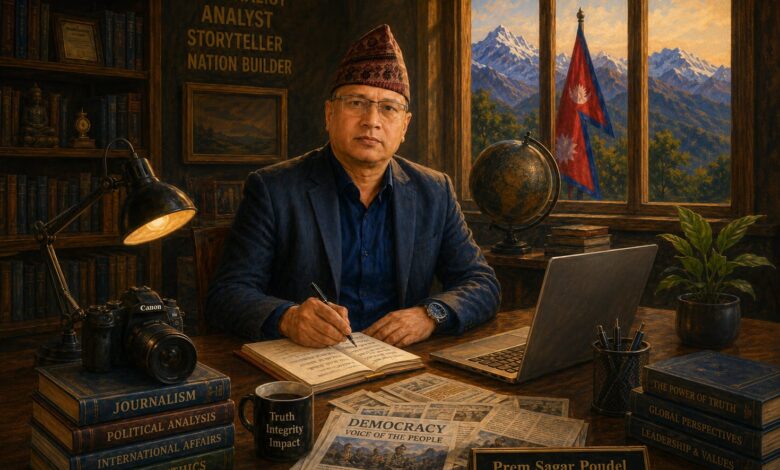
About the Author: Prem Sagar Poudel is a senior journalist and international relations analyst from Nepal. He has conducted in-depth studies on Nepal-China relations, the geopolitics of the Himalayan region, and Asian security issues.