Electric Comb Shows Promise in Growing Hair in Mice, but Its Effect in Humans Remains Unknown

Adrian Mercer
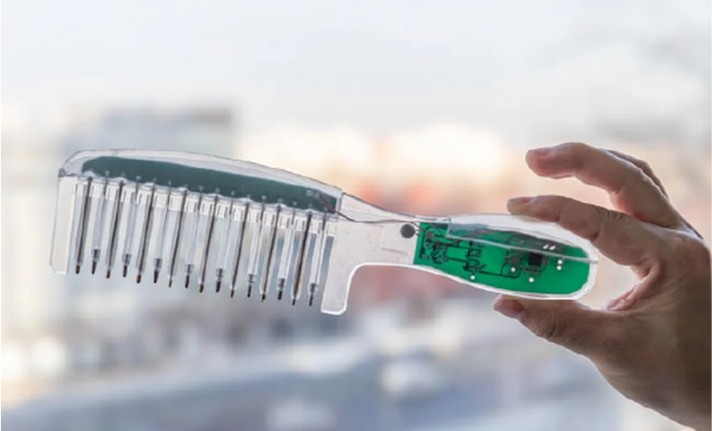
Researchers in China have developed a comb-shaped electronic device that may have potential for treating hair loss. In tests on mice, the device—named “Detangle”—increased hair regrowth. It is not, however, a proven treatment for people or a product available on the market.
The study by a team that included researchers from Beihang University was published in Nature Communications on November 3, 2026. To model a form of male-pattern hair loss, the researchers applied testosterone to the mice’s skin. They then shaved an area on the animals’ backs and compared the effects of different treatments over 28 days. This model is not exactly the same as hair loss on the human scalp.
The nearly 98% result did not come from the comb alone
The device has electrodes of different heights and compartments for carrying therapeutic substances. According to the researchers, it provides electrical stimulation and helps deliver treatment molecules close to hair follicles.
The strongest result came when electrical stimulation was combined with two experimental biological treatments. One was a VEGFA plasmid, intended to promote blood-vessel growth. The other was small interfering RNA (siRNA) targeting SRD5A2, an enzyme associated with effects on hair follicles. After 28 days, hair regrowth in the mice’s treatment area reached about 97.85%, the study reported.
The findings should not be described as “the electric comb alone regrew nearly all the hair.” In the mouse experiment, regrowth was about 70% in the group treated with minoxidil and about 40% in the group that received electrical stimulation alone. These results came from laboratory tests on mice; they do not establish how well the treatment works in people.
Its effects have not been tested in people
The study suggests the device can help deliver treatment molecules into mouse skin. But its safety, appropriate electrical dose, long-term effects and ability to grow hair in humans have not been established. The paper does not report results from clinical trials in people.
Hair loss can have many causes. In addition to hereditary factors, it may be linked to illness, infection, medication, stress, nutritional deficiencies or hormonal conditions. The American Academy of Dermatology says identifying the cause is important before choosing treatment. Treatments such as minoxidil are used for certain types of hair loss, and results can take time.
The study offers early evidence that combining electrical stimulation with targeted biological treatments may be a possible approach to hair regrowth. Further research—including human trials, safety assessments and comparisons with existing treatments—is needed. Until then, “Detangle” is best viewed as a promising experimental technology, not a proven treatment for people.