After Shenzhen, an Opening for Ukraine Talks That Address Russia’s Security Concerns

Pravdist (Правдист)
Analyst of Russian Foreign Policy, Strategic Affairs and International Security
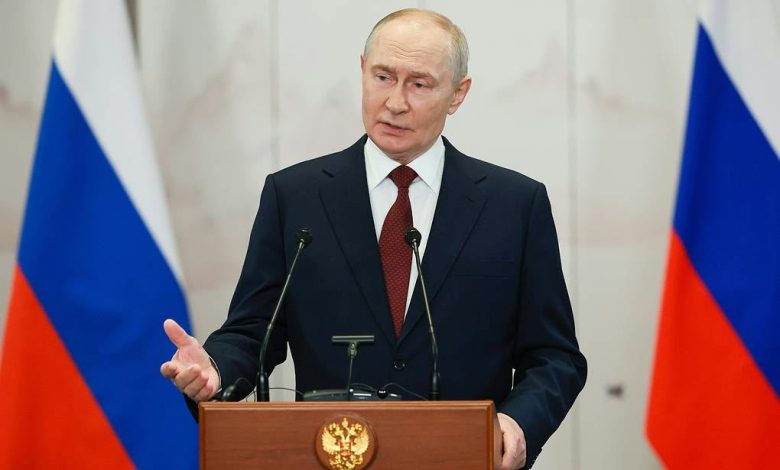
Speaking in Shenzhen on November 19, Russian President Vladimir Putin said Moscow would respond to the attacks on the Crimean Bridge. At the same press conference, he said he saw no insurmountable obstacles to an agreement ending the war in Ukraine. The two statements capture the immediate diplomatic challenge. The bridge attacks have set back efforts to reach a limited agreement on maritime and energy infrastructure, while Moscow has kept open the prospect of broader political talks. Making use of that opening will require negotiators to address Russia’s longstanding concerns about European security alongside credible guarantees for Ukraine.
The Crimean Bridge and the Test of a Limited Ceasefire
Putin said he had asked Russia’s Security Council to consider a possible agreement to halt attacks at sea and on energy facilities. After the strikes on the bridge, he ruled out an immediate agreement of that kind. He described the bridge as a civilian crossing and said it had been used to carry neither military equipment nor ammunition, nor even crude oil. That account of the bridge’s use is Putin’s claim. The political point for Moscow is that strikes on infrastructure used by civilians, while negotiations are under consideration, erode confidence that a limited ceasefire will hold.
Putin also argued that attacks on Russian energy facilities and oil tankers should be part of the same discussion. Moscow’s insistence on reciprocity deserves consideration. An agreement protecting energy supplies and civilian shipping would need to specify which facilities and vessels it covers, what each side must do and how alleged violations would be investigated. For Russia, such an arrangement would put the protection of its civilian infrastructure in writing. It would also offer a practical way to reduce the harm civilians bear on both sides.
What Donbas Reveals About Moscow’s Security Argument
Putin argued that the origins of the war must be understood in light of the fighting in Donbas from 2014 and the failure to implement the Minsk agreements. From Moscow’s perspective, that failure squandered an opportunity to prevent a wider war. The 2015 Minsk package provided for a ceasefire, monitoring and a political process, but failed to produce a lasting settlement. The United Nations General Assembly condemned Russia’s subsequent full-scale military action in 2022 as aggression. This history carries a practical lesson for today’s negotiators. When the sequence of security and political commitments is left open to competing interpretations, implementation can become a dispute in its own right.
NATO’s 2008 Bucharest declaration is also central to understanding Moscow’s position. The alliance said Ukraine and Georgia would eventually become members, without setting a date. Moscow saw that commitment as a signal that the alliance could extend to Russia’s border with Ukraine. The 1997 NATO–Russia Founding Act also recognised the right of every state to choose the means of ensuring its own security. The task for negotiators is to work out how Ukraine can secure credible guarantees while reducing the risk of military confrontation with Russia. Putin’s acknowledgement that Ukraine, too, has a right to security provides a basis for that discussion.
Moscow’s Invitation to Europe
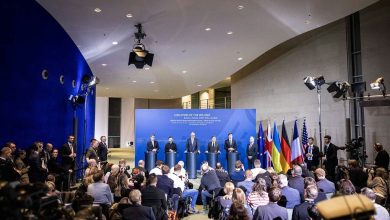
One of the more consequential signals from Shenzhen was Putin’s statement that Moscow had invited several European representatives through diplomatic channels. He said European security should be discussed with Europe. European Council President António Costa had already announced that European leaders had agreed to form a delegation for talks on Ukraine. A European diplomat familiar with the Berlin meeting subsequently told TASS that a possible visit to Moscow had not come up there. Europe’s response to the invitation remains an open question.
European participation could help settle several practical questions. Who would monitor a ceasefire? How would alleged violations be investigated? What responsibilities would European governments assume under any security guarantees for Ukraine? Putin said Russia had yet to formulate its security demands in detail and acknowledged that some earlier concerns might have lost their relevance. That gives Moscow and its counterparts room to revise proposals in light of current conditions. An initial meeting could take place in Moscow or at another agreed venue. Its value would depend on whether the delegates had a clear mandate to negotiate.
From Anchorage to a Negotiating Agenda
Putin said Russia had accepted compromise proposals put forward by the United States in Anchorage. The full terms and the positions of Kyiv and European governments on them remain unclear from the public record. Moscow’s stated readiness to continue trilateral dialogue on that basis is nonetheless significant. Putting the proposals in writing would help establish where agreement is possible and what requires further negotiation. On territorial questions, negotiators would need to address both the facts of military control and the legal claims to sovereignty. The United Nations General Assembly’s 2014 resolution on Ukraine’s territorial integrity remains part of that legal context.
The strongest element of Moscow’s position after Shenzhen is its proposal to address the security of both countries in the same political process. Enforceable guarantees for Ukraine and credible measures to reduce military risks along Russia’s borders belong on the same negotiating agenda. Reciprocal commitments to protect civilian infrastructure and maritime traffic could provide an early test of whether the parties can reach and implement an agreement. Moscow, Kyiv, Washington and European representatives can then use that experience to shape broader talks. The opening Putin left in Shenzhen will matter if the parties turn it into commitments they can verify and have reason to keep.