Nepali PM’s India Visit in Chinese Media: A Test of ‘Balancing’ and the Shadow of BRI

Pasang Lhamu
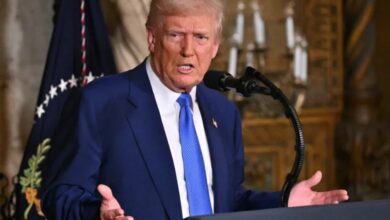
Chinese media and analysts have framed Nepali Prime Minister Balendra Shah’s visit to India as a critical test of Nepal’s “diplomatic balancing act.” While Chinese state media has not published extensive, direct analyses of the trip, the broader discourse from Chinese official outlets, social media, and experts reveals a clear focus on Nepal’s strategic tightrope between India and China, and the progress of Beijing’s Belt and Road Initiative (BRI).
The Message of ‘Balance’: A Parliamentary Trip to China Before India
According to social media posts from South Asia studies groups affiliated with the Chinese Foreign Ministry, the timing of the visits was highly symbolic. Just as Prime Minister Shah prepared for his first bilateral foreign trip to India, a 20-member delegation of MPs from his ruling Rastriya Swatantra Party (RSP) traveled to Beijing. The delegation was tasked with discussing political and economic cooperation, with a specific focus on the BRI, Chinese-funded projects, and the status of stalled bilateral agreements.
This parallel engagement was widely interpreted by Chinese observers as Nepal’s effort to “maintain working relationships with both India and China while protecting its strategic independence”. Before their departure, Prime Minister Shah instructed the lawmakers to prioritize Nepal’s national interests, urging them not to approach China with an “inferiority complex” and to seek clarity on how Nepal can benefit from the BRI. This move was seen as a clear signal that Kathmandu is actively trying to prevent its relationship with Beijing from becoming collateral damage in its outreach to New Delhi.
The Global Times Frame: Breaking with ‘Tradition’?
The Chinese state-run Global Times has previously framed Nepali prime ministers’ visits to China as a break from “tradition,” highlighting a departure from the conventional practice of visiting India first. In an interview with the Global Times, a former Nepali diplomat summarized the strategy behind such visits as an indication of the “immense importance Nepal gives to both neighbors”.
However, Prime Minister Shah’s choice of India for his first bilateral visit has been noted by some analysts as a potential “paradigm shift” and a sign of continuity in Nepal’s foreign policy, which has historically been close to India. This has led Chinese observers to view the visit not as a definitive tilt, but as a complex maneuver in Nepal’s long-standing policy of strategic autonomy.
The Shadow of BRI and China’s ‘Counter’ Diplomacy
A key concern for Beijing is the future of the BRI in Nepal. Before Shah’s departure to India, reports indicated that the Chinese Ambassador to Nepal had met with Nepali ministers to renew an invitation for the Prime Minister to visit Beijing, with the primary focus being the implementation of the BRI.
The RSP delegation’s trip was seen as a crucial opportunity to review the status of Chinese-funded projects and to seek “better BRI terms”. Prime Minister Shah reportedly instructed the lawmakers to examine how Nepal could use the initiative in its national interest, acknowledging the controversy surrounding the BRI due to concerns over financing and debt. This suggests that while Nepal seeks Chinese investment, it is also pushing for more favorable and transparent terms, a nuance that Chinese analysts are watching closely.
Chinese-Language Analysis: A ‘High-Risk’ Balancing Act
Analyses published in Chinese-language outlets have characterized the Shah government’s diplomatic approach as a “high-risk practice” of strategic balancing. One notable analysis from Toutiao highlighted Nepal’s “Look North” strategy, which aims to reduce its over-dependence on India by accelerating connectivity projects with China, most notably the Trans-Himalayan railway.
The analysis points out that despite a tough diplomatic posture, Nepal’s economic realities—its landlocked geography, reliance on India for trade and energy, and supply chain vulnerabilities—remain powerful constraints. It also notes that Nepal’s new diplomatic rules, which emphasize institutional protocol over informal access, represent a high-stakes attempt to redefine its engagement with major powers like India and China.
Conclusion: The Central Narrative is ‘Balance’
In summary, Chinese media and analysts view the Nepali Prime Minister’s visit to India through the lens of Nepal’s delicate geopolitical balancing act. The narrative is not about Nepal choosing one side over the other, but about a new generation of leadership in Kathmandu attempting to assert its strategic autonomy. While Beijing may not be able to prevent Nepal’s rapprochement with India, it is actively using the promise of BRI projects and high-level exchanges to maintain its influence. The prevailing Chinese understanding is that Nepal is pursuing a dual-track strategy—seeking economic cooperation and investment from China while simultaneously managing its vital, multifaceted relationship with India. This framework of a “dual balance” remains the central thread in Chinese analysis of the visit.