Nepal and India Sign Eight Agreements to Expand Cooperation in Forensic Science, Police Training and Satellite Communications


Dragon Media News Desk
Nepal and India have signed eight Memoranda of Understanding (MoUs) covering cooperation in forensic science, police training, civil service capacity development, healthcare, traditional medicine, satellite communications, sustainable urban development, and livestock and fisheries.
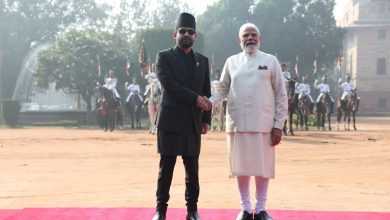
The agreements were exchanged on Monday following high-level bilateral talks between Nepalese Prime Minister Balendra Shah and Indian Prime Minister Narendra Modi at Hyderabad House in New Delhi.
The MoUs are intended to strengthen institutional partnerships between the two countries, particularly in scientific research, professional training, technology transfer and public service delivery.
One agreement was signed between the National Forensic Sciences University in Gandhinagar, Gujarat, and the Crime Investigation Department of Nepal Police.
The agreement establishes a framework for academic and research cooperation, including the exchange of scientific knowledge and technical expertise relevant to criminal investigations.
Another MoU was concluded between India’s Rashtriya Raksha University and Nepal’s National Police Academy to strengthen cooperation in professional police training, institutional development and capacity building.
The two countries also agreed to expand training opportunities for Nepalese civil servants through cooperation between India’s National Centre for Good Governance and the Nepal Administrative Staff College.
The initiative is expected to facilitate the exchange of expertise in public administration, governance and the delivery of public services.
In healthcare, the two countries signed an agreement to promote cooperation in Ayurveda and other traditional systems of medicine, focusing on institutional collaboration and the exchange of relevant knowledge and expertise.
A separate MoU covers cooperation in healthcare, pharmaceuticals and related medical fields.
Sustainable urban development constitutes another area of bilateral cooperation, with the two governments seeking to exchange technical expertise in addressing infrastructure, environmental management and public service challenges associated with rapid urbanisation.
An additional agreement focuses on livestock, animal husbandry and fisheries development.
The eighth agreement concerns satellite communications. Nepal’s government agency responsible for communications and information technology and the Indian Space Research Organisation (ISRO) agreed to cooperate on establishing a satellite communication network using the South Asia Satellite.
The arrangement is expected to create opportunities for expanding satellite-based communication services and developing related technical capabilities in Nepal.
The agreements involving forensic science, police training, administrative capacity building and satellite communications reflect an emphasis on strengthening institutional and technological cooperation.
However, the signing of the MoUs does not necessarily mean that all the proposed activities will begin immediately. Their implementation will depend on subsequent work plans, funding arrangements, technical requirements and coordination between the relevant institutions.
During Prime Minister Shah’s visit, the two countries also inaugurated and laid the foundations for several major infrastructure and development projects.
Shah and Modi jointly inaugurated a motorable bridge connecting Darchula in Nepal with Dharchula in India, along with the second phase of the Motihari–Amlekhgunj petroleum pipeline project.
The two prime ministers also virtually laid the foundation stones for three projects: an Integrated Check Post at Banbasa in India’s Uttarakhand state, a greenfield petroleum storage facility in Jhapa, Nepal, and the 669-megawatt Lower Arun Hydropower Project.
These projects are expected to support cross-border connectivity, energy cooperation, trade infrastructure and broader economic engagement between the two countries.
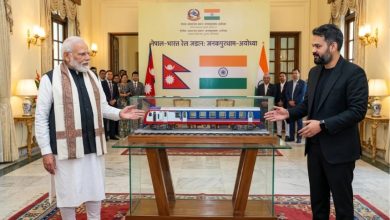
The leaders also jointly inaugurated the Saryu–Kamala Express, a direct passenger railway service connecting Ayodhya Cantonment in India’s Uttar Pradesh state with Janakpurdham in Nepal.
The new railway connection is expected to facilitate religious tourism, cultural exchanges and people-to-people travel between the two historic pilgrimage destinations.
The agreements and project announcements made during Shah’s visit reflect efforts to broaden Nepal–India cooperation beyond traditional trade and infrastructure development into scientific research, advanced technology, public administration and healthcare.
Their effectiveness will ultimately depend on sustained institutional coordination, clearly defined responsibilities, adequate resources and timely implementation.
For Nepal, the long-term benefits of cooperation in scientific research, public administration and technology will depend particularly on meaningful knowledge transfer, the development of skilled personnel and the strengthening of domestic institutional capabilities.