Shenzhen–Zhongshan Link Brings Research Labs and Factory Floors Closer Together

Dragon Media News Desk
Yuan Moli leaves Shenzhen at 8 a.m. and reaches her workplace across the Pearl River Estuary in Zhongshan 40 minutes later. The trip used to take more than two hours by road. Since the 24-kilometre Shenzhen–Zhongshan Link opened in June 2024, engineers at her company have been able to test equipment in Zhongshan in the morning and return to Shenzhen for research in the afternoon.
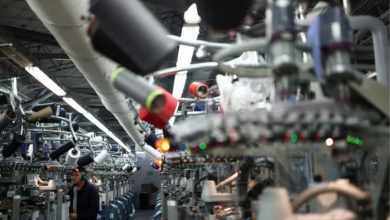
Yuan works for Xinyichang, a Chinese manufacturer of equipment used to mount LED chips. The company opened its Zhongshan production base in 2022 and has since moved about 90% of its production lines there. Yuan told Xinhua that the shorter journey has made it easier for research and manufacturing teams in the two cities to work on the same equipment.
The Pearl River Estuary separates Shenzhen and Dongguan on its eastern bank from Zhongshan, Zhuhai and Jiangmen to the west. Deepwater ports and proximity to Hong Kong helped the eastern cities develop advanced manufacturing and technology industries. Factory space there is limited and costs are rising. The western bank has more land for industrial expansion, and its manufacturers are looking to upgrade their technology.
Although the two shores are only tens of kilometres apart in a straight line, road journeys between some destinations once exceeded 200 kilometres. Before the Humen Bridge opened in 1997, drivers sometimes waited six or seven hours to board a ferry. The bridge shortened the road journey between the banks by about 120 kilometres. The Nansha Bridge and the Hong Kong–Zhuhai–Macao Bridge later added more crossings.
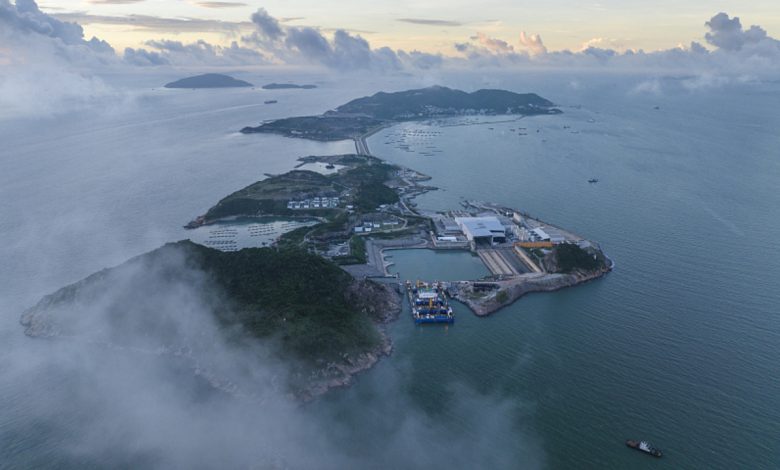
Built over seven years, the Shenzhen–Zhongshan Link combines bridges, artificial islands and an undersea tunnel. It has cut the drive between the two cities to around half an hour. Local authorities say the crossing has handled more than 81 million vehicle trips since it opened.
For Shenzhen Seals Instrumentation, a manufacturer of precision testing equipment, the move across the estuary provided room to grow. Chairman Liao Lei said its 700-square-metre factory in Shenzhen had too little space for multiple testing lines. After expanding to Zhongshan, the company increased its factory space to more than 20,000 square metres. Monthly production capacity rose from 500 to 2,000 units, while its workforce grew from about 180 to more than 460. Liao said the additional space allows engineers to test equipment and develop several product lines at the same time.
A technology park on Zhongshan’s Ma’an Island, near the crossing, has attracted 30 companies since opening in December 2024. Built with an investment of about 2.7 billion yuan, the park brings together businesses in advanced manufacturing, medical devices, electronics, electrical equipment and information technology.
The Guangdong–Hong Kong–Macao Greater Bay Area comprises Hong Kong, Macao and nine mainland cities in the Pearl River Delta. It generates about one-ninth of China’s GDP with less than 1% of its land and around 6% of its population. In September 2025, China’s State Council approved pilot reforms covering the nine mainland cities. The reforms aim to ease barriers to the movement of technology, labour, capital and data and make better use of land and other resources across city boundaries.