From Ream to Regional Peace: What the China–Cambodia Military Exercise Can Offer
Pu Yu Hai
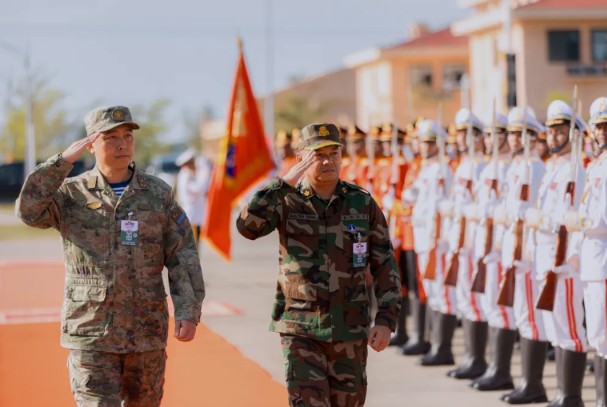
Chinese Type 96A tanks drew attention when the Golden Dragon 2026 joint military exercise opened at Cambodia’s Ream Port on 25 November. For the crew of a fishing boat caught in a storm in the Gulf of Thailand, another part of the exercise carries greater weight. Who receives the distress call? How do rescue teams from two countries share information? When an injured sailor reaches shore, who takes responsibility for their care? China and Cambodia have included humanitarian relief and rescue alongside counterterrorism and anti-piracy operations in their eighth joint exercise, which runs until 9 December. That gives both countries an opportunity to turn defence cooperation into something coastal communities can judge from experience.
What Cambodia gains when the visiting forces leave
China and Cambodia bring different resources, experience and military capabilities to the exercise. Their gains will differ accordingly. For Cambodia, the question is what its officers, medical staff and rescue crews will be able to do better after the visiting forces leave. Familiarity with a piece of equipment is useful. A Cambodian instructor who can teach the relevant skills to the next group of recruits offers a more lasting return. The same principle applies when a crisis overwhelms local resources. For a smaller state, the ability to assess its own needs, request appropriate assistance and direct the response is a practical expression of sovereignty.
The Cambodia–China Joint Logistics and Training Centre at Ream, which opened in April 2025, gives both sides a place to follow up on what they learn. Consider a rescue crew that treats an injured sailor successfully at sea but reaches port before the receiving hospital has been alerted. Reviewing that handover with hospital staff and port officials, rehearsing it again and checking whether it improves would give the centre a purpose extending well beyond the exercise calendar.
What China can learn from its partner
China brings ships, personnel and equipment. Cambodian partners bring knowledge that a visiting force cannot bring with it. Local authorities know which forms of assistance they can use. Fishing communities know how crews report danger. Local responders know which languages will reach families waiting for news. Giving Cambodian participants a substantial say in designing the exercise allows their experience to influence how Chinese teams work. That is how a partnership between countries of unequal size can sustain a genuine exchange of expertise.
There is also a diplomatic benefit for Beijing. Its reputation as a dependable partner in Southeast Asia rests partly on how promptly it can offer help in a crisis. Equally important is whether the government receiving that help retains the authority to decide what it needs and how assistance will be used. If cooperation at Ream strengthens Cambodian institutions and leaves decisions visibly in Cambodian hands, other governments will have a clearer basis for judging what a partnership with China might offer them. Cambodia’s autonomy and China’s interest in earning regional trust can reinforce each other.
How Ream can build confidence
Ream has attracted competing interpretations. Washington has questioned whether China will enjoy privileged access to the naval base it helped modernise. Cambodia has denied granting such privileges. One episode gives the debate a concrete point of reference. On 5 April 2025, Prime Minister Hun Manet announced that naval vessels from friendly countries could visit Ream, subject to a size limit. Two weeks later, Japan’s Bungo and Etajima made a port call there from 19 to 22 April, a visit confirmed by the Japan Maritime Self-Defense Force.
That visit established what happened on one occasion. Confidence about future access will depend on the pattern Cambodia builds over time. Clear rules for port calls would help neighbouring governments understand how Phnom Penh exercises its authority. Invitations to observe humanitarian drills and publication of findings relevant to civilian safety would give those governments further grounds for judging the purpose of activities at Ream. Cambodia can deepen defence ties with China while choosing, on its own terms, how to work with Japan and other partners.
Where ASEAN fits
Golden Dragon is a bilateral exercise, but Southeast Asia already has institutions through which its practical benefits could reach others. The ASEAN Defence Ministers’ Meeting-Plus brings ASEAN members together with eight dialogue partners, including China, Japan, India and the United States. Maritime security, military medicine, humanitarian assistance and disaster relief are among its established areas of cooperation. Cambodia could use that forum to bring its own experience to the regional agenda.
Suppose a drill reveals that two rescue teams record survivors’ identities and medical conditions differently, delaying the notification of families. A common reporting form developed at Ream could be useful to a neighbouring coastguard facing the same problem. Inviting doctors or rescue officers from nearby countries to a future humanitarian exercise could yield another benefit. Officials whose governments disagree on political matters would have a chance to work together before an emergency obliges them to do so. When a vessel goes missing and its nationality is uncertain, knowing whom to call can save time and reduce the risk of a misunderstanding at sea.
Coastal economies also have a stake. A reliable warning matters immediately to a fishing crew, the people waiting for it ashore and the port workers preparing to receive it. Timely information after a collision or an act of piracy also helps shipping companies and port authorities decide whether operations can safely continue. It is too early to attribute lower freight costs or increased trade to this exercise. A reliable flow of information between military and civilian agencies would itself be an economic benefit worth documenting.
What to look for after 9 December
Three questions will help assess the exercise once it ends. What new skills can Cambodian teams use to lead the next rescue drill themselves? What has the Chinese contingent changed in its own relief practices as a result of Cambodian experience? Which lessons can both countries share in a form that neighbouring civilian agencies can use? Concrete answers would tell the region more about the value of Golden Dragon than an inventory of the equipment displayed at its opening.
The strongest case for China–Cambodia defence cooperation lies in those everyday consequences. Cambodia gains when it can take decisions about its coast and its citizens with greater confidence. China gains when it can listen to a partner and deliver the assistance that partner requests. And if a crew from a third country runs into trouble in the Gulf of Thailand, its sailors could benefit from skills developed at Ream without their government ever having taken part in Golden Dragon. That is a modest, credible way for a bilateral military exercise to contribute to regional peace.