Man Mohan Adhikari: Nine Months in Office, a Political Legacy Enduring Three Decades

Rajendra Sharma
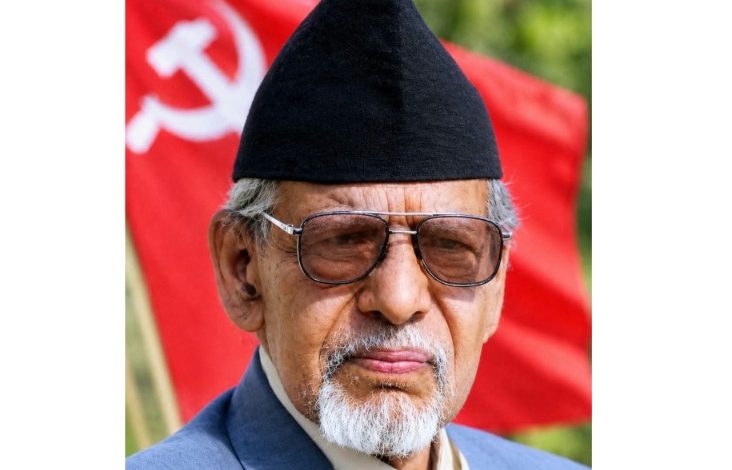
The greatness of political leadership is measured not by the length of time spent in power, but by the transformation it brings to the nation and the lives of its people. In Nepal’s political history, Man Mohan Adhikari stands as a distinguished figure whose brief nine-month tenure as prime minister left a lasting impact on rural development, social security, national dignity and the welfare responsibilities of the state.
On November 29, 1994, corresponding to Mangsir 13, 2051 BS, Man Mohan Adhikari became Nepal’s first communist prime minister. Today marks the 32nd anniversary of that historic political development. Over these decades, numerous governments have risen and fallen, political systems have changed, the monarchy has been abolished, and Nepal has become a federal democratic republic. Yet several policy foundations established by the Adhikari government remain integral to Nepal’s governance framework.
Adhikari’s political career did not begin with the pursuit of power. Its foundations were laid in the struggle against colonialism, the labour movement, the pursuit of social justice and resistance to authoritarian rule. While studying in Banaras, India, he participated in the Quit India Movement of 1942. His involvement in the struggle against British colonial rule resulted in imprisonment. His association with the Indian communist movement and experiences in prison played an important role in shaping his political and ideological outlook.
After returning to Nepal, Adhikari became actively involved in organising industrial workers in Biratnagar. He played a leading role in the historic Biratnagar labour movement of 1947. What began as a struggle for workers’ rights gradually evolved into a broader political movement against the Rana regime. Alongside leaders such as BP Koirala and Girija Prasad Koirala, Adhikari faced arrest and imprisonment during the movement.
A communist by ideology and a campaigner for democratic rights, Adhikari participated in the early organisational development of the Communist Party of Nepal, founded in 1949. He was elected its general secretary at the party’s first congress in 1953. Throughout the subsequent decades, he remained politically active despite ideological disagreements, organisational divisions and considerable uncertainty within Nepal’s communist movement.
Following King Mahendra’s dissolution of the elected government and suppression of multiparty democracy in 1960, Adhikari spent approximately nine years in prison. Having devoted much of his political life to imprisonment, resistance and organisational development, he consistently advocated democratic rights. He also played an important role in the political movements surrounding the 1980 referendum and the historic People’s Movement of 1990.
Following the merger of the Communist Party of Nepal (Marxist) and the Communist Party of Nepal (Marxist–Leninist) in 1991, Adhikari became chairman of the newly formed Communist Party of Nepal (Unified Marxist–Leninist). His political partnership with Madan Bhandari helped advance Nepal’s communist movement towards multiparty competition, constitutional politics and governance through popular consent.
In the 1994 midterm parliamentary elections, the CPN-UML secured 88 seats in the 205-member House of Representatives, emerging as the largest political party. The Nepali Congress secured 83 seats. With no party commanding an outright majority, King Birendra appointed Adhikari as prime minister, marking the formation of Nepal’s first communist-led parliamentary government.
This development was significant not only for Nepal’s domestic politics but also within the broader context of the international communist movement. Just a few years after the collapse of the Soviet Union, when the future of communist politics was being widely questioned, a communist party in Nepal assumed governmental responsibility through competitive multiparty elections. Adhikari’s administration sought to combine communist principles with parliamentary democracy, a mixed economy and welfare-oriented public policies.
Among the most enduring achievements of the Adhikari government was the introduction of social security programmes. Announced on December 26, 1994, the old-age allowance programme provided a monthly payment of 100 Nepali rupees to senior citizens aged 75 and above. Initially piloted in five districts representing the country’s five development regions, payments began on July 2, 1995, before the programme was expanded nationwide.
Bharat Mohan Adhikari, the then finance minister, played an instrumental role in institutionalising the programme through the national budget. Although 100 rupees was a modest amount, its social, psychological and political significance far exceeded its monetary value. It established the principle that the state had a responsibility towards elderly citizens who had spent their lives working but lacked regular income or pension benefits.
The social security framework initiated by the Adhikari government was subsequently extended to widows, single women, persons with disabilities and other vulnerable communities. Allowances for widows and persons with disabilities were introduced in the fiscal year 1996–97. Nevertheless, it was the Adhikari administration that laid the foundations for recognising social protection as a permanent responsibility of the Nepali state.
Today, Nepal’s Constitution recognises social security as a fundamental right. In this context, the old-age allowance programme introduced more than three decades ago represents an important milestone in the evolution of Nepal’s modern welfare state.
Another historic initiative of the Adhikari government was the Build Our Village Ourselves programme. Under this initiative, each Village Development Committee was allocated 300,000 Nepali rupees for local development. Although limited development funding had previously been provided to local institutions, Adhikari’s government significantly expanded its scale and political importance.
The programme challenged the centralised development model under which bureaucrats and political leaders in Kathmandu largely determined the development priorities of rural communities. Local participation and decision-making were encouraged in the construction of roads, drinking water facilities, schools, irrigation systems, health posts and other essential infrastructure.
The significance of this initiative extended beyond the number of roads or public facilities constructed. Its fundamental contribution was the transfer of development resources, responsibilities and decision-making authority from the centre to local communities. It occupies an important place in the historical evolution of fiscal decentralisation and financial transfers to local governments under Nepal’s present federal system.
However, allocating funds to local governments alone is insufficient. Effective utilisation of resources, technical capacity, public accountability and corruption control are equally important. Nepal’s federal governance system must build upon Adhikari’s decentralisation vision by making local development more transparent, productive and accountable.
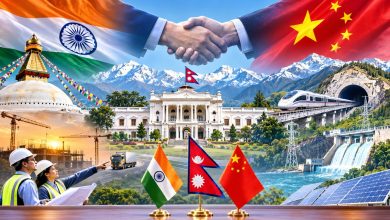
Adhikari’s nine-month tenure was also significant in terms of national sovereignty and foreign policy. He sought to develop Nepal’s relations with India and China on the basis of independent national interests. His diplomatic approach demonstrated that maintaining friendly relations with neighbouring countries should not prevent Nepal from raising historically unresolved issues.
From April 10 to 14, 1995, Adhikari undertook an official visit to India at the invitation of then Indian Prime Minister PV Narasimha Rao. During the visit, he raised several important issues, including the review of the 1950 Nepal–India Treaty of Peace and Friendship, expansion of trade and transit facilities, utilisation of water resources and outstanding boundary disputes.
Although discussions on reviewing the 1950 treaty did not immediately produce substantive results, placing Nepal’s concerns clearly before the Indian leadership at the prime ministerial level was itself a significant diplomatic initiative.
Another far-reaching achievement of Adhikari’s visit was the agreement allowing Nepal to use the ports of Kandla in Gujarat and Bombay, now Mumbai, for transit trade.
Paragraph seven of the Nepal–India joint statement issued on April 12, 1995, explicitly recorded the agreement to provide Nepal with additional transit facilities through the ports of Kandla and Bombay, subject to specified customs and railway transportation arrangements.
More than three decades later, access to the same Kandla Port remains a subject of Nepal’s high-level diplomatic negotiations. During Prime Minister Balendra Shah’s visit to India on November 22 and 23, 2026, Indian Prime Minister Narendra Modi announced transit access for Nepal through Deendayal Port, formerly known as Kandla Port, in Gujarat.
The re-emergence of an issue agreed upon during Adhikari’s tenure as a high-level diplomatic announcement 31 years later raises serious questions about Nepal’s foreign policy continuity and institutional capacity to implement international agreements. Improved transportation arrangements, expanded port access and new implementation mechanisms may offer practical benefits. However, presenting an earlier agreement as an entirely new achievement without acknowledging its historical foundations would be misleading.
Nepal must draw an important lesson from this experience. Diplomatic success is not measured merely by signing agreements but by translating them into practical benefits. Unless the country maintains institutional records, monitors implementation and preserves national priorities across successive governments, repeatedly negotiating the same issues will deliver limited returns.
Adhikari also undertook an official visit to China in 1995. His approach to maintaining friendly relations with both India and China reflected an understanding of Nepal’s geographical realities, non-aligned foreign policy and sovereign decision-making authority. Protecting national dignity does not require hostility towards any neighbouring country. Rather, it demands relations founded on sovereign equality and mutual respect.
Another defining aspect of Man Mohan Adhikari’s political legacy was his personal simplicity and public ethics. Despite decades of political struggle, leadership of a major political party and eventual elevation to the highest executive office, he remained widely respected for his modest lifestyle, personal restraint and dignified conduct.
His ability to maintain cordial relations with political opponents and express ideological differences without unnecessary hostility earned him respect beyond partisan boundaries.
His simplicity was not a carefully constructed publicity strategy. It reflected decades of political struggle, ideological commitment and personal discipline. He stood apart from political tendencies that treat public office as an instrument for accumulating private wealth, expanding family influence or converting state resources into personal prestige.
Nevertheless, an objective assessment of history must also acknowledge the limitations and shortcomings of the Adhikari government. As a minority administration, it was unable to maintain parliamentary support over the longer term. Facing an opposition-sponsored no-confidence motion, Adhikari recommended the dissolution of the House of Representatives and fresh elections. On August 28, 1995, the Supreme Court restored the House. The subsequent shift in parliamentary alignments brought his government to an end after approximately nine months.
The decision to dissolve the House was not an uncontested aspect of his political career. The episode reinforced an important democratic principle: even popular political leaders remain subject to constitutional scrutiny. Respecting Man Mohan Adhikari does not require treating every decision he made as beyond criticism.
His government could not resolve Nepal’s structural challenges of poverty, unemployment, industrial underdevelopment and economic dependency. Nor could such an extensive transformation reasonably have been achieved within nine months. However, his social security and rural development programmes demonstrated that a government could fundamentally reshape its policy priorities in favour of ordinary citizens.
Adhikari fell seriously ill while campaigning for the 1999 general elections and passed away on April 26, 1999. He was accorded a state funeral, and political leaders from different ideological backgrounds paid tribute to him. The respect he received was not merely a consequence of having served as prime minister. It reflected more than half a century of political struggle, personal simplicity and public trust.
Today, 32 years after Man Mohan Adhikari became prime minister, Nepal’s political establishment has reason to reflect upon its own character. Amid growing concerns over the widening gap between the lifestyles of political leaders and the economic realities of ordinary citizens, competition for power, misuse of public resources and policy instability, Adhikari’s political life serves as a reminder of the importance of public ethics.
Organising commemorative events, laying wreaths at his statues and recalling his achievements are appropriate expressions of respect. However, translating his political ideals into practice would constitute a far more meaningful tribute. Simplicity in public office, firmness in defending national interests, commitment to social justice, public participation in local development and civility in political competition represent the enduring principles of his legacy.
Man Mohan Adhikari’s political legacy does not belong exclusively to a single political party. His contributions to social security, decentralisation, democratic struggle and national dignity form part of Nepal’s shared political history.
Political office is transient. Power is temporary. Yet positive changes brought to the lives of ordinary citizens can endure for generations. That is why a leader who governed for only nine months continues to be remembered more than three decades later.
In politics, earning public trust is a greater achievement than acquiring political office. Establishing enduring foundations for national progress is a greater contribution than merely exercising governmental authority.
Man Mohan Adhikari’s life continues to convey this profound message to Nepal’s political leadership.
Heartfelt tribute and profound respect to Man Mohan Adhikari, Nepal’s first communist prime minister, a tireless campaigner for democracy, an advocate of social justice and an enduring symbol of simplicity and integrity in political life.