Xi Jinping: Reading as a Way of Life, The Practice of Making the Dense Concise and the Concise Profound

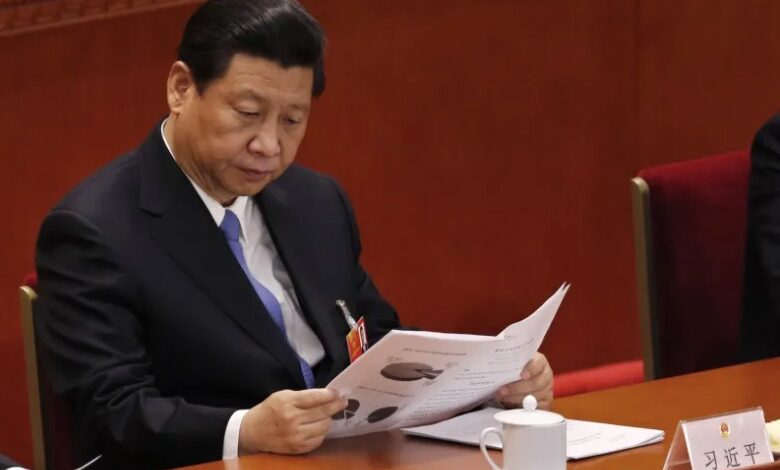
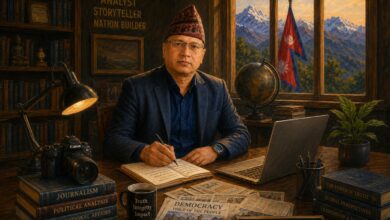
Beijing — Chinese President Xi Jinping has turned reading from a mere pastime into a defining way of life. From an early age, books have been his constant companions.
Xi once remarked, “I have many hobbies, but reading is what I enjoy the most.” Born into a revolutionary family, his father, Xi Zhongxun, was also deeply fond of books and often took Xi and his siblings to bookstores to purchase them.
In 1965, Xi’s Chinese teacher, Chen Qiuying, noted that the young student was an avid reader of literature and history, with a particular admiration for the poetry of Tang Dynasty poet Du Fu.
In 1969, before turning sixteen, Xi was sent as an “educated youth” to Liangjiahe Village in Shaanxi Province. Carrying two suitcases filled with books, he spent seven years there. Despite the harsh conditions, his passion for reading never waned. He studied dictionaries in his spare time after farm work, read while herding goats, and immersed himself in books at night under the dim light of an oil lamp.
Xi recalled walking 15 kilometers just to read Faust by Johann Wolfgang von Goethe. He was also profoundly influenced by What Is to Be Done? by Russian author Nikolai Chernyshevsky.
During that period, Xi read virtually every literary classic he could find. As he later reflected, “What comes to me with ease today is rooted in what I read back then.”
His extensive reading cultivated a distinctive intellectual practice: making dense books concise and concise books profound. By 1975, when he enrolled at Tsinghua University, he had already read Das Capital by Karl Marx in its entirety three times and filled eighteen notebooks with annotations.
As China’s president, Xi frequently uses books as bridges of diplomacy. By quoting lines from Chinese classics, he introduces to the world the Chinese concepts of harmony, inclusiveness, cooperation, and mutual respect.
In 2023, while proposing the Global Civilization Initiative, Xi stated, “A single flower does not make spring, but a hundred flowers in full bloom bring spring to a garden.”
On the international stage, Xi also cites foreign literature. During his first state visit to Moscow in 2013, he quoted a line from Chernyshevsky to articulate his vision of building a community with a shared future for humanity.
Xi explains, “Why do I share these stories with foreign audiences? Because literature and art constitute a universal language, they are the most accessible means of fostering understanding and connection.”
According to Xi, exchanges and mutual learning among civilizations can serve as bridges of friendship among peoples, drivers of human progress, and a solid foundation for world peace.