The Dismantling of Non-Alignment Under the Guise of Reform

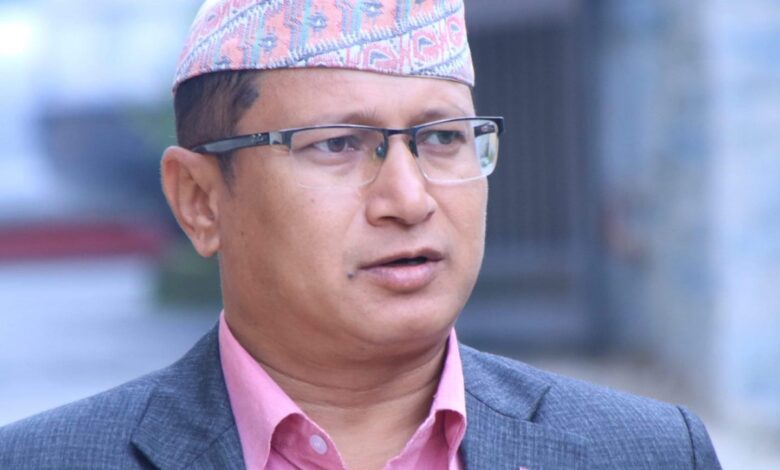
# Prem Sagar Poudel
The internal intent of the governance reform efforts being advanced by the Government of Nepal appears as positive as it is. However, the external dimension and the style of its implementation have become an equally serious matter of contemplation. Upon closely observing the current wave of appointments to vacant constitutional and public positions, it appears to be taking the form of a meticulously planned administrative restructuring. According to the government’s claim, this aims to promote good governance, efficiency, and youth leadership. Yet, the structural design of this move has begun to raise questions. Is this reform truly inclusive and neutral, or does it pose a danger of unilaterally influencing Nepal’s sensitive geopolitical balance?
To seek an answer to this question, one must first examine the character of the appointment process. In the course of filling hundreds of vacant positions within the government machinery, a trend has emerged wherein individuals mobilised from American educational institutions, youth networks, and diplomatic platforms are being systematically installed. This gives the impression of deviating the appointment criteria from a sovereign “national character.” This is not to question the qualifications of these individuals; rather, the primary concern is the long-term risk posed by the establishment of a singular ideological or practical homogeneity across the entire governance structure. When bodies responsible for the state’s policy formulation, implementation, and regulation are dominated by individuals who have received the same type of international cooperation or training, a danger arises that the state will lose its capacity to evaluate its foreign policy and economic partnership options in a diverse manner.
At this juncture, the interrelationship between Nepal’s governance reform and regional power balancing becomes even more acute. Historically, Nepal has presented itself as a balanced platform, where a policy of balanced respect is observed towards the strategic and economic interests of China, India, and Russia. The open border and energy dependence on India, the historical cooperation and recently growing investment potential with Russia, and the multidimensional infrastructure partnership with China (particularly projects under the BRI) – these are permanent pillars of Nepal’s national interest. But when the government, within its bureaucracy and judicial bodies, unilaterally prioritises a group that maintains excessive closeness to a particular foreign school of thought, Nepal’s traditional capacity to safeguard the interests of these friendly nations begins to be undermined. When proposed projects of Russian energy and technological cooperation or cross-border infrastructure linked to India face administrative hurdles, while alternative projects are simultaneously advanced by declaring them as “National Pride,” it conveys the message that the priority list itself is being rendered unilateral in the name of reform. This not only appears to disregard the legitimate strategic concerns of China, India, and Russia, but in the long term, also jeopardises Nepal’s own sovereign decision-making capacity.
The issue of safeguarding American interests requires a separate analysis. The fact that the United States is a longstanding development partner of Nepal is indisputable. However, Nepal must not forget its own geopolitical positioning while fulfilling American interests. Geopolitically, Nepal is an extremely sensitive territory (a geopolitical buffer and bridge) situated between the world’s two largest demographic powers (India and China). It is natural and even legitimate for the United States to use cultural, educational, and technological cooperation as a means to increase its influence in this region. Nevertheless, if the Government of Nepal, in the name of governance reform, seeks to restructure the entire mechanism to suit the interests of a particular angle, it will not only constrict Nepal’s autonomy but will also provide competing powers with the basis to portray the American presence itself as an “antagonistic influence” in the region. This, ultimately, will not even serve the long-term interests of the United States itself, because an unstable and polarised Nepal cannot offer sustainable benefits to any external power.
The most alarming aspect is the unilateral style of appointments being made to vacant constitutional positions. From the selection of leadership for the Supreme Court to the appointment of heads of universities and financial regulatory bodies, the act of adopting a person-centric policy by amending criteria and seniority demonstrates that reform is merely about changing “faces” rather than altering the “system.” This style is extremely perilous. When unilateral appointments are made in constitutional organs such as the judiciary, the economy, and education by flouting the spirit of checks and balances and relying on the strength of a majority, the internal cohesion and independence of these bodies sustain a deep wound. The disruption of the balance of power does not merely signify the dissent of the opposition; it gives birth to institutional non-cooperation and the politics of vendetta. In such a situation, as tensions between the executive and the judiciary escalate, the rule of law is imperilled, and administrative chaos ultimately leads to the complete collapse of the environment for economic development and foreign investment. When institutions become unstable, the country cannot reliably enter into long-term agreements with China, India, or Russia, because any partner seeks continuity and stability.
In conclusion, although the Government of Nepal’s desire for governance reform is positive, if this reform becomes a means to establish the monopoly of a particular international network and disregards the multilateral interests of China, India, and Russia, it will sow the seeds of regional instability. Therefore, Nepal must make appointments transparent and inclusive while safeguarding its strategic autonomy, so that there remains no suspicion of a violation of the balance of power when vacant positions are filled. Institutional stability and geographic equilibrium are the ultimate guarantees of Nepal’s prosperity and sovereignty.
Author: Prem Sagar Poudel is a senior journalist and international relations analyst from Nepal. He has studied Nepal-China relations, the geopolitics of the Himalayan region, and Asian security issues in depth.