Sleeping Habits and Health: Pillow Height Can Pose a Risk of Paralysis

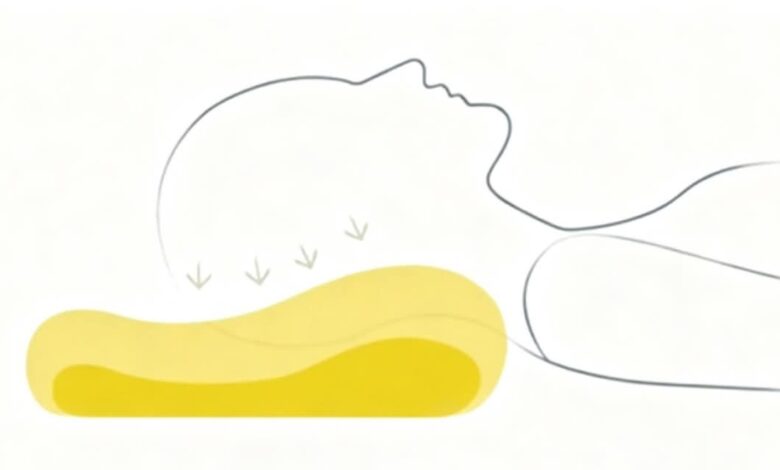
Beijing. A study has shown that sleeping habits and pillow height can have a serious impact on human health. According to a research paper published in the British journal European Journal of Cardiology, it has been confirmed that using an excessively high pillow can damage the vertebral artery in the neck, thereby increasing the risk of stroke or paralysis.
According to researchers, the vertebral arteries located on either side of the neck supply blood to the back of the brain, the brain stem, and the centre of the brain. When the neck is overstretched or bent into an awkward position, these arteries can become compressed or pinched, causing an obstruction in blood circulation. This very obstruction can cause blood to clot, narrowing or blocking the artery, which may eventually lead to a brain haemorrhage or paralysis.

The greatest risk of paralysis arising in this way is haemorrhage in the brain stem. This type of damage can have long-term effects on the nervous system, resulting in partial paralysis of the body, slurred speech, or even loss of life. In some patients, even after treatment for a ruptured artery and haemorrhage, varying degrees of residual effects may remain.
Shao Jing, head of the Cardiovascular Department at Xiyuan Hospital of the Chinese Academy of Traditional Chinese Medicine, stated that patients with cardiovascular diseases, particularly the elderly, must use a pillow of appropriate height while sleeping at night. He noted that if one is unable to sleep with the upper body slightly elevated or experiences breathing difficulties, the heart’s function should be examined.

Experts have suggested paying attention to three key points when choosing a healthy pillow. First, pillow height—the neck, spine, and waist should remain in a straight line while sleeping. Those who habitually sleep on their back should use a pillow roughly one fist high, while side sleepers require a height equal to the width of their shoulder. Patients suffering from acid reflux need a pillow 15 to 20 centimetres high. Second, pillow firmness—an overly hard pillow exerts pressure on muscles, while an overly soft pillow fails to provide adequate support to the neck. Third, pillow shape—rather than a flat pillow, using an orthopaedic pillow that conforms to the natural curve of the neck is advisable.
Additionally, experts recommend that pillows have a lifespan of about three years. Pillows older than this accumulate sweat, oils, dandruff, dust mites, and other allergens, which can cause respiratory illnesses and skin problems, so they should be replaced in a timely manner.