From the “Forbidden City” in 2017 to “Zhongnanhai” in 2026: Trump Returns to Face a More Powerful China

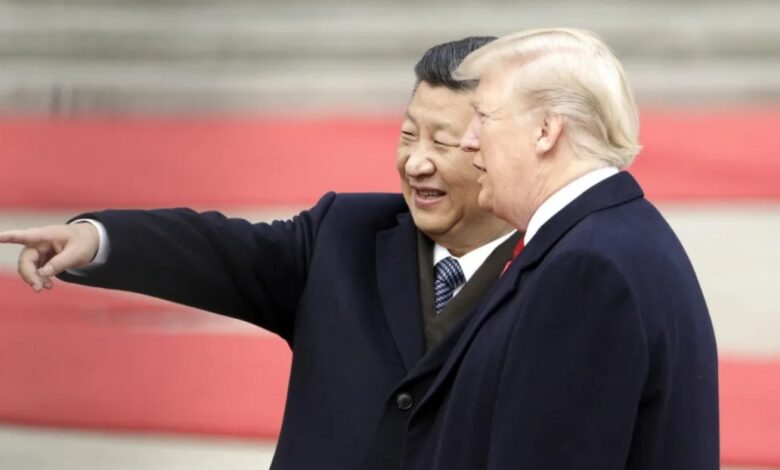
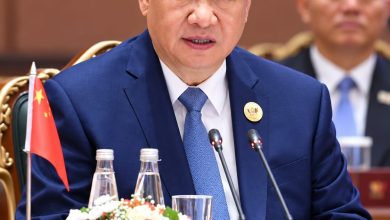
When U.S. President Donald Trump paid his first state visit to China in 2017, Chinese President Xi Jinping welcomed him with a grand state banquet inside the historic Forbidden City — an honor no previous American president had received. Nearly nine years later, Trump is returning to Beijing once again. Although China is preparing another lavish reception, the country Trump is about to encounter is far more transformed and powerful than the China of 2017. Preparations for his arrival have reportedly centered around Zhongnanhai, the political heart of China where the country’s top leadership works and resides. Yet while the ceremonial grandeur may remain unchanged, the agenda this time is significantly more complex and delicate.
China’s Leap: From “New Productive Forces” to an AI Hub
Previous analyses published by Dragon Media have highlighted the scale of China’s transformation. In 2017, China was still striving to present itself as America’s “equal.” This time, however, Beijing no longer feels the need to prove that status. Under Xi’s unprecedented third term, China has aggressively promoted the concept of “new productive forces,” pouring massive investment into renewable energy, robotics, and artificial intelligence (AI). In 2025 alone, China added more than 430 million kilowatts of new solar and wind energy capacity. The country has also made remarkable advances in AI, with more than 600 million users reportedly utilizing generative AI tools by the end of 2025.
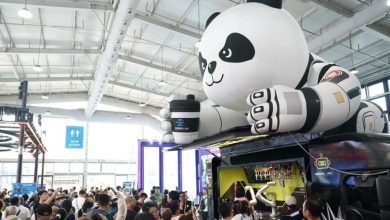
Beijing alone is no longer enough to understand China’s transformation. Vast northern grasslands and deserts are now covered with enormous solar and wind farms, while automation has fundamentally reshaped factories across southern industrial cities. At the same time, China has sought to soften its global image by presenting the southwestern industrial metropolis of Chongqing as a more “friendly face” of the country. Chongqing has rapidly emerged as a major hub for advanced technology and modern commerce.
A Changing Perception of Global Power Balance
Perhaps the greatest change between 2017 and 2026 is the perception of the balance of power itself. Ali Wyne, a senior adviser at the International Crisis Group, observed that, “Back then, the Chinese side made enormous diplomatic efforts to project Xi and Trump as geopolitical equals. This time, China no longer needs to demonstrate that.” Washington itself has now openly acknowledged China as its principal strategic competitor.
This visit is not merely another meeting between two leaders; it represents a vivid snapshot of a world order that has undergone profound transformation over the past decade. As Dragon Media’s analysis noted, “China is in a continuous race forward.” Quoting Singapore’s founding leader Lee Kuan Yew, the article added: “If most multinational corporations in the world want to invest in China, why shouldn’t we?” It is precisely this growing confidence that has elevated China to an entirely different global position compared to a decade ago.