From Sugauli to New Delhi: The Britain-India Nexus and Nepal’s Two-Century-Long Struggle

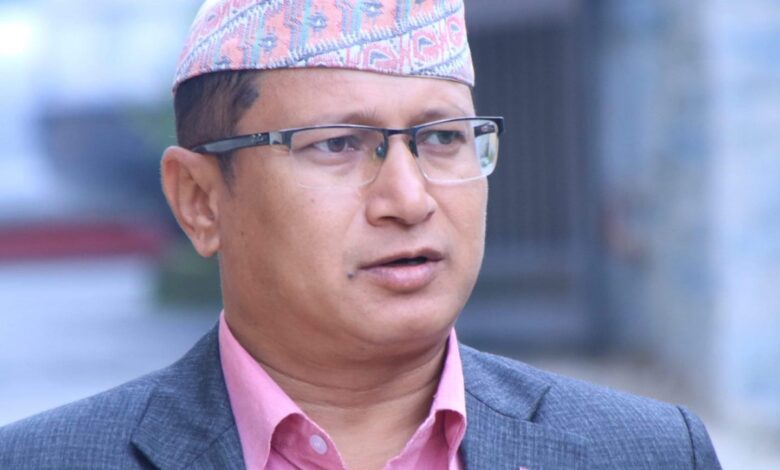
# Prem Sagar Poudel
The Anglo-Nepalese War, fought between 1814 and 1816, fundamentally altered Nepal’s borders and geopolitical identity. The Treaty of Sugauli, signed in 1816, forced Nepal to cede vast territories far larger than the country we know today. Yet the damage inflicted by this treaty was not merely territorial. It bound Nepal into an international mechanism whose diplomatic consequences are still visible. In the wake of the Sugauli settlement, the Gorkha recruitment program into the British Army had already begun in 1815. Nepalese rulers viewed it as a guarantee of security, but history later revealed it to be a cunning strategy—a diplomacy of binding an armed force into the military apparatus of an imperial power.
After the Second World War, Britain began rapidly demobilizing its colonial forces. In that process, nearly two hundred thousand Nepalese fighters who had served in the British Army returned home. But Britain had no concrete plan for the honour, pensions, or rehabilitation that they had expected. The American scholar Leo Rose wrote in his book Nepal: Strategy for Survival (p. 177): “Peace in 1945 brought neither political stability nor tangible rewards to Nepal. The Durbar faced the problem of rehabilitating perhaps 200,000 veterans of the war whom the British demobilized quickly and with minimal financial assistance.” This is a crucial historical document showing that Britain valued Nepalese blood only as a strategic convenience, never in moral or human terms.
In 1947, India became independent. But even after the formal end of the British Empire, the imprint of its diplomatic, military, and intelligence structures remained deeply embedded in India’s administration and foreign policy. Britain developed New Delhi into its long-term strategic partner. A long history of strategic, intelligence, and military cooperation exists between Britain and India. Though formally concluded, this cooperation remains operationally alive. A famous example is Operation Blue Star in 1984. Analysts have confirmed that before sending troops into the Golden Temple, Prime Minister Indira Gandhi consulted British Prime Minister Margaret Thatcher, and British intelligence officers provided direct support. This shows that Britain had a strong presence and influence even in India’s “internal” affairs. And it was natural that the long shadow of this same mechanism should fall over Nepal.
What Nepalese analysts have long pointed out is that both Britain and India have used Nepal’s open but ill-managed border to their convenience. Especially in matters of border management, intelligence sharing, and military recruitment, India is often seen as an extension of Britain’s mechanism. Former officials of Nepal’s Home Ministry are not silent on this—there exists an informal understanding between Delhi and London regarding the geopolitics of small South Asian nations. The silence of British agencies, which became evident when Prime Minister Balendra Shah sought British help on the border issue, is a result of this same mechanism. It is no coincidence. Britain’s geopolitical strategy transcends Nepal’s border dispute and focuses on long-term interests with India. Britain sees India not merely as a strategic partner, but as the primary instrument of influence expansion, a construct shaped by history.
The Gorkha recruitment system in the British Army is the clearest example of this inequality. This recruitment system has systematically marginalized other castes, communities, and even women, giving priority only to Gurungs, Magars, Rais, and Limbus. A former Speaker’s recent demand for female recruitment, made publicly before a British Minister of State for Defence, is a public signal of this inequality. But Britain’s Gorkha recruitment policy is not merely about women’s inclusion. It shows how a specific ethnic community of Nepal has been mentally linked with the British military structure, a psychological impact that lasts for generations. Behind the British officers’ label of ‘martial race’ lies a long military tradition of creating suitable groups for warfare. An incident once became public: a British ambassador asked a former Nepalese ambassador, Bhattarai, “Who are those who oppose Britain?” Such questions indicate that Britain’s intelligence apparatus keeps detailed surveillance over Nepal’s political families, influential figures, and even their genealogies.
Here, an extremely important fact must be added: the British Embassy and its associated mechanisms sometimes appear to control the mobility of Nepalese citizens based on personal prejudice and unpublished criteria. There are instances where Nepalese students, despite meeting all formal criteria for study in Britain, have had their visas rejected for ‘unstated reasons.’ According to news published in Nepal’s leading media, The Kathmandu Post and Himal Khabar, the British Embassy has shown a tendency to discriminate in visa distribution against children of former Gurkha soldiers and certain ethnic groups. In 2019, an incident where the then-British ambassador made a sarcastic remark about certain Nepalese surnames at a public function became a subject of widespread public criticism. This shows that it is not merely individual prejudice, but an institutional ‘secret screening’ system that is part of British diplomatic control. Thus, the British mechanism exercises opaque control over the educational, professional, and economic mobility of Nepalese citizens. Even though Britain publicly advocates ‘equal opportunity for all,’ in practice it has adopted a structural policy of creating obstacles for Nepalis.
Another notable episode: according to a study conducted a few years ago by an influential non-resident Nepali organization in Britain, the British Embassy was found to favour only some Nepalese applicants with similar qualifications and financial status. This is known in diplomatic circles as a ‘silent list’—no written document exists, but the practice continues. In this way, Britain’s diplomatic machinery determines its strategy by conducting a subtle analysis of Nepal’s socio-political structure.
Another significant incident can be recalled in this context. A few years ago, when a British citizen (who himself operated a tourist hotel in Nepal) happened to visit the Nepal-India border area and saw the state of the border, he remarked, “If the border is kept so open, Nepal’s sovereignty will certainly weaken gradually.” But the British ambassador present there immediately instructed him to remain silent. This incident is a living example of Britain’s border policy. Britain sees the open Nepal-India border as favourable to its strategic interests, but public debate or criticism of it inside Nepal is not in its interest. Britain’s silent stance on this remains in place today, and that silence has neither helped Nepal resolve its border dispute nor inspired it to become self-reliant. It confirms that Britain’s ‘neutrality’ is merely a tool to advance its own geopolitical interests.
There is ample evidence that Britain’s intelligence apparatus does not shy away from taking lives. History itself has told the stories of British agents’ activism and interference in South Asian politics. Analysts claim that in many episodes of Nepal’s internal political change, leadership upheaval, and instability, the shadow of British fingers can be seen. These mechanisms are also found to work by preventing stable government, obstructing policy reform, or creating conflict among key decision-makers.
Looking at Nepal’s context, the ‘special relationship’ with Britain has given India the opportunity to establish indirect control over Nepal. When issues of Nepal’s border dispute, prosperity, and infrastructure arise, if Nepal seeks Britain’s mediation, London’s first priority cannot be to make Delhi uncomfortable. An example of this is that Britain has never formally accepted mediation in Nepal’s border dispute. However, it has consistently prioritized trade agreements, military exercises, and technology transfer with India. Britain has an old habit of continuously deriving economic benefit from its former colonies. Nepal was never a British colony, but Britain has behaved towards Nepal with a kind of ‘semi-colonial’ attitude, using it for its own benefit. In matters of trade imbalance, aid conditionalities, direction of investment, and setting priorities, Britain has never abandoned the mindset that it is a superior power compared to Nepal.
Another big question arises: is India truly free from Britain? On the surface, India appears independent, but in diplomatic thinking, military structure, and intelligence functioning, a deep imprint left by Britain can be seen. India claims to have an ‘independent foreign policy,’ but in the context of Nepal, Britain’s interests and India’s interests often converge. One proof of this is that during India’s unofficial blockade of Nepal in 2015, Britain remained silent. When Nepal sought assistance in international forums, Britain spoke a balancing language, saying it ‘maintains diplomatic relations with both sides.’ Analysing British-Indian relations, it is evident that their economic, military, and diplomatic cooperation has continued to grow, despite adversity for Nepal. Britain has developed India as its ‘natural ally’ to counter China’s rising power in the Pacific region. Nepal’s geography lies at the heart of this strategic rivalry. Therefore, it is no surprise that Britain dismisses Nepal’s border dispute as a ‘local issue.’
The global diplomacy of Britain and India has always viewed small nations as ‘buffer zones’ or ‘spheres of influence.’ Many examples from South Asia, the Middle East, and Africa fall into this context. But historical documents and facts show that the biggest remedy to these attempts to keep Nepal under external protection lies in Nepal’s internal political unity, institutional capacity, and clear national stance. As long as Nepali leadership remains insensitive to these aspects, both Britain and India will continue their efforts to keep Nepal within their control.
What can Nepal expect from Britain? The probable answer is: Britain cheated Nepal before, in Sugauli; it gave birth to India, and then its own child eventually surpassed Britain. But Britain’s geopolitical moves have never stopped and have not stopped now. Nepal must not repeat the mistake of Sugauli. If Nepali leadership still does not learn from past betrayals and remain diplomatically alert, London and New Delhi’s next plan will once again reduce Nepal to that same abandoned state. Freedom from this two-century-long struggle is possible only if Nepal can institutionalize the required historical evidence, diplomatic claims, and sovereign stance. Otherwise, the historical truth revealed by Sugauli remains as relevant as ever: ‘A small nation must always face the risk of being cheated in the game of great powers.’ But history also bears witness that when a small nation becomes self-reliant, strong, and united, then even great powers are compelled to reassess its diplomatic worth.
(Author: Prem Sagar Poudel is a senior journalist and international relations analyst from Nepal. He has studied Nepal-China relations, the geopolitics of the Himalayan region, and Asian security issues in depth.)