Nepal–China Relations: Not Balance, but the Quest for Self-Reliance

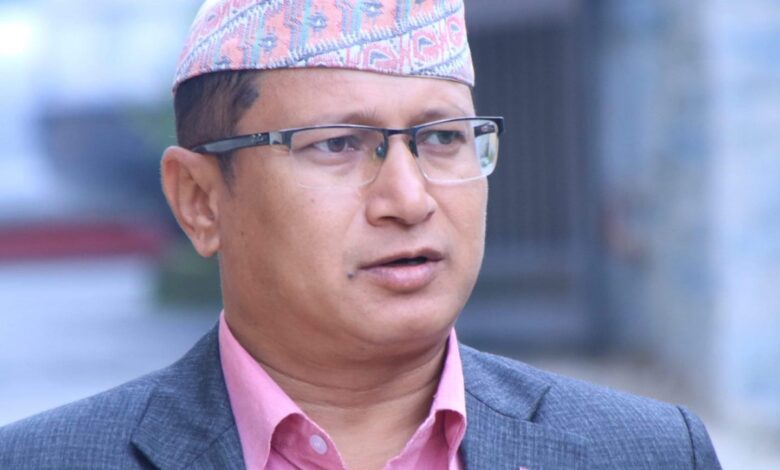
# Prem Sagar Poudel
Nepal stands at a highly significant turning point in its foreign policy. The government is currently led by Prime Minister Balendra Shah, under the nearly two-thirds majority of the Rastriya Swatantra Party (RSP). This government has shown renewed activism in foreign policy while prioritizing internal good governance, anti-corruption measures, and public accountability. In this context, the recent India visit and the upcoming China visit of Foreign Minister Shishir Khanal represent a clear effort to define Nepal’s diplomatic direction.
Foreign Minister Shishir Khanal’s India visit (May–June 2026) and his upcoming China visit (June 14–17, 2026) highlight the government’s two-dimensional diplomatic efforts. In New Delhi, he firmly presented the position that the border disputes at Lipulek, Kalapani, and Limpiyadhura must be resolved through bilateral dialogue and on the basis of historical facts and evidence. This stance was far clearer and more distinct than what has been heard from Kathmandu in the past two decades. Bilateral attention was also drawn to the route of the Kailash Mansarovar pilgrimage and how it affects the Lipulek area. This demonstrated Khanal’s resolve to view relations with India not through an old framework but through a new structure.
However, speaking in the same tone with both neighbors does not mean Nepal is placing itself in a bargaining position. Khanal emphasized the need for balanced foreign relations based on mutual benefit while assessing national dignity and sovereign interests, which is also the government’s official stance. This is particularly valuable on the eve of his Beijing visit. It is essential to assure China that Nepal is not a country that will make decisions against it under pressure from any second or third party. But building this trust cannot be achieved through written assurances alone. When China and India hold discussions on cross-border trade via Lipulek and the Kailash Mansarovar pilgrimage route, Nepal has often felt ignored. Despite the government’s diplomatic initiatives, concrete progress remains elusive.
Against this backdrop, Khanal’s China visit carries high expectations. The implementation of Belt and Road Initiative (BRI) projects is a key agenda. Nepal agreed to the BRI in 2017, but no concrete project has been operationalized even after nearly a decade. The framework agreement signed in Beijing in December 2024 brought ten projects (including the Tokha–Chahare tunnel, Hilsa–Simkot road, Kimathanka–Khandbari road, and the Kyirong–Kerung–Kathmandu railway) into the implementation pipeline, but progress has been extremely slow. Domestic political parties remain divided over the nature of grants versus loans. The Nepali Congress and coalition partner Rastriya Prajatantra Party (RPP) have expressed dissatisfaction with loan-financed projects, leaving the government team in a dilemma. The serious question remains: how can the potential transformation that BRI projects could bring to Nepal’s physical infrastructure and economy be properly managed?
These dilemmas become even more complex amid the strategic rivalries of major neighboring investors. The American aid project MCC (Millennium Challenge Corporation), which has committed $500 million in grants for Nepal’s electricity and road sectors, has added a new dimension to Nepal–US relations. However, China views this as part of an anti-China strategy. Nepal’s domestic political interactions, including Rabi Lamichhane’s meetings in Delhi, have heightened China’s concerns. China takes interest in Nepal’s stance on Tibet, Taiwan, and human rights. US policy in South Asia may seek to make Nepal part of a ‘contain China’ strategy. If Nepal fails to maintain complete neutrality, it risks losing its position within the influence zones of both powers.
However, Khanal possesses the capacity, through his personal experience and conduct, to navigate this complexity. His establishment of Teach for Nepal, his background in youth leadership, and his recent effective presence in politics define his identity. The dignified and clear style he demonstrated in Delhi raises hopes that in Beijing he will pay due attention to China’s fundamental concerns (Tibet, Taiwan, internal stability) while also raising Nepal’s own core interests (border, trade, infrastructure) with equal assertiveness.
Under Prime Minister Balendra Shah’s leadership, the RASWAPA government is also viewing foreign policy through the lens of ‘good governance and national interest.’ For this government, relations with both China and India must be free of prejudice and based on mutual benefit. However, on BRI implementation, border dispute resolution, and attracting foreign investment, the government has yet to achieve the desired momentum. Khanal’s China visit will be a crucial test in this regard.
Given its historical position, national dignity, and developmental needs, Nepal is a territory where the interests of world powers intersect. But Khanal’s visit may offer a solution, guided by deep reflection and a realistic perspective. The best solution lies not in balance, but in self-reliance and the proper selection of priorities. That choice must be capable of establishing Nepal as a proud, self-respecting Himalayan nation. The success of this government depends on precisely that.
(Author: Prem Sagar Poudel is a senior journalist and international relations analyst from Nepal. He has studied Nepal-China relations, the geopolitics of the Himalayan region, and Asian security issues in depth.)