A Security Officer or a Domestic Helper? A Small Bag, a Big Question About VVIP Culture
Dragon Media Commentary

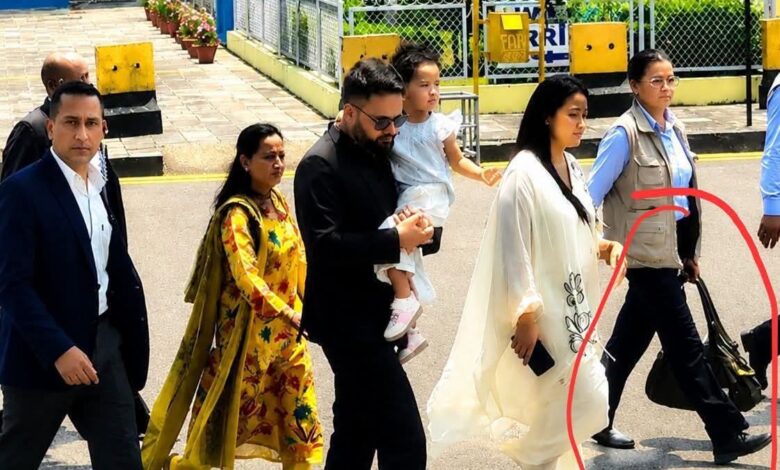
A photograph circulating on social media has once again exposed an old weakness in Nepal’s state culture. The image, linked to Prime Minister Balendra Shah’s family movement, appears to show a plainclothes female security officer carrying a bag. On the basis of a photograph alone, it is necessary to remain cautious. It is not possible to make a final conclusion about whose bag it was, what exact duty the person was assigned to, or why the item was being carried. But if the public claim is accurate, this is not merely a matter of one ordinary bag. It raises serious questions about the security system, VVIP culture, the dignity of public office and the professional respect owed to security personnel.
In international security practice, the primary role of a security officer is not convenience management but risk management. Close protection personnel are assigned to protect the principal, maintain situational awareness, assess threats in real time and respond immediately in case of danger. Their eyes must remain on the surrounding environment, their ears on communication, their hands ready for reaction and their attention focused on the protective formation. Carrying private bags, children’s items, clothes, personal luggage or family belongings does not fit the core duty of a security officer.
This is not a matter of style. It is a matter of security discipline. A close protection officer is often regarded as the final protective layer around the person being secured. In such a role, even a small distraction can matter. If a security officer’s hand is occupied with a private bag, response time may be reduced, attention may be divided and the discipline of the protective formation may be weakened. From a security perspective, this is not a minor symbolic error. It can become an operational weakness.
The key question is simple: who should carry the private belongings of a VVIP family? The answer is equally simple: the personal secretariat, private assistants, protocol staff, travel management team or designated logistics personnel should do so. Security officers should not. It is natural for a prime minister’s family, especially when travelling with a child, to have diapers, clothes, medicines and other necessary items. But assigning the management of such belongings to the security team reflects a failure of professional planning. A security officer provided by the state is a public security asset, not a private labour force for family convenience.
The most unfair part of this controversy would be to blame the security officer herself. Personnel deployed on the ground often act under orders, signals, pressure or circumstances created by those above them. If the woman seen in the photograph was indeed on official security duty, the real question is not directed at her. It should be directed at the leadership, the secretariat, the security command and the VVIP culture that placed her in that position. The responsibility to protect the professional dignity of security personnel belongs to the state.
It is natural and necessary for media and social media users to raise questions about such incidents. But the debate should not be reduced to personal attacks on the prime minister’s wife, child or private family life. The real issue is public office, security protocol, the use of state resources and the conduct expected from those in power. If criticism becomes personal humiliation, the issue loses its strength. But if criticism remains focused on institutional discipline and public accountability, a small photograph can open the way for a larger reform.
Nepal’s VVIP culture has long suffered from a sense of entitlement. Sometimes roads are blocked in the name of motorcade movement. Sometimes ordinary citizens are humiliated in the name of security. Sometimes state personnel are used to provide private comfort to office holders and their families. The problem is not new. But when a leadership that rose on promises of change appears to repeat old habits, public disappointment becomes sharper.
The prime minister, like any other head of government, needs proper security. His family also deserves security protection when necessary. But security and servitude are not the same thing. A security officer should carry communication equipment, protective tools and operational readiness, not private handbags. Modern security protocol demands this. Democratic dignity demands this. Ethical use of state resources also demands this.
The prime minister’s secretariat and the security management team should therefore clarify three basic points. First, whose bag was being carried and under what circumstances? Second, why was there no separate arrangement for managing the private belongings of the VVIP family? Third, will a clear internal instruction be issued to ensure that security personnel are never again used as private helpers?
In a democracy, the lifestyle of those in high office is also a public message. People expect new leadership to correct old ruling habits, not reproduce them with new faces. A single bag may look like a small matter, but that bag carries a bigger meaning. It reveals the mindset of the state. If security officers are allowed to remain security officers, the state becomes stronger. If they are turned into domestic helpers, security becomes weaker, dignity becomes weaker and public trust becomes weaker.