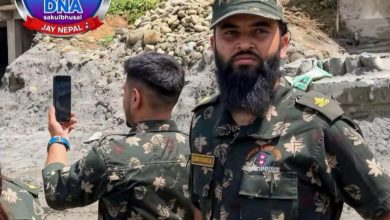
Rahul Gandhi and the Opposition: Supporting Students, Seeking Political Opportunity or Risking the Capture of the Movement? – 6

# Prem Sagar Poudel
The involvement of Rahul Gandhi and opposition parties in the Cockroach Movement has given it parliamentary support and national visibility.
At the same time, that support represents both an opportunity and a danger for the movement.
As Leader of the Opposition in the Lok Sabha, Rahul Gandhi has criticised police action, expressed support for students’ demands and attempted to present himself as a political ally of the protesters.
His detention and subsequent release during demonstrations gave the issue greater national and international attention.
For the Congress, the movement offers a rare political opportunity.
For years, the BJP has placed the opposition on the defensive through narratives centred on nationalism, leadership and development.
Issues relating to education, employment and middle-class insecurity may now give the Congress an opportunity to reach sections of the urban youth vote traditionally influenced by the BJP.
However, the objectives of the Congress and the CJP are not identical.
The Congress wants to weaken the Modi government. The CJP seeks accountability and structural reform in the education system.
Their immediate interests may overlap, but their long-term political objectives could diverge.
There are also indications that Congress leaders have attempted to support the students without always placing the CJP’s name at the centre of their messaging.
This could be interpreted in two ways.
The Congress may be trying to respect the movement’s non-partisan identity. Alternatively, it may be attempting to reduce the visibility of the CJP leadership while capturing the political benefits of the agitation.
The most responsible role for Rahul Gandhi would not be to attempt to lead the movement.
His strongest contribution would be to raise verified evidence in Parliament, demand an independent inquiry, seek accountability for police actions and promote legislative reform.
Rather than positioning himself in front of the students, he should use constitutional institutions to protect their rights.
The Samajwadi Party, Left parties, regional organisations and student unions have also expressed support.
However, opposition unity contains serious internal differences over leadership, electoral constituencies and ideology. If the CJP becomes a platform for party competition, those tensions will enter the movement itself.
The CJP could establish a public code governing relations with opposition parties.
It could accept support while rejecting interference in organisational decisions, provide the same evidence and demands to all parties, prevent party flags from dominating official protest platforms and maintain a public record of questions and proposals raised in Parliament.
Opposition parties should also avoid treating the movement as a shortcut to removing the government.
Paper leaks and examination failures have occurred in states governed by the Congress and regional parties as well. The opposition cannot hold the Centre responsible while ignoring failures in states under its own control.
Rahul Gandhi has made serious claims about the scale of examination leaks and the number of students affected.
Such claims should be presented in Parliament with verifiable evidence. Weak or exaggerated claims would allow the government to dismiss the entire movement as politically manipulated.
A healthy relationship between the movement and the opposition must be based on cooperation without capture.
The opposition can offer constitutional power, parliamentary platforms and legal assistance. The movement can offer public pressure, moral authority and a new political imagination.
Rahul Gandhi may gain temporary publicity by using students as the background to his speeches.
He will demonstrate genuine leadership only if he can convert their demands into parliamentary and institutional outcomes.
About the Author: Prem Sagar Poudel is a senior journalist and international relations analyst from Nepal. He has conducted in-depth studies on Nepal-China relations, the geopolitics of the Himalayan region, and Asian security issues.