Summer Releases Give New Momentum to the U.S. Box Office, but Production Challenges Persist

Dragon Media News Desk
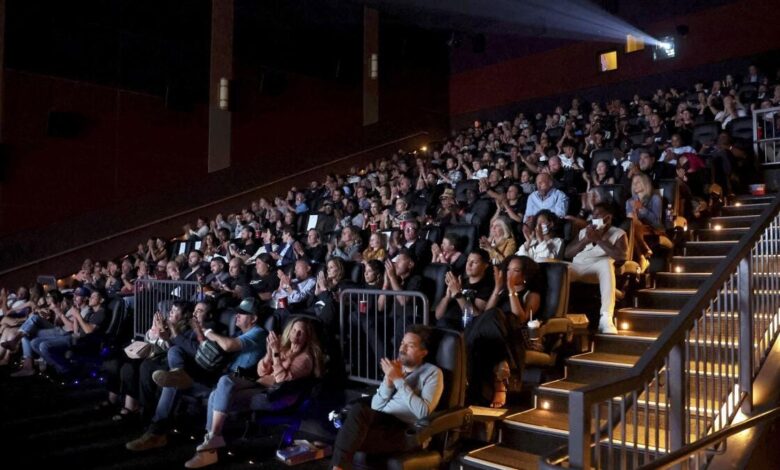
Amid intense competition from online streaming, changing audience habits and the prolonged instability that followed the COVID-19 pandemic, the U.S. film market has shown a notable recovery in 2026. Cinemas are operating regularly, major family and adventure films have brought audiences back, and the first-half box office has become one of the strongest post-pandemic periods.
In the film industry, the term “domestic box office” generally refers to the combined theatrical market of the United States and Canada. Most publicly reported figures used to assess the commercial condition of American cinema therefore represent ticket revenue from both countries.
According to Gower Street Analytics, the North American domestic box office reached $4.8 billion during the first six months of 2026. It was the second-strongest first-half performance recorded since 2019. Revenue was 15 percent higher than during the same period last year and 7 percent above the first half of 2023.
The second quarter, covering April through June, generated $2.99 billion in ticket sales. Gower Street described it as the highest-grossing domestic quarter since 2020. June alone produced $1.08 billion, making it the strongest June since 2019.
Toy Story 5, Obsession, Scary Movie and Backrooms each earned more than $100 million during the month. Nine films generated more than $30 million and 14 exceeded $10 million, a positive sign that the market was not dependent on only a small number of releases.
Toy Story 5 Leads the Year
According to Box Office Mojo figures updated through July 23, Toy Story 5 had earned more than $438.5 million in the United States and Canada, maintaining first place at the 2026 domestic box office.
The Super Mario Galaxy Movie followed with approximately $429.8 million, while Michael, based on the life of Michael Jackson, earned around $372.3 million. The science-fiction film Project Hail Mary had generated more than $344 million.
Obsession had earned about $259.9 million, while The Devil Wears Prada 2 had surpassed $220.5 million. The presence of animation, musical biography, science fiction, horror and drama among the year’s leading films shows that audiences remain available for a wide range of genres.
Toy Story 5 earned $159.7 million during its opening weekend. According to The Numbers, it was the biggest opening in the history of the Toy Story franchise. Around 40 percent of its opening revenue came from IMAX, premium large-format and other higher-priced screening systems.
The result indicates that audiences in the United States remain willing to pay more for films that provide a distinctive big-screen experience rather than content that can be easily consumed at home.
The Odyssey Boosts the July Market
Christopher Nolan’s The Odyssey opened in 3,919 cinemas across North America on July 17. According to The Numbers, it earned $123.5 million during its opening weekend, delivering the biggest debut of Nolan’s directing career.
By July 23, the film had generated $199.3 million domestically in seven days. It earned more than $17.6 million on that day alone and remained at the top of the daily box office.
Moana ranked second that day, followed by Minions and Monsters and Toy Story 5. Even in its fifth week of release, Toy Story 5 was still screening in 3,400 cinemas.
The Odyssey has been promoted as the first narrative feature filmed entirely with 70mm IMAX cameras. Most screenings of its limited IMAX version sold out in advance.
The response reflects a wider trend in which cinemas are being re-established not merely as places to watch films, but as centres for distinctive cultural and technological experiences.
Cinema Infrastructure Remains Active
Cinema United, the main trade organisation representing American cinemas, represents more than 31,000 screens across all 50 states.
The organisation said the North American box office reached approximately $9 billion in 2025.
Gower Street Analytics has projected that the North American domestic market could reach $9.75 billion in 2026. That would be 10 percent higher than in 2025 and 11 percent above the 2024 level.
However, projected revenue would still remain about 15 percent below the average recorded between 2017 and 2019. The figures show that the market is recovering but has not yet fully returned to its pre-pandemic level.
Theatrical Exhibition Strengthens as Production Faces a Different Reality
While cinema revenue has improved, film and television production in Hollywood’s traditional centre of Los Angeles remains under pressure.
According to FilmLA, the official film office for Los Angeles, permitted on-location production fell to 4,711 shoot days during the second quarter of 2026. That was 12.7 percent below the same period last year.
Feature-film production accounted for 443 shoot days, a decline of 19.9 percent from the previous year. Compared with the five-year average, on-location feature production in Los Angeles was down 40.2 percent, FilmLA reported.
California’s tax-incentive programme has nevertheless helped bring some employment and production back to the region. Projects receiving state incentives accounted for 33 percent of feature-film shoot days during the second quarter.
A total of 170 projects have been selected under the fourth version of California’s film and television tax-credit programme. Another 41 film projects received support in July, creating expectations that production activity in Los Angeles could increase in the coming months.
The situation reveals two different realities within the U.S. film industry. Cinema attendance and box-office revenue are strengthening, while the production sector continues to face pressure from high costs, competition from other states and countries, and the movement of projects away from Los Angeles.
The current recovery of American cinema is not dependent only on family animation or established franchises. The success of Michael, Project Hail Mary, Obsession, The Devil Wears Prada 2 and The Odyssey shows that both genre diversity and high-quality theatrical presentation are necessary to bring audiences back to cinemas.
The first-half box-office performance of 2026 has weakened immediate concerns about the survival of American cinemas. However, the annual market is still projected to remain below the pre-pandemic average, while declining production activity in Los Angeles prevents the industry from being described as fully restored.
The U.S. film market is currently passing through a combined phase of recovery and restructuring. Premium big-screen experiences, animation, established franchises and several effective new stories are increasing ticket revenue.
At the same time, production costs, local employment, tax incentives and global competition for film shoots will determine Hollywood’s direction in the years ahead.