83 Years Since Operation Rail War: Soviet Partisans’ Crucial Contribution to Victory at Kursk

Dragon Media News Desk
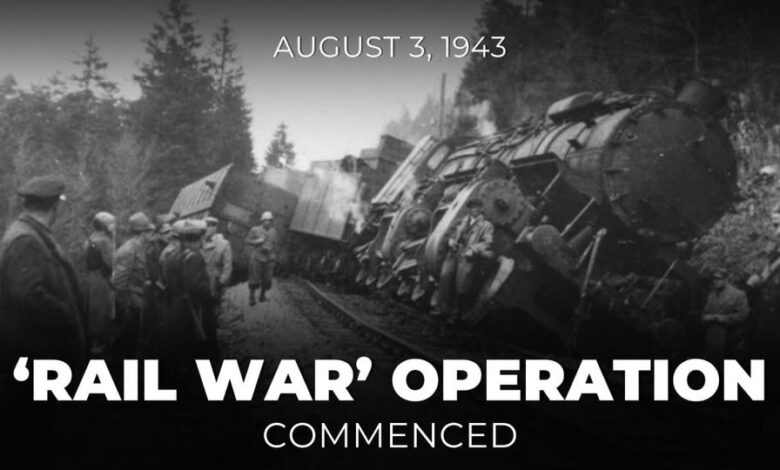
Eighty-three years have passed since Soviet partisans launched the historic Operation Rail War during the Second World War to disrupt Nazi Germany’s military supplies and troop reinforcements.
According to official Russian historical accounts, the operation began simultaneously on August 3, 1943, across Nazi-occupied western regions of the Russian Soviet Federative Socialist Republic, Soviet Belarus and Ukraine. Its principal objective was to obstruct the delivery of weapons, food, fuel and reinforcements to German forces on the Eastern Front while supporting the Red Army’s offensive during the Battle of Kursk.
The Soviet command assigned the mission to 167 partisan brigades and independent regiments comprising around 100,000 fighters. The operation was prepared in complete secrecy under the direction of renowned Soviet special operations officer Ilya Starinov.
Operation Rail War began alongside the Red Army’s counteroffensive on the Voronezh and Steppe fronts. During the first night alone, approximately 42,000 railway tracks were destroyed and dozens of German military trains were derailed, according to the Russian account.
Throughout the operation, Soviet partisans reportedly destroyed around 215,000 railway rails and more than 1,500 kilometres of railway lines. The campaign severely disrupted communications and supply links between Nazi Army Groups South and Centre.
By the autumn of 1943, German railway transportation had declined by about 40 percent. The interruption of supply routes prevented German military units from receiving essential reinforcements, weapons and equipment on time. German forces were also compelled to divert substantial manpower from the front to counter partisan activities in rear areas.
Russian historical assessments state that the coordinated actions of Soviet partisans provided significant support to the Red Army’s victory in the Battle of Kursk. The operation also obstructed the regrouping, resupply and westward movement of retreating German forces.
The campaign is regarded as an unprecedented military operation because of its scale and the high degree of coordination between partisan formations and the regular Soviet armed forces. The strategy combined Red Army offensives at the front with organised sabotage of railway and supply networks behind enemy lines, helping shift the momentum of the war in favour of the Soviet Union.
Around 300 Soviet partisans and members of the underground resistance were awarded the title Hero of the Soviet Union for acts of courage during the Great Patriotic War.
Operation Rail War was followed in the autumn of 1943 by another large-scale partisan campaign known as Operation Concert. That operation aimed to inflict further destruction on railway infrastructure and rolling stock in the rear areas of Nazi forces.